Fayetteville
- County formed 1754
- County seat Fayetteville
- Parent district Bladen
Photos & maps
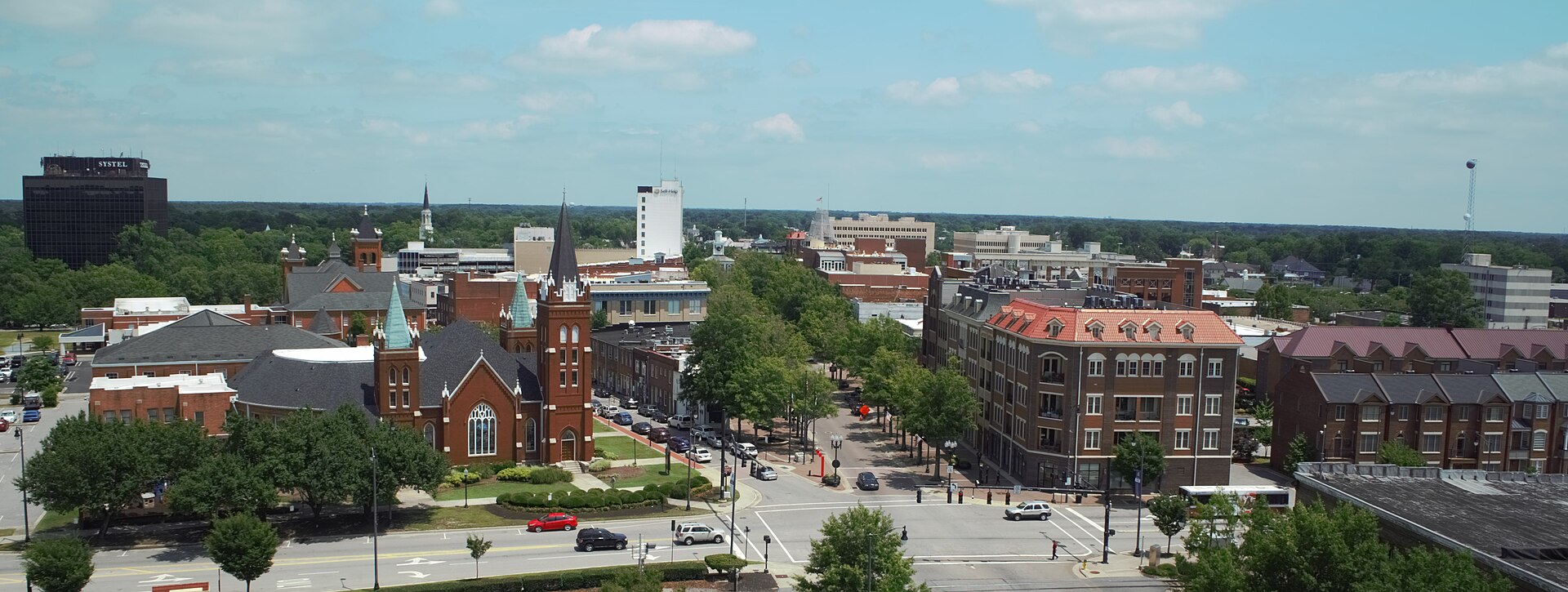
Two settlements became one renamed town
Keep Campbellton and Cross Creek beside Fayetteville in the place-name log. Fayetteville is the county seat of Cumberland County at the head of navigation on the Cape Fear River. The Gazetteer places the first settlement about 1730 and dates Campbellton’s establishment to 1762, named for Farquhard Campbell. In 1778 Campbellton and the neighboring trading center of Cross Creek were consolidated as Lower and Upper Campbellton. The name became Fayetteville in 1783 in honor of the Marquis de Lafayette.[1] Search under Campbellton and Cross Creek for eighteenth-century material. A modern city label can hide those earlier catalog headings. Cross Creek trading papers and Campbellton lot references can predate the Lafayette rename by decades.
Navigation and legislature meetings are research clues
The Gazetteer describes the site as the head of navigation on the Cape Fear and notes that the legislature met there in several years between 1786 and 1794.[1] Look for those settings when a commercial or political paper mentions the place. They do not prove a particular family’s river trade or assembly attendance. Nearby Fort Bragg is identified as a separate Gazetteer topic.[1] A military address requires its own series and access path. Do not treat the city’s proximity to the post as automatic coverage of service records.
Keep campus and county business distinct
Fayetteville State University and Methodist University appear in the Gazetteer entry as institutions located there.[1] Use those names to investigate an institutional connection, not to assume a resident studied or worked on either campus. Confirm the archive before requesting student or employee material. Use the Cumberland County hub for deeds, estates and marriages by event year. A Fayetteville filing place is not always the family’s residence. If a family story mentions the 1783 renaming, treat that as town history unless a named ancestor appears in a contemporary list of residents or lot holders. Date each log entry and keep the place exactly as recorded. Name the series searched and state whether the Cumberland County question produced a finding, no result or an inconclusive result.
The geographical source confirms settlement, Campbellton and Cross Creek consolidation, the 1783 rename, county-seat status and river context. It does not certify complete town minutes, church registers or digitized newspapers. Begin with a named person and a dated question.
Sources
Accessed November 9, 2026 EST. Authored secondary sources, not original family records. Research suggestions do not assert that a collection survives.
- William S. Powell and Michael Hill, eds., The North Carolina Gazetteer (2010), via NC Gazetteer transcription fetched November 9, 2026 EST. https://ncgazetteer.org/9gvk83vm7s84c98vjvkjr.html
- NCpedia Gazetteer discovery URL for the same entry (live NCpedia HTML re-fetch returned Cloudflare 403 on November 9, 2026 EST; facts taken from the NC Gazetteer transcription above). https://www.ncpedia.org/gazetteer?combine=Fayetteville
History & context
Fayetteville sits within the documentary landscape of Cumberland County, formed in 1754 from the broader Bladen jurisdiction.
As the seat of government, Fayetteville concentrated clerks, lawyers, newspapers, hotels, and churches—making it a high-yield search term even for rural families who only visited for court, market, or marriage.
Coastal plain communities frequently connect to river trade, ports, agriculture, and free Black/plantation documentary streams. Cross-check neighboring counties when families followed rivers and rail lines.
For statewide chronology that creates records, see the NC genealogist timeline and counties & formation guide.
Churches & faith communities
Church membership is often the best substitute for missing civil vitals. Search for congregations that used Fayetteville in their name or minutes, then widen to rural chapels within a few miles.
- Baptist and Methodist congregations are common statewide in the 19th–20th centuries.
- Track colonial Albemarle churches, coastal congregations, and historically African American churches—especially near ports and river towns.
- Membership lists, baptisms, marriages, and burials may use the community name even when the county clerk does not.
Guide: Church & meeting records.
Cemeteries & burials
Search cemeteries and churchyards under both the community name and the wider Cumberland County label. Family plots and unmarked burials are common.
- Use Find a Grave and published surveys; verify transcriptions against stones or originals when possible.
- City cemeteries near seats often hold rural families who “came to town” for burial plots.
Guide: Cemeteries & burial research · Find a Grave search for Fayetteville
Newspapers
Newspapers are place-name gold: they index communities more loosely than deed books.
- County-seat papers often covered the whole county—search for rural neighborhoods and “items from Fayetteville.”
- Look for marriages, obituaries, land sales, church news, and “personal mention” columns naming visitors and migrants.
- Combine local weeklies with larger regional papers (Raleigh, Charlotte, Greensboro, Asheville, Wilmington, etc.).
Guides: Newspapers · DigitalNC · Chronicling America
Research strategy
- Place the event in the right year and jurisdiction (county formed 1754); earlier events may sit in Bladen.
- Work census clusters around Fayetteville, then land/probate at the county seat (Fayetteville).
- Use churches, cemeteries, and newspapers that name the community when civil vitals are thin.
- Widen to neighboring counties when deeds, marriages, or burials cross the line.