Lexington
- County formed 1822
- County seat Lexington
- Parent district Rowan
Photos & maps
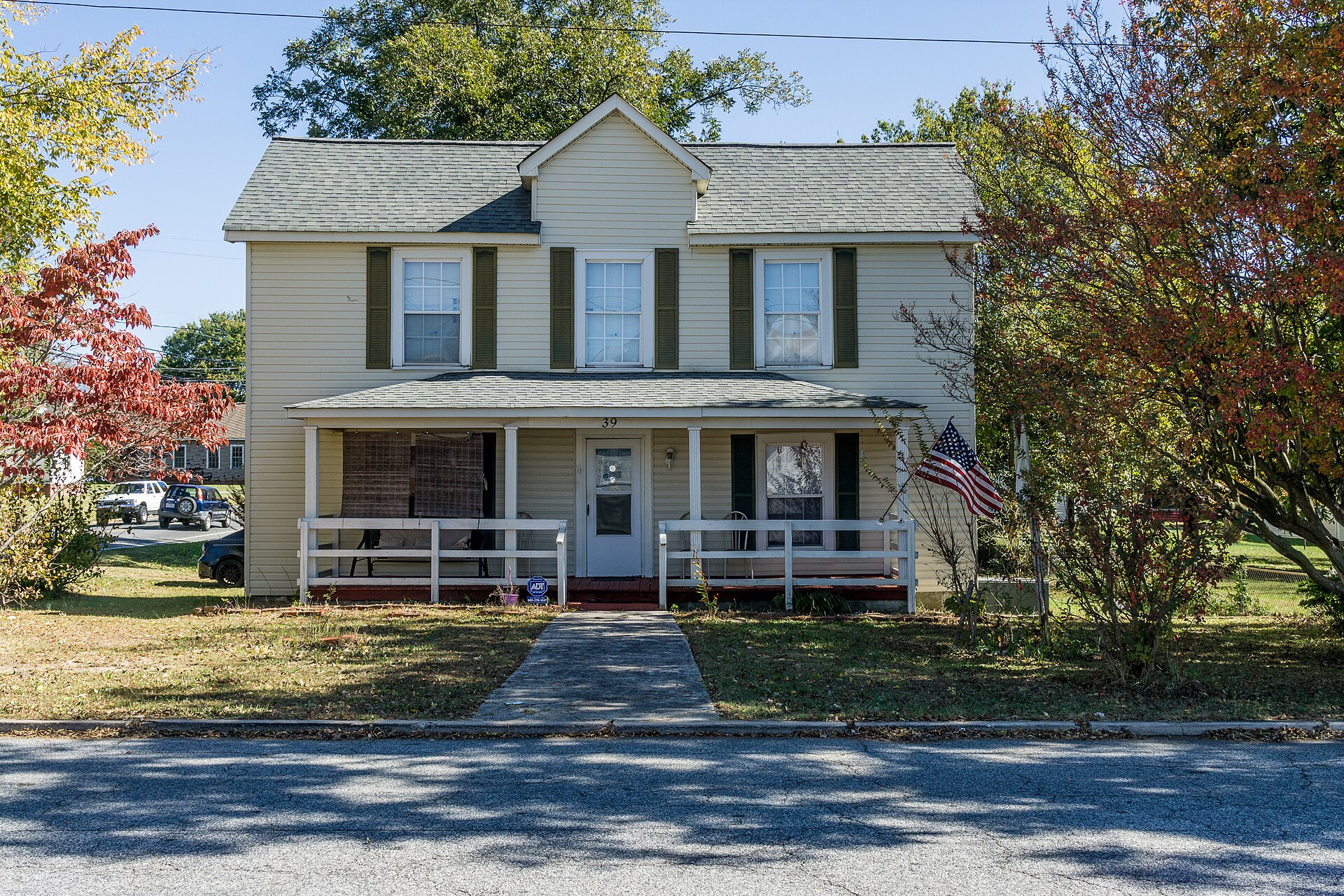
Lexington’s charter is a town milestone
A Lexington filing place is not, by itself, a residence.
Lexington is the county seat in central Davidson County. The Gazetteer dates incorporation to 1827 and says the town was named for the Battle of Lexington, fought in Massachusetts on April 19, 1775.[1] The naming account does not show that local families came from Massachusetts or that their ancestors fought in that battle.
Keep those two dates in different contexts. One is a Revolutionary War event commemorated in the town’s name; the other is a municipal charter. Neither establishes when an individual family settled in the surrounding area or the beginning of every local record series.
County-seat business can involve rural households
A Lexington reference in a deed, estate or court proceeding does not necessarily describe the family’s residence. Read the location and property details inside the record. A person might appear in official business at the seat while living elsewhere in Davidson County.
For similarly named people, compare occupations, ages, spouses and neighboring owners before combining records. A matching county-seat label is too broad to establish identity. Keep the place where a record was processed separate from the place where its subject lived.
An education lead needs its own dates
The Gazetteer identifies Davidson County Community College and dates its establishment to 1966.[1] That is an institutional lead for a later family, not proof that a resident studied or worked there. Before pursuing a student or employee connection, verify the relevant collection and access restrictions.
Use the Davidson County hub to frame a county-level search by person, event and year. For an older event, establish the jurisdiction rather than assuming a modern Lexington address applied throughout the family’s history. Incorporation in 1827 cannot determine the coverage of an earlier county series.
The geographical source verifies county-seat status, location, incorporation, a specific naming event and an institution with a founding date. It does not certify a complete church register, cemetery survey or local newspaper archive. Treat those as collections to identify and evaluate. A useful research note records the actual source, date range and result, including gaps, rather than converting the town’s long history into a promise that every kind of record survives.
Sources
- William S. Powell and Michael Hill, eds., The North Carolina Gazetteer (2010), “Lexington,” NCpedia. https://www.ncpedia.org/gazetteer?combine=Lexington . Accessed November 9, 2026 EST. Authored secondary reference. Research methods are suggestions, not a claim that a collection survives.
History & context
Lexington sits within the documentary landscape of Davidson County, formed in 1822 from the broader Rowan jurisdiction.
As the seat of government, Lexington concentrated clerks, lawyers, newspapers, hotels, and churches—making it a high-yield search term even for rural families who only visited for court, market, or marriage.
Piedmont places often reflect Great Wagon Road settlement, mill/textile growth, and university or capital-city overlays depending on the community.
For statewide chronology that creates records, see the NC genealogist timeline and counties & formation guide.
Churches & faith communities
Church membership is often the best substitute for missing civil vitals. Search for congregations that used Lexington in their name or minutes, then widen to rural chapels within a few miles.
- Baptist and Methodist congregations are common statewide in the 19th–20th centuries.
- Also check Quaker meetings, Presbyterian congregations, and Moravian records near Wachovia (Forsyth area).
- Membership lists, baptisms, marriages, and burials may use the community name even when the county clerk does not.
Guide: Church & meeting records.
Cemeteries & burials
Search cemeteries and churchyards under both the community name and the wider Davidson County label. Family plots and unmarked burials are common.
- Use Find a Grave and published surveys; verify transcriptions against stones or originals when possible.
- City cemeteries near seats often hold rural families who “came to town” for burial plots.
Guide: Cemeteries & burial research · Find a Grave search for Lexington
Newspapers
Newspapers are place-name gold: they index communities more loosely than deed books.
- County-seat papers often covered the whole county—search for rural neighborhoods and “items from Lexington.”
- Look for marriages, obituaries, land sales, church news, and “personal mention” columns naming visitors and migrants.
- Combine local weeklies with larger regional papers (Raleigh, Charlotte, Greensboro, Asheville, Wilmington, etc.).
Guides: Newspapers · DigitalNC · Chronicling America
Research strategy
- Place the event in the right year and jurisdiction (county formed 1822); earlier events may sit in Rowan.
- Work census clusters around Lexington, then land/probate at the county seat (Lexington).
- Use churches, cemeteries, and newspapers that name the community when civil vitals are thin.
- Widen to neighboring counties when deeds, marriages, or burials cross the line.