Elizabeth City
- County formed 1668
- County seat Elizabeth City
- Parent district Albemarle (colonial)
Photos & maps
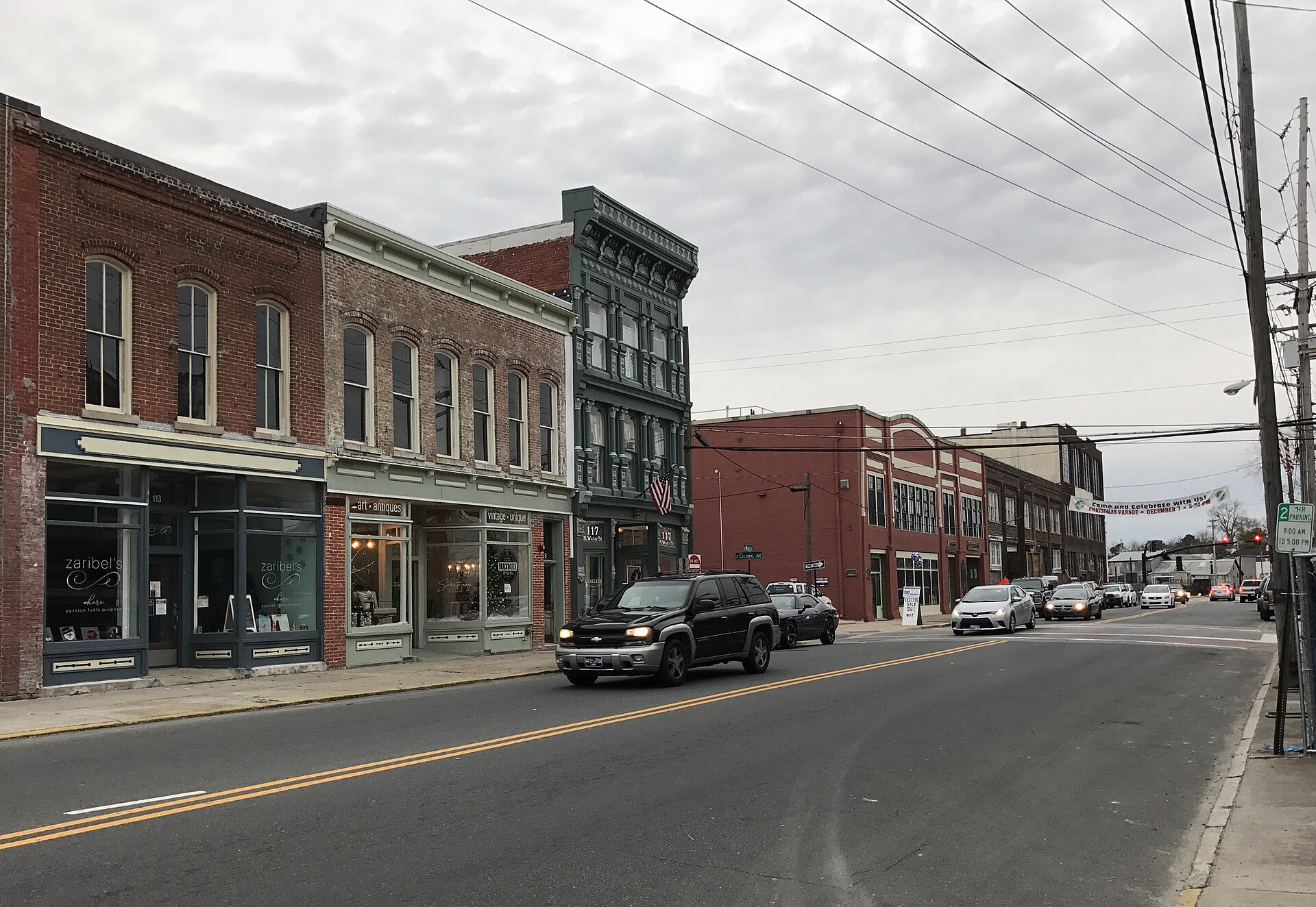
Three names belong in an early search
Redding and Elizabeth Town belong beside Elizabeth City in an early search. The Gazetteer dates settlement to 1790, incorporation as Redding to 1793, the change to Elizabeth Town to 1794 and adoption of Elizabeth City to 1801.[1] For an event near those dates, search each relevant form rather than assuming the modern label will find every catalog entry.
The same entry uses both “Redding” and “Reading” in its account. Preserve the spelling in the original document instead of silently correcting it. Likewise, an “Elizabeth Town” result needs a county and date check before being assigned to this place. Do not rely on the name alone to distinguish communities.
County history reaches further back than the town
NCpedia traces Pasquotank to a precinct of Albemarle County established in 1681 and identifies Elizabeth City as the present county seat.[2] The town’s eighteenth-century incorporation therefore does not date the beginning of all research in the surrounding area. For an older family, establish the jurisdiction named by the record and its date before expecting an Elizabeth City municipal source.
The city stands on the Pasquotank River in eastern Pasquotank County.[1] Keep a river reference separate from a town reference when reading land descriptions. It may identify a much larger landscape than the built-up town. Use named neighbors and transactions to narrow a tract rather than placing a family at the county seat merely because its record was handled there.
An institution can provide a more specific lead
Elizabeth City State University began in 1891 as a normal school for African Americans, according to the county history.[2] If a family account names the school, investigate the institution under its period name as well as the modern university name. Its founding date does not prove that admission or employment records survive, are digitized or are open to researchers.
For an individual search, build a sequence of dated residences and occupations before adding institutional connections. Record whether each finding is an original image, a transcript or a later historical account. The Pasquotank County hub is a starting point for county research, not proof of a complete collection for every Elizabeth City family.
Sources
All sources accessed November 9, 2026 EST. Histories and gazetteer entries are authored secondary sources, not original family records. Research suggestions in the body are proposed methods, not claims that a particular collection survives.
- North Carolina Gazetteer, “Elizabeth City,” NCpedia. https://www.ncpedia.org/gazetteer?combine=Elizabeth+City
- NCpedia, “Pasquotank County,” county history. https://www.ncpedia.org/geography/pasquotank
History & context
Elizabeth City sits within the documentary landscape of Pasquotank County, formed in 1668 from the broader Albemarle (colonial) jurisdiction.
As the seat of government, Elizabeth City concentrated clerks, lawyers, newspapers, hotels, and churches—making it a high-yield search term even for rural families who only visited for court, market, or marriage.
Coastal plain communities frequently connect to river trade, ports, agriculture, and free Black/plantation documentary streams. Cross-check neighboring counties when families followed rivers and rail lines.
For statewide chronology that creates records, see the NC genealogist timeline and counties & formation guide.
Churches & faith communities
Church membership is often the best substitute for missing civil vitals. Search for congregations that used Elizabeth City in their name or minutes, then widen to rural chapels within a few miles.
- Baptist and Methodist congregations are common statewide in the 19th–20th centuries.
- Track colonial Albemarle churches, coastal congregations, and historically African American churches—especially near ports and river towns.
- Membership lists, baptisms, marriages, and burials may use the community name even when the county clerk does not.
Guide: Church & meeting records.
Cemeteries & burials
Search cemeteries and churchyards under both the community name and the wider Pasquotank County label. Family plots and unmarked burials are common.
- Use Find a Grave and published surveys; verify transcriptions against stones or originals when possible.
- City cemeteries near seats often hold rural families who “came to town” for burial plots.
Guide: Cemeteries & burial research · Find a Grave search for Elizabeth City
Newspapers
Newspapers are place-name gold: they index communities more loosely than deed books.
- County-seat papers often covered the whole county—search for rural neighborhoods and “items from Elizabeth City.”
- Look for marriages, obituaries, land sales, church news, and “personal mention” columns naming visitors and migrants.
- Combine local weeklies with larger regional papers (Raleigh, Charlotte, Greensboro, Asheville, Wilmington, etc.).
Guides: Newspapers · DigitalNC · Chronicling America
Research strategy
- Place the event in the right year and jurisdiction (county formed 1668); earlier events may sit in Albemarle (colonial).
- Work census clusters around Elizabeth City, then land/probate at the county seat (Elizabeth City).
- Use churches, cemeteries, and newspapers that name the community when civil vitals are thin.
- Widen to neighboring counties when deeds, marriages, or burials cross the line.