Goldsboro
- County formed 1779
- County seat Goldsboro
- Parent district Dobbs
Photos & maps
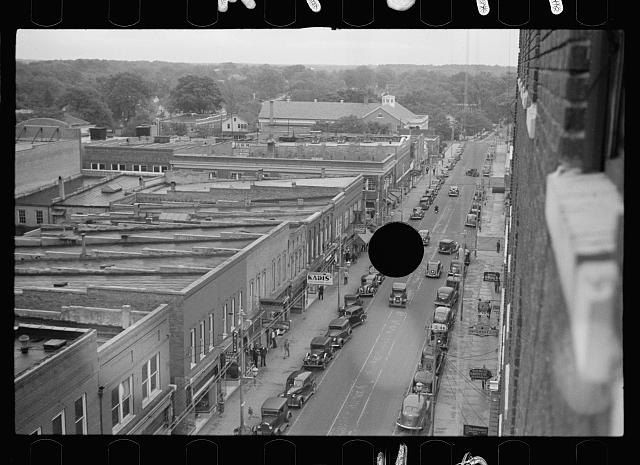
Goldsboro and Waynesborough were different places
Keep Goldsboro and Waynesborough separate on the map. Goldsboro incorporated in 1847 and became Wayne County’s seat in 1850, replacing Waynesborough. The Gazetteer places the city east of the Neuse River near its junction with the Little River.[1] For an early county family, preserve both town names, but do not treat Waynesborough as merely an old spelling of Goldsboro.
The county-seat change helps explain where official business was conducted. It does not prove that a household moved or that a surviving record is now stored at the original courthouse location. A family in a rural part of Wayne County could appear in county business associated with either seat without residing in the town itself.
A railway namesake is a clue, not a pedigree
The Gazetteer identifies Major Matthew Tilghman Goldsborough, an assistant engineer for the Wilmington and Weldon Railroad, as the city’s namesake.[1] The longer surname is worth preserving when searching early accounts. It should not be confused with a separate municipality simply because a catalog uses the older spelling.
Use a railroad reference to ask a specific question about a worker or business. Test the connection with a named person, occupation or dated transaction. Do not infer railway employment merely because a family lived in a town whose development was associated with the line.
Keep Adamsville in the place index
The city includes the former community of Adamsville, according to the same geographical entry.[1] If a family document uses Adamsville, retain that specific name rather than replacing it everywhere with Goldsboro. A narrower community reference may be the more useful clue when comparing residences or land descriptions.
The Gazetteer also dates the establishment of Seymour Johnson Air Force Base to 1942.[1] For a twentieth-century family with a demonstrated military connection, distinguish the base from the surrounding city in the timeline. The base’s existence does not establish that an individual served there or that a military personnel file is publicly accessible.
Start the civil-record portion of the search at the Wayne County hub, using the event year to decide which jurisdiction and series to investigate. The dates on this page describe places and institutions. They do not certify continuous deed, marriage, cemetery or newspaper coverage. Verify a repository’s actual holdings before relying on a proposed source.
Sources
All sources accessed November 9, 2026 EST. Histories and gazetteer entries are authored secondary sources, not original family records. Research suggestions in the body are proposed methods, not claims that a particular collection survives.
- North Carolina Gazetteer, Powell and Hill, “Goldsboro,” NCpedia. https://www.ncpedia.org/gazetteer?combine=Goldsboro
History & context
Goldsboro sits within the documentary landscape of Wayne County, formed in 1779 from the broader Dobbs jurisdiction.
As the seat of government, Goldsboro concentrated clerks, lawyers, newspapers, hotels, and churches—making it a high-yield search term even for rural families who only visited for court, market, or marriage.
Coastal plain communities frequently connect to river trade, ports, agriculture, and free Black/plantation documentary streams. Cross-check neighboring counties when families followed rivers and rail lines.
For statewide chronology that creates records, see the NC genealogist timeline and counties & formation guide.
Churches & faith communities
Church membership is often the best substitute for missing civil vitals. Search for congregations that used Goldsboro in their name or minutes, then widen to rural chapels within a few miles.
- Baptist and Methodist congregations are common statewide in the 19th–20th centuries.
- Track colonial Albemarle churches, coastal congregations, and historically African American churches—especially near ports and river towns.
- Membership lists, baptisms, marriages, and burials may use the community name even when the county clerk does not.
Guide: Church & meeting records.
Cemeteries & burials
Search cemeteries and churchyards under both the community name and the wider Wayne County label. Family plots and unmarked burials are common.
- Use Find a Grave and published surveys; verify transcriptions against stones or originals when possible.
- City cemeteries near seats often hold rural families who “came to town” for burial plots.
Guide: Cemeteries & burial research · Find a Grave search for Goldsboro
Newspapers
Newspapers are place-name gold: they index communities more loosely than deed books.
- County-seat papers often covered the whole county—search for rural neighborhoods and “items from Goldsboro.”
- Look for marriages, obituaries, land sales, church news, and “personal mention” columns naming visitors and migrants.
- Combine local weeklies with larger regional papers (Raleigh, Charlotte, Greensboro, Asheville, Wilmington, etc.).
Guides: Newspapers · DigitalNC · Chronicling America
Research strategy
- Place the event in the right year and jurisdiction (county formed 1779); earlier events may sit in Dobbs.
- Work census clusters around Goldsboro, then land/probate at the county seat (Goldsboro).
- Use churches, cemeteries, and newspapers that name the community when civil vitals are thin.
- Widen to neighboring counties when deeds, marriages, or burials cross the line.