Newton
- County formed 1842
- County seat Newton
- Parent district Lincoln
Photos & maps
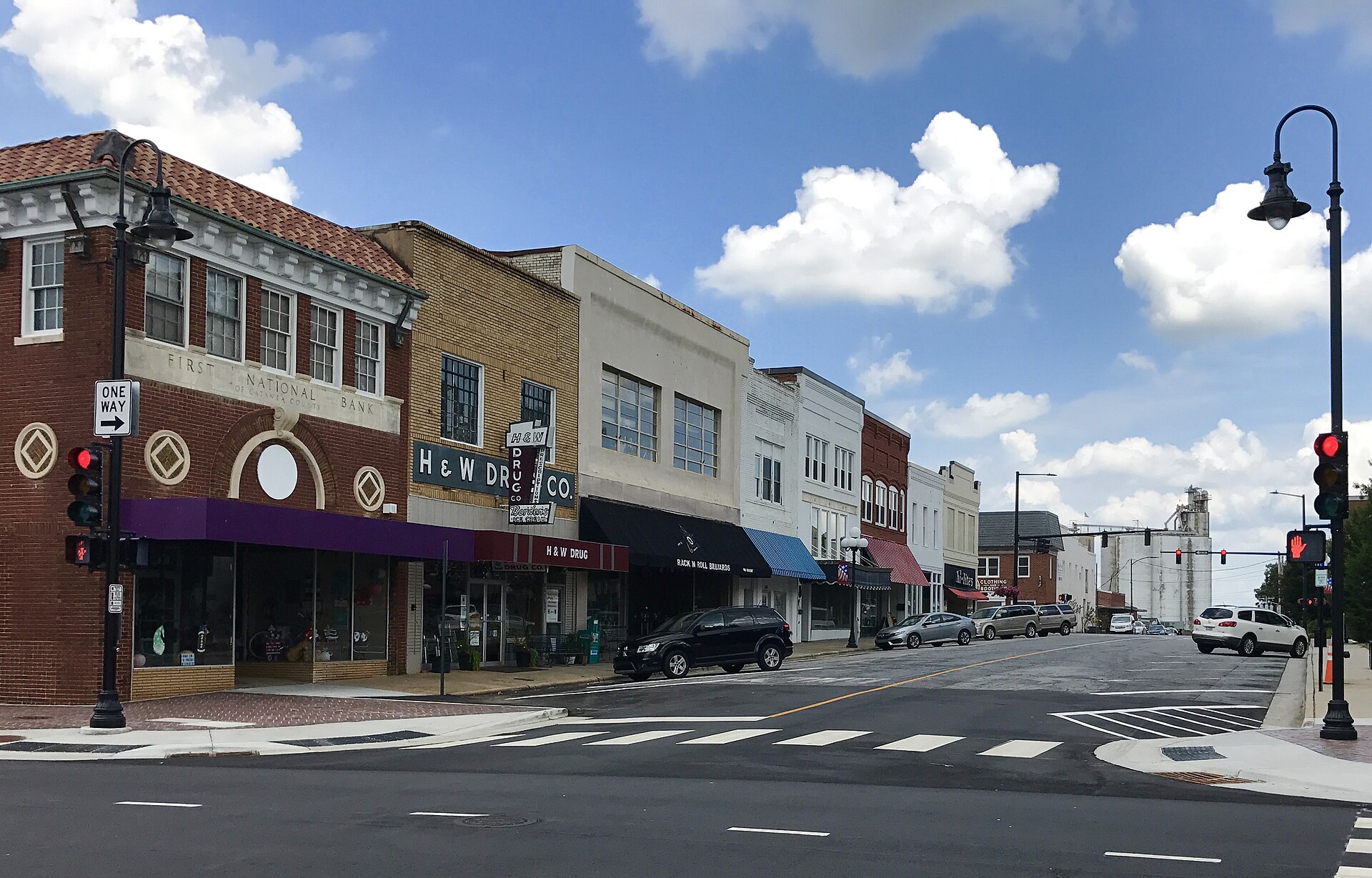
A planned county seat before incorporation
Newton can appear in a family paper after the 1845 town plan and before the 1855 charter.
Newton is the county seat in central Catawba County. The Gazetteer dates authorization to lay out the town to 1845 and incorporation to 1855.[1] An early family document can therefore refer to Newton before the municipal charter. The two dates describe different steps in the town’s development.
For a property question, the town-plan milestone is a lead to investigate, not a substitute for a lot description or purchaser record. Begin with an identified owner and dated transaction. Do not place a household in the original planned town simply because it appears in later Newton records.
The name includes a specific Wilson connection
The Gazetteer’s naming sentence can be read as assigning the legislative role to Isaac Newton Wilson.[1] NCpedia’s editors explicitly correct that ambiguity: the town was named for Isaac, while his father Nathaniel Wilson was the legislator who introduced the bill creating Catawba County.[2] Keep the father and son distinct rather than copying the older wording into a family history.
A local Wilson surname does not establish a relationship to the namesake. Keep the town’s naming history in the place notes and document a family connection separately. The name Newton should not be treated as evidence that a resident belonged to a Newton family either.
County business is not proof of town residence
As the seat, Newton can appear in official business concerning people elsewhere in Catawba County. Read the residence and property details inside the record rather than assigning the family to the place where the document was processed.
Use the Catawba County hub to frame a deed, estate or marriage search by person and event year. For an older event, establish the historical jurisdiction before choosing a collection. Neither the 1845 plan nor the 1855 charter is a universal first year for surviving county records.
The Gazetteer provides the seat, location, town-plan date, incorporation and naming attribution. It does not identify a complete town-lot archive, church register, cemetery survey or local newspaper run. A catalog or repository description must establish that a proposed collection actually exists and covers the years needed.
Sources
-
William S. Powell and Michael Hill, eds., The North Carolina Gazetteer (2010), “Newton,” NCpedia. https://www.ncpedia.org/gazetteer?combine=Newton . Accessed November 9, 2026 EST. Authored secondary reference. Research methods are suggestions, not a claim that a collection survives.
-
NCpedia, “Catawba County,” Library of North Carolina editors’ correction, accessed November 9, 2026 EST. https://www.ncpedia.org/geography/catawba . This correction identifies Nathaniel, not Isaac, as the legislator.
History & context
Newton sits within the documentary landscape of Catawba County, formed in 1842 from the broader Lincoln jurisdiction.
As the seat of government, Newton concentrated clerks, lawyers, newspapers, hotels, and churches—making it a high-yield search term even for rural families who only visited for court, market, or marriage.
Piedmont places often reflect Great Wagon Road settlement, mill/textile growth, and university or capital-city overlays depending on the community.
For statewide chronology that creates records, see the NC genealogist timeline and counties & formation guide.
Churches & faith communities
Church membership is often the best substitute for missing civil vitals. Search for congregations that used Newton in their name or minutes, then widen to rural chapels within a few miles.
- Baptist and Methodist congregations are common statewide in the 19th–20th centuries.
- Also check Quaker meetings, Presbyterian congregations, and Moravian records near Wachovia (Forsyth area).
- Membership lists, baptisms, marriages, and burials may use the community name even when the county clerk does not.
Guide: Church & meeting records.
Cemeteries & burials
Search cemeteries and churchyards under both the community name and the wider Catawba County label. Family plots and unmarked burials are common.
- Use Find a Grave and published surveys; verify transcriptions against stones or originals when possible.
- City cemeteries near seats often hold rural families who “came to town” for burial plots.
Guide: Cemeteries & burial research · Find a Grave search for Newton
Newspapers
Newspapers are place-name gold: they index communities more loosely than deed books.
- County-seat papers often covered the whole county—search for rural neighborhoods and “items from Newton.”
- Look for marriages, obituaries, land sales, church news, and “personal mention” columns naming visitors and migrants.
- Combine local weeklies with larger regional papers (Raleigh, Charlotte, Greensboro, Asheville, Wilmington, etc.).
Guides: Newspapers · DigitalNC · Chronicling America
Research strategy
- Place the event in the right year and jurisdiction (county formed 1842); earlier events may sit in Lincoln.
- Work census clusters around Newton, then land/probate at the county seat (Newton).
- Use churches, cemeteries, and newspapers that name the community when civil vitals are thin.
- Widen to neighboring counties when deeds, marriages, or burials cross the line.