Greensboro
- County formed 1771
- County seat Greensboro
- Parent district Rowan, Orange
Photos & maps
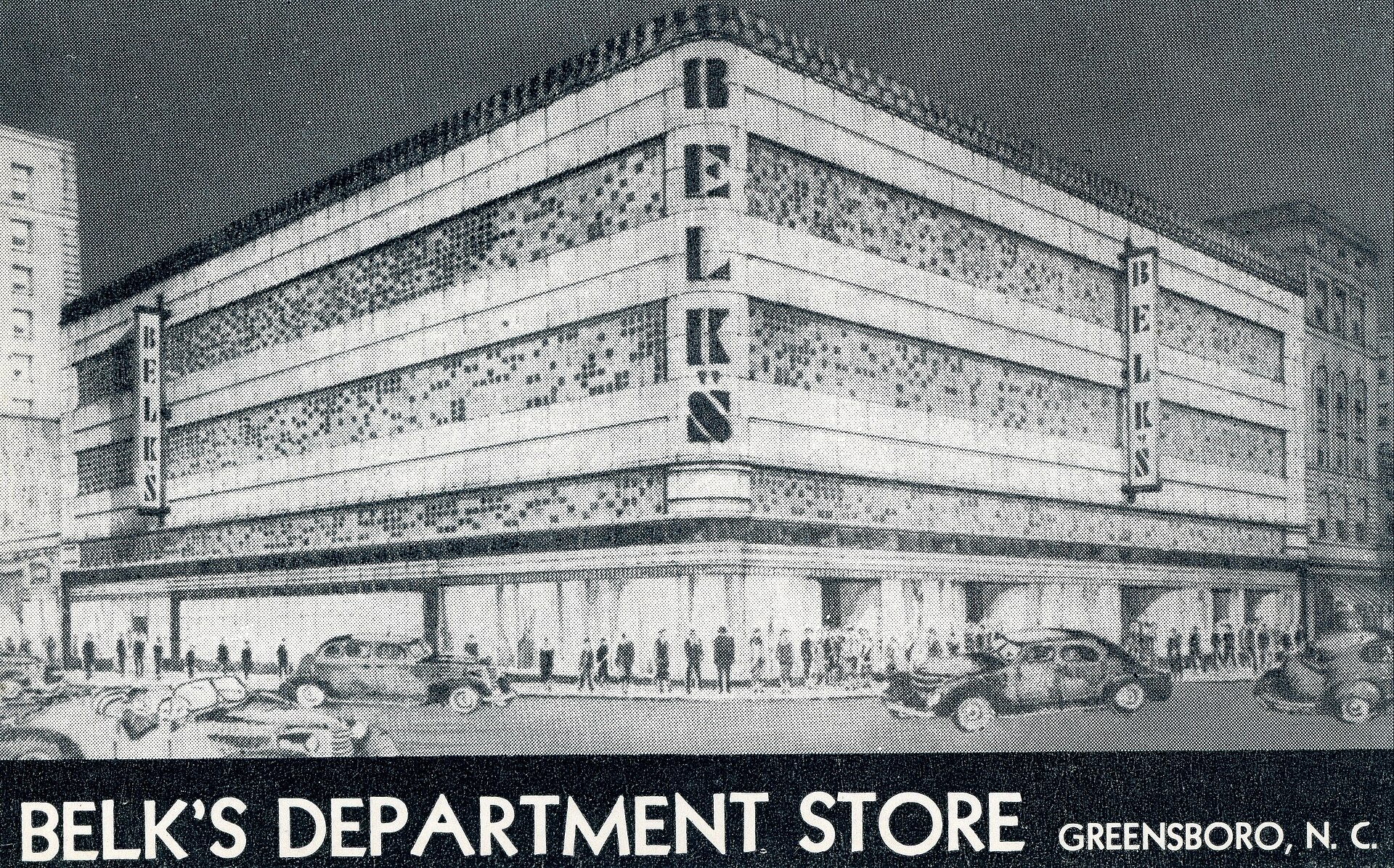
Greensboro was not the first county seat
Martinsville belongs in an early Guilford search, but it is not simply an older name for Greensboro. The county seat moved from Martinsville to Greensboro in 1808. The new town honored Nathanael Greene, and its name was originally written “Greensborough.”[1] The Gazetteer distinguishes its establishment in 1808 from incorporation in 1810.[2] Use those dates for different events rather than choosing one as the town’s only beginning.
Search the longer spelling when working with nineteenth-century catalogs, maps and newspaper text. Martinsville is another useful place term for the earlier courthouse location, but it is not a former name for the same town site. A county-seat move is not evidence that a family moved with it.
Let a school or employer narrow the question
Several Greensboro institutions have older names that matter in a family search. Guilford College began as a Quaker boarding school in 1837. Greensboro Female College was established in 1838, and Bennett College began as Bennett Seminary in 1873.[1] If a family account names one of those institutions, search its historical name as well as the present name. These dates establish institutional history, not the survival or public accessibility of student records.
For a mill family, look for a named employer. NCpedia identifies Henry Humphreys’s steam-powered cotton mill in 1828 and the Cone brothers’ Southern Finishing and Warehouse Company in 1895.[1] An occupation, street address or employer from a census return can help distinguish unrelated families with the same surname. Do not assign a mill employer merely because someone lived in Greensboro.
Follow the newspaper title through its changes
The Greensboro Daily Record began on November 17, 1890. The Daily Industrial News first appeared in 1905 and preceded the Greensboro Daily News. The Record and Daily News merged in March 1984 as the Greensboro News and Record.[3] A search for a 1910 event should therefore consider the period’s separate titles.
Before searching an obituary, establish which years a repository actually holds. The newspaper history does not certify a complete digital run. Note whether a result is an original issue image, an index or a later transcription. When two notices disagree, retain both citations and compare their event dates, named relatives and addresses rather than silently combining them.
Sources
All sources accessed November 9, 2026 EST. Histories and gazetteer entries are authored secondary sources, not original family records. Research suggestions in the body are proposed methods, not claims that a particular collection survives.
- Wiley J. Williams, “Greensboro,” NCpedia, revised September 2025. https://www.ncpedia.org/greensboro
- North Carolina Gazetteer, “Greensboro,” via NCpedia. https://www.ncpedia.org/gazetteer?combine=Greensboro
- William D. Snider, “Greensboro News and Record,” NCpedia, 2006. https://www.ncpedia.org/greensboro-news-and-record
History & context
Greensboro sits within the documentary landscape of Guilford County, formed in 1771 from the broader Rowan, Orange jurisdiction.
As the seat of government, Greensboro concentrated clerks, lawyers, newspapers, hotels, and churches—making it a high-yield search term even for rural families who only visited for court, market, or marriage.
Piedmont places often reflect Great Wagon Road settlement, mill/textile growth, and university or capital-city overlays depending on the community.
For statewide chronology that creates records, see the NC genealogist timeline and counties & formation guide.
Churches & faith communities
Church membership is often the best substitute for missing civil vitals. Search for congregations that used Greensboro in their name or minutes, then widen to rural chapels within a few miles.
- Baptist and Methodist congregations are common statewide in the 19th–20th centuries.
- Also check Quaker meetings, Presbyterian congregations, and Moravian records near Wachovia (Forsyth area).
- Membership lists, baptisms, marriages, and burials may use the community name even when the county clerk does not.
Guide: Church & meeting records.
Cemeteries & burials
Search cemeteries and churchyards under both the community name and the wider Guilford County label. Family plots and unmarked burials are common.
- Use Find a Grave and published surveys; verify transcriptions against stones or originals when possible.
- City cemeteries near seats often hold rural families who “came to town” for burial plots.
Guide: Cemeteries & burial research · Find a Grave search for Greensboro
Newspapers
Newspapers are place-name gold: they index communities more loosely than deed books.
- County-seat papers often covered the whole county—search for rural neighborhoods and “items from Greensboro.”
- Look for marriages, obituaries, land sales, church news, and “personal mention” columns naming visitors and migrants.
- Combine local weeklies with larger regional papers (Raleigh, Charlotte, Greensboro, Asheville, Wilmington, etc.).
Guides: Newspapers · DigitalNC · Chronicling America
Research strategy
- Place the event in the right year and jurisdiction (county formed 1771); earlier events may sit in Rowan, Orange.
- Work census clusters around Greensboro, then land/probate at the county seat (Greensboro).
- Use churches, cemeteries, and newspapers that name the community when civil vitals are thin.
- Widen to neighboring counties when deeds, marriages, or burials cross the line.