Anson County Genealogy
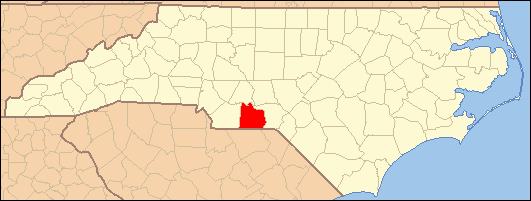
- Formed 1750
- Parent county / earlier Bladen
- County seat Wadesboro
- Neighbors Union, Stanly, Richmond, Montgomery
Photos & maps

What’s new
- Pee Dee border parent whose early records still feed multiple modern counties.
- Formation 1750 from Bladen — for pre-formation events, use the parent jurisdiction’s paper (not later Anson-only catalogs).
- Seat: Wadesboro · Neighbors: Union, Stanly, Richmond, Montgomery.
- Tools: checklist · this week in Anson history.
Do not place every early Anson entry near modern Wadesboro; the land may lie far beyond today’s county. NCpedia dates its formation from Bladen to 1750 and describes a territory that theoretically extended westward to the Mississippi River. Portions later became Mecklenburg, Montgomery, Richmond and Union counties. An “Anson” entry therefore needs to be placed on a historical map before it is interpreted as a residence near modern Wadesboro. [1]
Wadesboro is the county seat. It was established in 1783 as New Town and renamed in 1787 for Revolutionary War soldier and legislator Thomas Wade. Both place-names may matter when following an early town reference. Preserve the name used by the source rather than replacing it silently with the later one. [1]
Find the land before announcing a migration
For an early deed, copy the entire location description: watercourses, roads, adjoining owners and references to earlier transactions. Add the date of execution and the date of recording. A later document in a different county may concern the same tract rather than a move by the family.
Use the sequence of county changes to decide where to look next, but verify which jurisdiction covered the particular place. A modern county name in a family history can describe a location retrospectively. Keep that later description separate from the county named in the contemporary document.
The State Archives’ County Records Guide includes Anson, Bladen and the later counties named above. It separates original records from microfilm and groups material by series. Land, estates, courts, marriage, tax and wills are among the categories. Its descriptions help define a search; they do not guarantee that every series survives continuously or is available online. [2]
A Pee Dee family needs a river-level location
NCpedia identifies the Pee Dee River as central to the county’s early settlement and describes Catawba and Cheraw communities whose settlements served as trading places. It also notes later British and Scots-Irish immigration. This is regional history, not evidence of a particular family’s ancestry. Do not assign an ethnic or tribal identity from residence alone. [1]
For an individual, work from documents that identify relationships and locations. A family story about “Indian ancestry” should remain a research question until evidence supports it. Record who supplied the story, when it was recorded and which ancestor it concerns. A place association can guide a search without answering the identity question.
Anson borders South Carolina. When a record names a relative or event across the line, investigate the actual South Carolina jurisdiction for that period. Proximity is a reason to consider a lead, not permission to merge two same-name people without matching ages, spouses or other evidence. [1]
Separate Wadesboro from the smaller communities
Ansonville, Cedar Hill, Lilesville, McFarlan, Morven, Peachland, Polkton, Pee Dee and White Store are among the communities identified by NCpedia. Retain a small community name in the family timeline even when the courthouse reference is Wadesboro. Recording a deed at the county seat does not establish residence there. [1]
The county history associates Leonidas L. Polk with the founding of Polkton in 1875 and dates the Brown Creek soil conservation district to 1937. These are useful chronological anchors if a family account mentions the town or district. They do not establish an ancestor’s employment, participation or relationship to a prominent local person. [1]
Let an estate supply relationships in its own words
If the aim is to identify children, do more than collect surname matches in a will index. Compare the estate’s documents with land transactions and any available guardianship evidence. An administrator, witness or purchaser is not automatically a child of the deceased. Copy the role first and test the relationship with another source.
When a record seems missing, write down exactly what was searched. An unsuccessful online index is not evidence of a courthouse fire or a lost collection. Ask about the relevant series and years before deciding the evidence cannot survive. A compiled abstract may identify a document worth requesting even when no image appears in the search portal.
Plan around the 1868 courthouse fire
Anson’s court records have a known gap. The State Library’s county formation table notes that a courthouse fire in 1868 destroyed many court records. If a court search for the years before the fire comes up empty, log it as a possible loss and keep the question open. An empty result is not proof that no case was ever heard. [3]
Land records follow different dates. The Register of Deeds’ remote access site states that every deed book is online back to deed book 1, together with scanned land index books from 1749 to July 31, 1989. Use the index to find the instrument, then read the deed itself for neighbors, watercourses and earlier transactions. [5]
The Register of Deeds also states that its birth and death records start in October 1913 and its marriage records go back to 1870. Those records cover people born or deceased in Anson, or couples whose license was issued there. For an earlier marriage, or a death in another county, choose another record class. [4]
End the session with a boundary-aware timeline
Keep each event’s date, place as written, historical county, source citation and confidence in the identification. Separate proposed connections from established ones. Decide whether the next step follows a tract into a successor county, returns to Bladen for an earlier event, or tests a second same-name household as a different family.
Sources
Accessed November 9, 2026 EST. Historical facts below come from fetched sources; research steps are recommendations, not claims that a particular ancestor appears in a collection.
- NCpedia, “Anson County,” Encyclopedia of North Carolina. Authored historical summary supporting county formation, named places and the local history cited above. https://www.ncpedia.org/geography/anson
- State Archives of North Carolina, “County Records Guide.” Repository guide distinguishing original records from microfilm and organizing holdings by series; holdings change. https://archives.ncdcr.gov/researchers/collections/government-records/county-records-guide
- State Library of North Carolina, “NC County Formation,” county table with record-history notes. Accessed November 23, 2026. https://library.nc.gov/genealogy-and-family-history/family-records/nc-county-formation
- Anson County, Register of Deeds. Birth, death and marriage record start dates and coverage. Accessed November 23, 2026. https://www.co.anson.nc.us/314/Register-of-Deeds
- Anson County Register of Deeds, remote access site. Deed book and land index coverage. Accessed November 23, 2026. https://www.ansonncrod.org/
In-depth topics
Towns & communities
History notes
Anson County (formed 1750 from Bladen; seat Wadesboro) is a research problem defined by Pee Dee border parent whose early records still feed multiple modern counties. Modern labels help late sources and mislead when the event year sat in a parent courthouse.
Jurisdiction first. Write person + event + year + place as written in a source, then open the jurisdiction that owned that year. Before 1750, expect parent paper—not an Anson-only catalog search.
Place density differs. Wadesboro and market towns generate directories, newspapers, and church clusters that rural neighborhoods do not. Treat Wadesboro, Polkton, Morven, Lilesville, Peachland as separate paper systems sharing a courthouse label.
FAN clubs spill. Neighbor research regularly includes Union, Stanly, Richmond, Montgomery. Abstract adjoining owners, witnesses, bondsmen, and three neighboring census households before you declare a negative search.
Special Anson trap: Bladen parent; SC border FAN clubs; colonial parent for many Piedmont families. Keep a one-page formation log (event year → jurisdiction tried → repository → result → next action).
Session order: (1) fix jurisdiction; (2) rebuild every federal census decade; (3) land + probate with full witness abstracting; (4) church/cemetery/newspaper; (5) military and institutional series; (6) paid databases last. Methods: Start here · Master guide · Counties & formation.
A colonial county with a disputed birth
Anson was formed from Bladen and is usually dated 1750, though Corbitt's Formation of the North Carolina Counties notes that writers have given 1748 and 1749, most agreeing on 1749. The confusion has a reason. On September 29, 1748, Governor Gabriel Johnston proclaimed the "said Peedee" and adjoining land in Bladen a county named Anson, but the Lower House denied that the governor and council had that power. Anson was among the counties, with Edgecombe, Bertie and Onslow, whose formation the crown disallowed during that dispute. The seat was called Anson Court House from 1755 to 1780. New Town was authorized in 1783 and renamed Wadesboro in 1787, for Col. Thomas Wade (NCpedia).
The mother of the southern Piedmont
NCpedia describes Anson as for a time one of the largest territories in the colony, with borders that in theory stretched to the Mississippi. Mecklenburg, Montgomery, Richmond and Union were later carved wholly or partly from it, so an "Anson" ancestor of the 1750s and 1760s may have lived far west of today's county. The State Archives entry for Anson gives no courthouse fire or loss note.
Wadesboro offices
- Anson County Register of Deeds in Wadesboro. Its remote access site offers scanned land record index books covering 1749 to July 31, 1989, so even the earliest recorded deeds can be searched from home.
- Clerk of Superior Court in Wadesboro for estates and court files kept locally.
- Hampton B. Allen Library, 120 South Greene Street, Wadesboro; Caroline Hightower is library manager.
- State Archives of North Carolina for Anson County records transferred from the courthouse.
Pee Dee people and newcomers
NCpedia notes a considerable Catawba and Cheraw population whose settlements along the Pee Dee River served as trading outposts for British and Scots-Irish immigrants. Leonidas L. Polk, the state's first commissioner of agriculture, was born in the county and founded Polkton in 1875, and Brown Creek, established in 1937, was the nation's first soil conservation district. Other communities NCpedia lists include Ansonville, Lilesville, Morven, McFarlan and Peachland.
Anson research tips
- For 1750s and 1760s entries, map the land before assuming a family lived near Wadesboro. Tracts that fell into Mecklenburg (formed 1762), Richmond (1779) or Montgomery (1779) continue in those counties' records after the split.
- Because the county borders South Carolina, early families on the Pee Dee may also appear in South Carolina records.
- The State Archives' Cohabitation Records list no surviving Anson volume. NARA M1909 refers Wadesboro to the Rockingham office, and lists agent William MacFarland covering Wadesboro from March to December 1868.
Record availability matrix
| Record type | Coverage | Years (approx.) | Notes |
|---|---|---|---|
| Federal census | good | 1790–1950 | Federal schedules after formation with boundary awareness for a shrinking parent county. Losses in other series make census + tax + neighbors essential. |
| Birth records | sparse | 1913– | Sparse early civil; church and Bible records critical. |
| Marriage records | partial | 1750– | Early civil thin; bonds, church, and newspaper substitutes first. |
| Death records | partial | 1913– | Sparse early civil; obituaries, church burial, probate, and cemeteries. |
| Land & deeds | partial | 1750– | 1868 fire—do not assume continuous early deeds. Test SC border counties, daughter counties after splits, and State Archives grants/plats. Metes often cross the state line in FAN work. |
| Probate & estates | partial | 1750– | When thin, use equity, newspaper legal notices, neighboring estates (including SC), and later administrations. Abstract every name on surviving pages. |
| Church & parish | partial | varies | Church coverage varies by denomination and survival. Baptisms, membership, and burial registers often beat early civil vitals; check local societies and denominational archives. |
| Newspapers | varies | varies | Wadesboro and local weeklies; verify DigitalNC Anson titles. Charlotte and SC border papers sometimes carry notices when local runs gap. |
| Military | good | 1775– | Revolutionary through 20th-century service may generate pensions, CMSRs, militia notes, and wartime claims. Pair unit research with Anson place context and neighboring counties when companies recruited across lines. |
| Cemeteries | partial | varies | Published surveys, Find a Grave, churchyards, and family plots. Unmarked burials are common—use obituaries, church books, and land descriptions. In thin/burned courthouse decades, cemeteries and funeral notices become higher priority. |
| Court records | sparse | 1750– | Common pleas, sessions, and other court series often begin near formation (1750); equity may sit with or near probate. Pre-1750 under Bladen. Known disruption: 1868 fire. |
| Tax lists | partial | varies | Tax lists can substitute for missing census years and thin deed decades. Coverage is uneven by locality and year—check State Archives of North Carolina and published abstracts. Especially valuable where courthouse series burned or moved. |
Newspapers
Structured transcriptions
-
Anson County Deed Abstracts (USGenWeb Archives)
Grantor Grantee Year Book:page Chambers, Nathaniel Cox, William 1758 — (locate on film) Downs, Henry Downs, Richard 1753 — (locate on film) Elliot, Peter Davis, James 1753 — (locate on film) Dobbs (Dabbs), George Mathews, James 1756 B:319 Crawford, John & Crawford, Anne Thomas, Philemon 1768 H:266-267 Bailey, John; Shepherd, Isaac; Stanfield, James Strickland, Lot (of Richmond) 1794 — (locate on film)
Cemeteries & burial research
- Eastview Cemetery
- Anson County cemeteries (Find a Grave / surveys)
Societies & repositories
Vital records
North Carolina statewide vital registration expanded in the early 20th century. For many Anson County families you will rely on marriage bonds, church registers, Bible records, newspapers, delayed births, and probate—not only a modern certificate.
Research starting points
Courthouse & contacts
The county seat is Wadesboro. Confirm current Register of Deeds, Clerk of Superior Court, and library hours before visiting—offices move and digital portals change.Public library: Anson County Library
Record series note: 1868 fire in a Pee Dee / SC-border parent county. Classic thin-series research: SC border FAN clubs, daughters, Archives, newspapers.
If not found here, try…
- Formed 1750
- Parent / earlier jurisdiction Bladen — check district-era records before this county existed (districts guide).
Neighboring counties (deeds, marriages, newspapers, and kin often cross the line):
Sources & further reading
- NCpedia — Anson County
- David Leroy Corbitt, The Formation of the North Carolina Counties, 1663–1943
- William S. Powell, The North Carolina Gazetteer
- State Archives of North Carolina
- DigitalNC — Anson County
- Chronicling America (Library of Congress)
- FamilySearch Wiki · NCGenWeb