Avery County Genealogy
- Formed 1911
- Parent county / earlier Mitchell, Caldwell, Watauga, Burke
- County seat Newland
- Neighbors Mitchell, Caldwell, Watauga, Burke, McDowell
Photos & maps
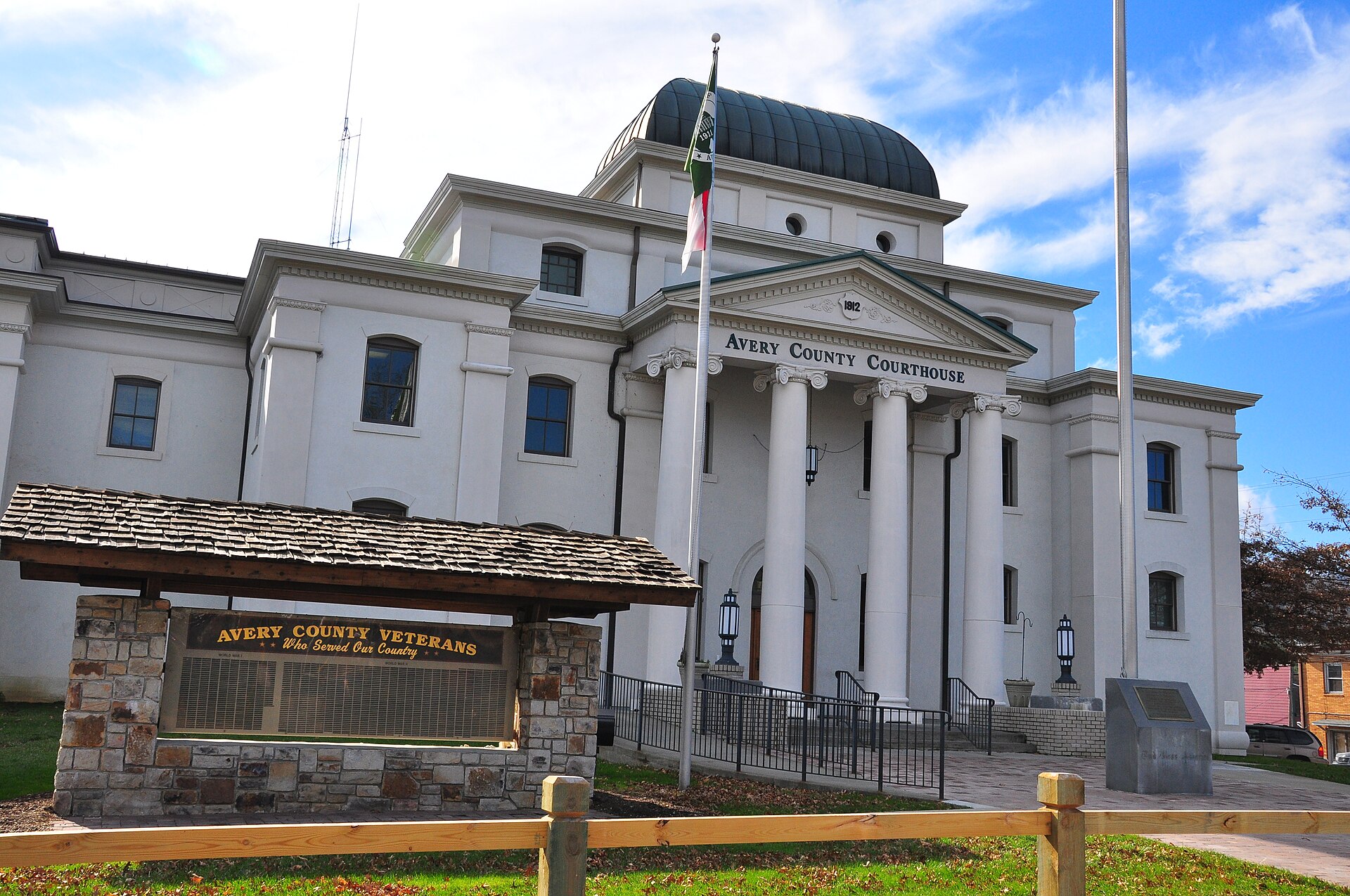
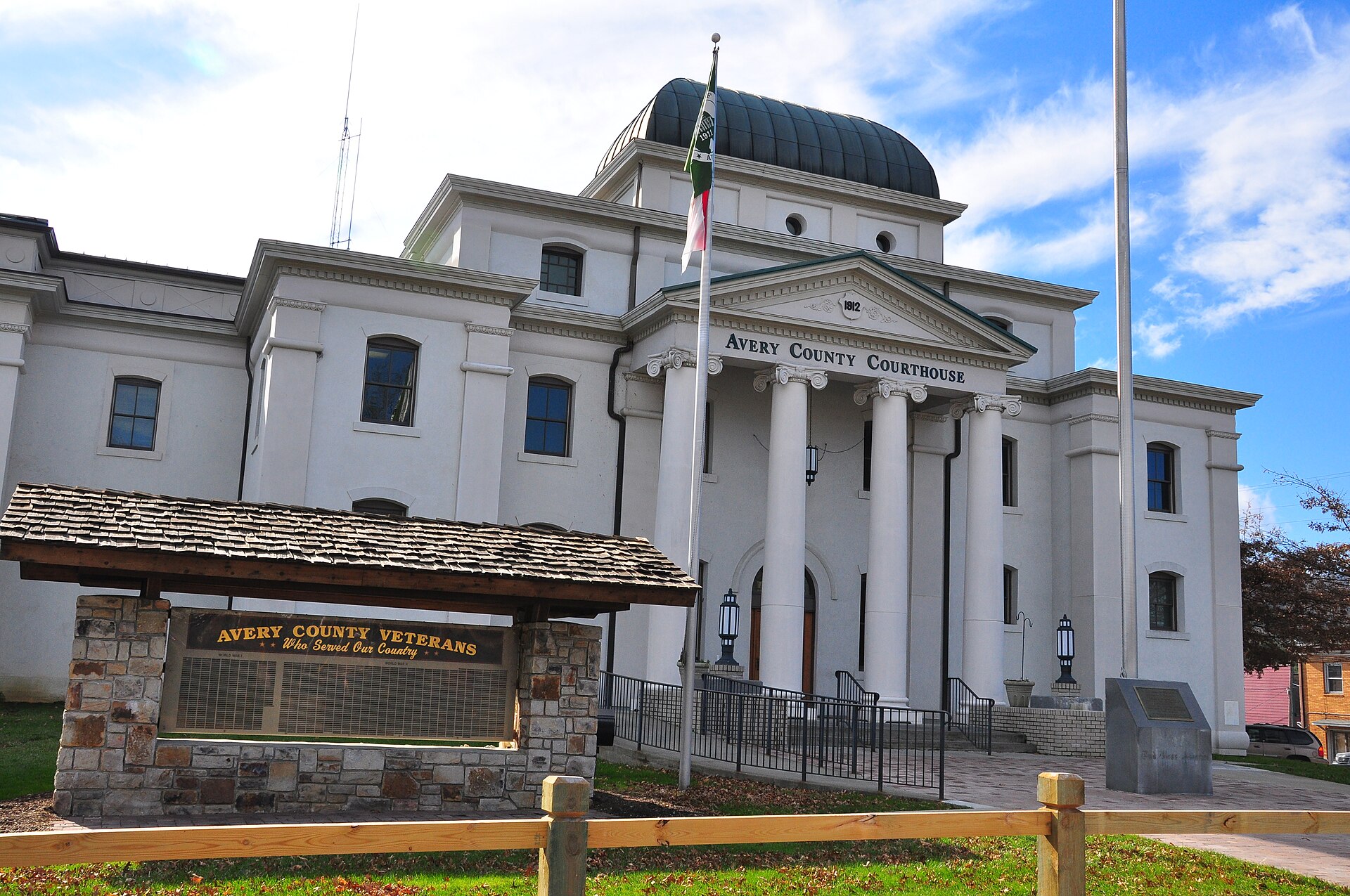
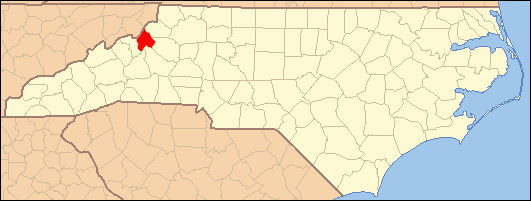
What’s new
- Late 1911 formation—always check Mitchell/Caldwell/Watauga/Burke parents.
- Formation 1911 from Mitchell, Caldwell, Watauga, Burke — for pre-formation events, use the parent jurisdiction’s paper (not later Anson-only catalogs).
- Seat: Newland · Neighbors: Mitchell, Caldwell, Watauga, Burke, Mcdowell.
- Methods: Start here · Formation · Master guide.
Before 1911, there was no Avery County heading to search. That year, Avery became North Carolina’s one-hundredth and final county, taking territory from Mitchell, Caldwell and Watauga counties. A family remembered as being “from Avery” may have lived on the same mountain farm for generations before that name appeared on a courthouse record. The first task is to recover the older location, not to assume the family arrived in 1911. [1]
Newland is the county seat. It was incorporated in 1913 and named for William Calhoun Newland, North Carolina’s lieutenant governor from 1909 to 1913. Other communities identified in NCpedia include Banner Elk, Crossnore, Elk Park and Linville. Preserve those smaller place-names in a family timeline. They may help you decide which of the three parent counties deserves the first search. [1]
Follow a farm through the county change
For an event before 1911, use the person’s actual residence or land description to choose among Mitchell, Caldwell and Watauga. A modern mailing address is a starting point, not a historical boundary map. Search the parent county relevant to the tract and retain the evidence that placed it there. If you cannot yet locate the farm, compare the earliest known deed with a later one that clearly belongs to the family.
Keep the land notes simple:
- Copy the grantor, grantee, transaction date, recording date and book and page.
- Transcribe the creek, ridge, road and adjoining owners without modernizing their names.
- Note any reference to an earlier deed or prior owner.
- Compare the description with the first Avery transaction you can identify securely.
This does not require a family to own land continuously. A sale, lease reference or estate division may be the connecting document. If the chain breaks, state where it breaks. Do not bridge it with a same-surname owner whose connection has not been established.
Keep mountain places distinct
The county’s High Country setting includes Grandfather Mountain, Beech Mountain and the Linville area. NCpedia describes tourism as a major part of Avery’s economy and also notes lumber, livestock, Christmas trees and mineral production. These are useful historical themes, but an occupation still needs evidence about the individual. A family photograph of a tree farm does not establish who owned the land or when the photograph was taken. [1]
When an ancestor’s occupation is known, add it to the search rather than substituting it for a name. A farmer, miner, teacher or hotel worker may be easier to distinguish from a same-name person if you compare household members, employer references and exact community. Date every clue. The landscape can remain familiar while employers, roads and county labels change.
Lees-McRae College was established in Banner Elk in 1900, before Avery County existed. That offers a useful example of why an institution’s location and a county’s creation date must be kept separate. If a family document names the college, search under the institution and period as well as the later county name. The college’s existence alone does not establish that it has a surviving record of your ancestor. [1]
Choose the record series, then the repository
The State Archives’ County Records Guide lists Avery and its three parent counties. It distinguishes original records from microfilm and arranges them by series, including land, estates, courts, marriage, tax and wills. Holdings change as records are transferred and film is added. Consult the appropriate county entry for the event, rather than copying an assumed start date into your notes. [2]
For a death or inheritance question, put estate papers beside land records. Record the language used for a relationship and distinguish it from the role a person played in administering the estate. A guardian, witness or buyer may supply a valuable lead without being a parent or child. For a marriage question, seek the underlying record behind a compiled entry and preserve both citations.
Plan a focused request
A useful inquiry names the person, approximate year, community, record type and any existing reference. “An estate involving this named person around this date” is easier to investigate than a request for everything about an Avery surname. Ask about access, copies and restrictions before traveling. No county-wide list can establish that every relevant volume survives or is available online.
At the end of a session, write one paragraph explaining what changed in your understanding. Perhaps the household belongs in Mitchell before 1911, or the deed refers to a different creek than expected. Keep that conclusion separate from the evidence supporting it. A better-defined next search can matter more than another name on the tree.
Sources
Accessed November 9, 2026 EST. Research routes are recommendations, not claims that an individual appears in a collection.
- NCpedia, “Avery County,” Encyclopedia of North Carolina. Authored history supporting formation, parent counties, Newland, communities, institutions and economic context. https://www.ncpedia.org/geography/avery
- State Archives of North Carolina, “County Records Guide.” Repository description and county entries; holdings and access can change. https://archives.ncdcr.gov/researchers/collections/government-records/county-records-guide
In-depth topics
Towns & communities
History notes
Avery County (formed 1911 from Mitchell, Caldwell, Watauga, Burke; seat Newland) is a distinctive research problem: Late 1911 formation—always check Mitchell/Caldwell/Watauga/Burke parents. Genealogists who treat every NC county the same will miss how linville/banner elk tourism-era thin trails shapes the paper trail here—and how mountain gap roads and seasonal workers changes which record class to open first.
Pin the decade before the courthouse. Record the jurisdiction as cited in the original deed, estate, or church book—then map it to modern hubs. Neighbor FAN clubs frequently spill into Mitchell, Caldwell, Watauga, Burke, Mcdowell.
This county rewards a fixed order: census clusters with neighbors → land and probate in the correct years → church and cemetery substitutes for pre-vital generations → newspapers and directories around Newland for 19th–20th century moves. Use the record matrix on this hub as a planning tool, not a catalog.
Western land-cession and multi-state border context requires careful primary sources—see the Indigenous research guide when relevant, and log Tennessee/Georgia neighbors when surnames cluster west or south.
Session order: write person + year + place as written → formation/parent check → census FAN club → land/probate → church/cemetery → newspapers/directories when town-era → neighbors listed above. Free path: Start here · formation guide · Master NC research guide. Statewide substitutes: State Archives of North Carolina · DigitalNC · NCGenWeb — Avery.
Record availability matrix
| Record type | Coverage | Years (approx.) | Notes |
|---|---|---|---|
| Federal census | good | 1911–1950 | Federal schedules for NC; place each household in the correct county for that decade. Before 1911, people will not be labeled Avery—use Mitchell, Caldwell, Watauga, Burke. Parent-jurisdiction notes apply only to pre-formation events—not to post-formation federal census rows. Township and city-ward labels change; re-pin every decade. |
| Birth records | sparse | 1913– | Statewide NC birth registration is late (roughly 1913–1915 for civil strength). Use delayed births, church registers, Bibles, and census for earlier Avery generations—not parent-county “civil vitals.” |
| Marriage records | partial | 1911– | County marriage records improve in the 19th–20th centuries after formation (1911); earlier events often appear in church books, bonds, newspapers, or Mitchell, Caldwell, Watauga, Burke. Confirm event-year jurisdiction vs modern address. |
| Death records | partial | 1913– | Death certificates denser after statewide registration (~1913–1915+). Earlier Avery deaths via obituaries, church burial, probate, and cemeteries. |
| Land & deeds | good | 1911– | Record-loss / thin-series note: Formed 1911 (last NC county) from Mitchell/Caldwell/Watauga/Burke. Almost all earlier research is multi-parent mountain work. Avery deed/Register of Deeds series typically begin near formation (1911); pre-1911 land lives under Mitchell, Caldwell, Watauga, Burke. Colonial grants/plats may predate the county at State Archives of North Carolina. Always verify book/page gaps; abstract witnesses and neighbors. |
| Probate & estates | good | 1911– | Record-loss / thin-series note: Formed 1911 (last NC county) from Mitchell/Caldwell/Watauga/Burke. Almost all earlier research is multi-parent mountain work. Wills, administrations, inventories, and equity are core after 1911; pre-formation estates under Mitchell, Caldwell, Watauga, Burke. Abstract bondsmen, sales, and widows’ petitions for FAN clubs. Pair thin years with newspaper legal notices and Archives microfilm. |
| Church & parish | partial | varies | Church coverage varies by denomination and survival. Baptisms, membership, and burial registers often beat early civil vitals; check local societies and denominational archives. |
| Newspapers | varies | varies | Newland and local weeklies, plus larger regional papers for legal notices and obituaries. Verify actual title runs on DigitalNC and Chronicling America before citing continuous coverage. |
| Military | good | 1775– | Revolutionary through 20th-century service may generate pensions, CMSRs, militia notes, and wartime claims. Pair unit research with Avery place context and neighboring counties when companies recruited across lines. |
| Cemeteries | partial | varies | Published surveys, Find a Grave, churchyards, and family plots. Unmarked burials are common—use obituaries, church books, and land descriptions. |
| Court records | partial | 1911– | Record-loss / thin-series note: Formed 1911 (last NC county) from Mitchell/Caldwell/Watauga/Burke. Almost all earlier research is multi-parent mountain work. Common pleas, sessions, and other court series often begin near formation (1911); equity may sit with or near probate. Pre-1911 under Mitchell, Caldwell, Watauga, Burke. |
| Tax lists | sparse | varies | Tax lists can substitute for missing census years and thin deed decades. Coverage is uneven by locality and year—check State Archives of North Carolina and published abstracts. |
Cemeteries & burial research
- Newland / county-seat cemeteries
- Avery County cemeteries (Find a Grave / surveys)
Societies & repositories
Vital records
North Carolina statewide vital registration expanded in the early 20th century. For many Avery County families you will rely on marriage bonds, church registers, Bible records, newspapers, delayed births, and probate—not only a modern certificate.
Research starting points
Courthouse & contacts
The county seat is Newland. Confirm current Register of Deeds, Clerk of Superior Court, and library hours before visiting—offices move and digital portals change.
Public library: Avery County Library
Record-loss / series note: Formed 1911 (last NC county) from Mitchell/Caldwell/Watauga/Burke. Almost all earlier research is multi-parent mountain work.
If not found here, try…
- Formed 1911
- Parent / earlier jurisdiction Mitchell, Caldwell, Watauga, Burke — check district-era records before this county existed (districts guide).
Neighboring counties (deeds, marriages, newspapers, and kin often cross the line):
Local history & events
- Moody reflects on helping, hands, hooves and heritage - The Avery Journal-Times
- No fair-weather tradition: Moody reflects on helping, hands, hooves and heritage - The Avery Journal-Times
- Football Recap: Mountain Heritage Beats Avery County for Their Fifth Straight Victory + How To Watch - MaxPreps
- Avery County Varsity Football @ Mountain Heritage - MaxPreps
- Avery County native McKinney turns to music to preserve Appalachian heritage - Watauga Democrat
- Heritage Park: County's agricultural hub, emergency lifeline - The Avery Journal-Times
Sources & further reading
- NCpedia — Avery County
- David Leroy Corbitt, The Formation of the North Carolina Counties, 1663–1943
- William S. Powell, The North Carolina Gazetteer
- State Archives of North Carolina
- DigitalNC — Avery County
- Chronicling America (Library of Congress)
- FamilySearch Wiki · NCGenWeb