Forsyth County Genealogy
- Formed 1849
- Parent county / earlier Stokes
- County seat Winston-Salem
- Neighbors Stokes, Rockingham, Guilford, Davidson, Davie, Yadkin, Surry
Photos & maps
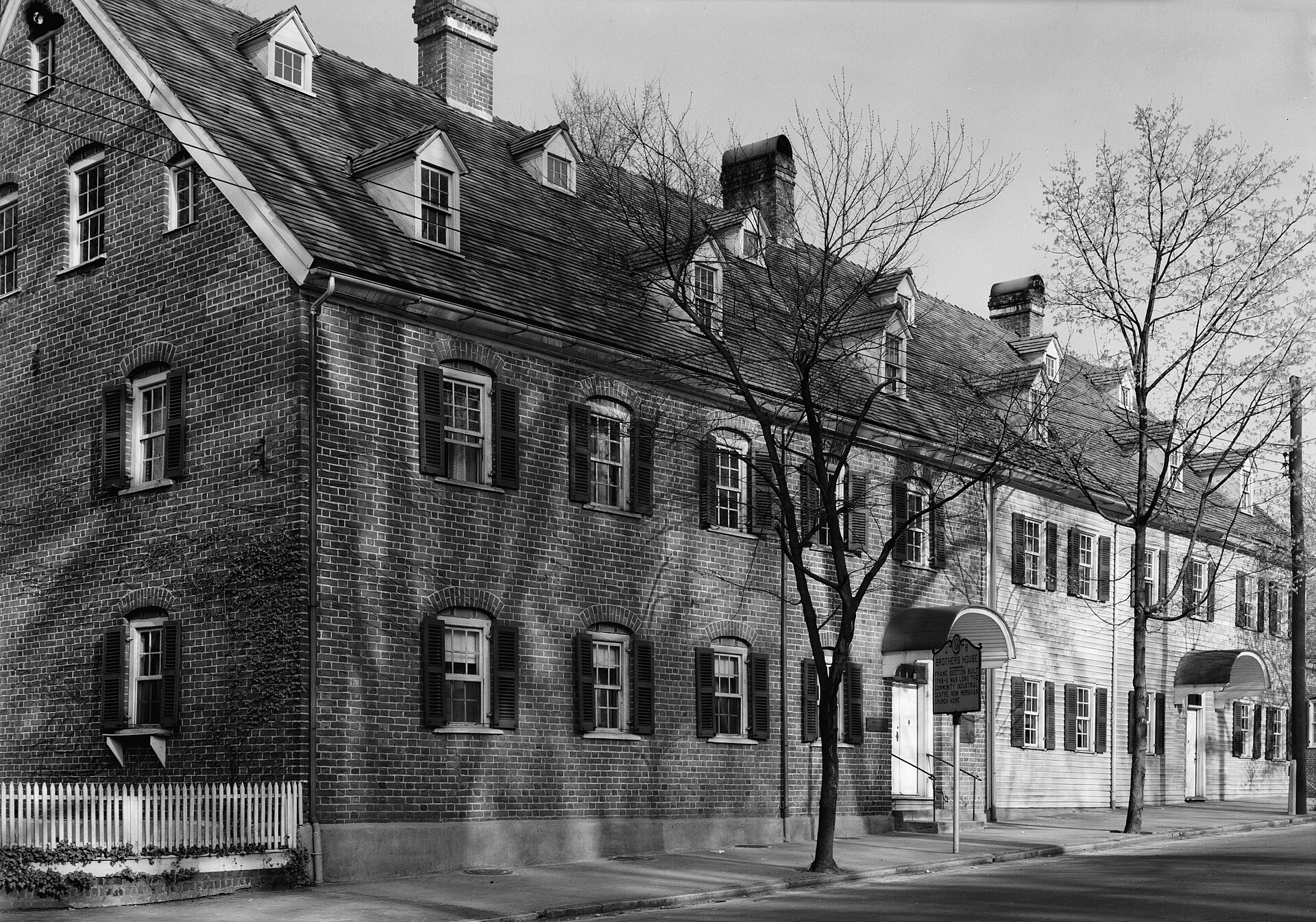
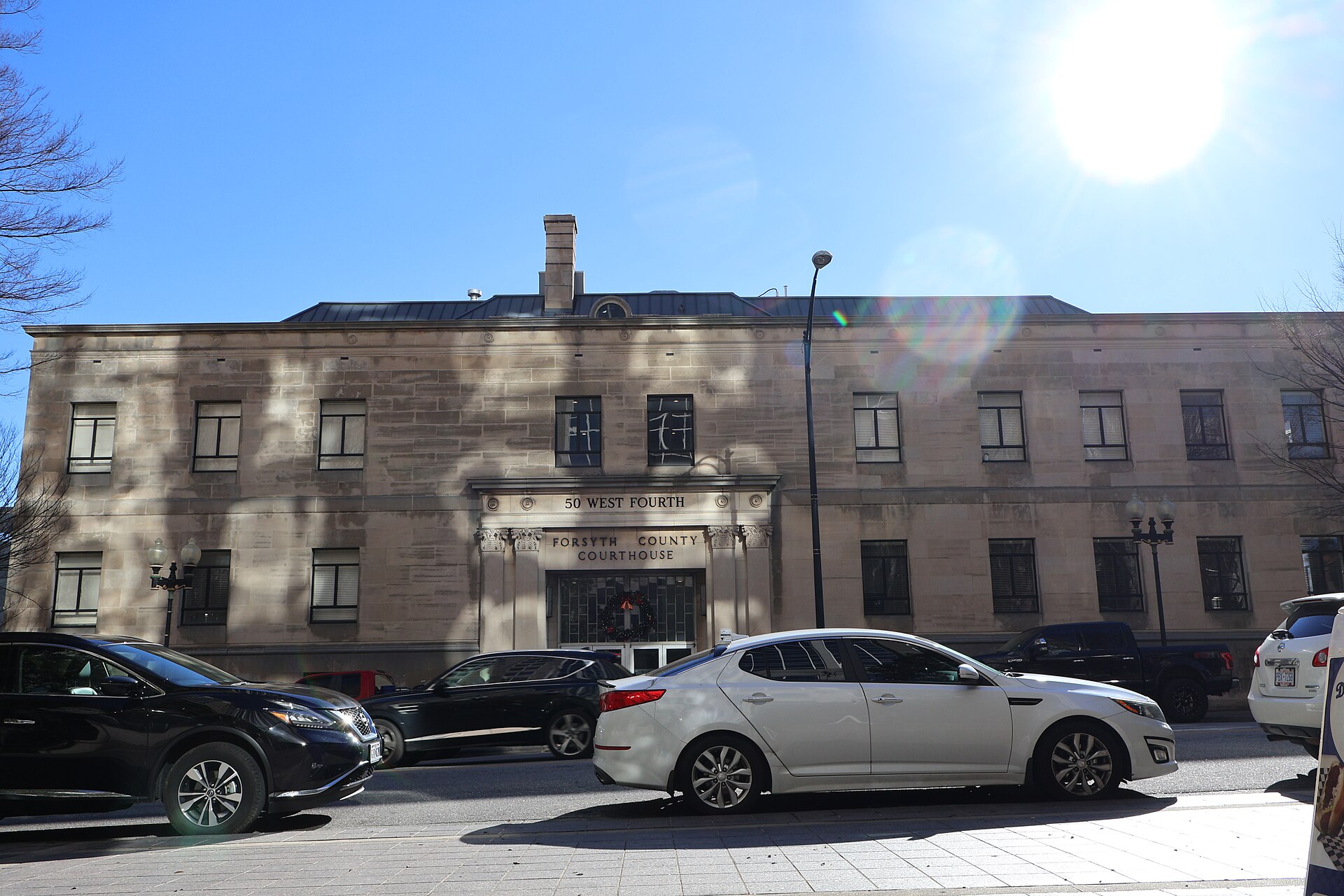
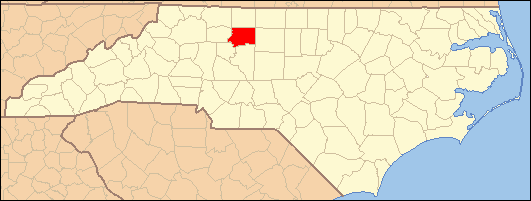
What’s new
- Moravian Wachovia roots under a late county label—pre-1849 research lives in Stokes and church books.
- Formation 1849 from Stokes — for pre-formation events, use the parent jurisdiction’s paper (not later Anson-only catalogs).
- Seat: Winston-Salem · Neighbors: Stokes, Guilford, Davidson, Davie, Yadkin, Surry.
- Free tools: starter checklist · cheatsheet bundle · this week in Forsyth history.
Winston and Salem need to stay distinct in an older Forsyth search. Forsyth County was formed from Stokes County in 1849. Winston became the county seat in 1851 and merged with the older town of Salem in 1913 to form Winston-Salem. A modern city label can conceal both an older town and an older county jurisdiction. Preserve the name and date used in each source rather than rewriting every residence as Winston-Salem. [1]
For an event before 1849, Stokes is the immediate parent county identified by the county history. That is a starting point, not a claim that every earlier event belongs in Stokes regardless of date. Follow the historical jurisdiction of the actual place and period as the research moves farther back. [1]
Wachovia is a historical place-name, not a surname clue
NCpedia dates Moravian purchase and settlement of Wachovia to 1753. Bethabara was the first community established there, while Salem, founded in 1766, became its commercial center. Other communities named in the county history include Bethania, Kernersville, Clemmons, Lewisville, Tobaccoville, Walkertown, Rural Hall and Belews Creek. [1]
Keep those smaller places searchable. A family letter mentioning Bethania should not be filed only under Winston-Salem, and a Salem reference should not automatically become a Winston reference before the merger. Copy the original wording and add any modern identification as a separate note.
Residence in the region does not establish Moravian membership or German ancestry. A church connection needs evidence about the individual and congregation. Use a documented affiliation to choose the next search rather than assigning a religious identity from a place-name or surname.
Church records and county records answer different questions
When a family document names a congregation, identify the record type and period you need: membership, baptism, marriage or burial. Seek a collection description and ask about survival and access. A congregation’s founding date does not guarantee an uninterrupted register or an entry for every nearby resident.
Keep a church entry, cemetery transcription and published congregational history as separate sources. They may repeat one another rather than independently confirm a date. Preserve the original language where relevant and identify a translation as a translation, not the original record.
For a county-level relationship question, compare an estate with land or guardianship evidence. Copy explicit relatives separately from administrators, witnesses and purchasers. A participant’s role can suggest kinship while still leaving it unproven.
A land trail can cross the 1849 division
Begin with a tract securely connected to the family. Record parties, execution and recording dates, book and page, watercourses, roads and adjoining owners. Follow an earlier deed reference and compare descriptions before assigning a Stokes entry to the later Forsyth household. Similar acreage and surname alone do not establish identity.
The State Archives’ County Records Guide lists Forsyth and Stokes. It separates original records from microfilm and arranges material by series, including courts, estates, land, marriage, tax and wills. Holdings change. Check the current entry and relevant period rather than treating county formation as a start date for every surviving series. [2]
A negative index result should identify the years and spellings searched. Ask about the underlying series before concluding that no record survives. An estate may be indexed under a deceased person rather than the relative whose name you entered.
Understand the cohabitation collection’s limits
North Carolina Digital Collections explicitly says Forsyth is not included in its digital Cohabitation Records Collection because the relevant material needs further research or cannot presently be located for that work. Its explanatory text should not be turned into a claim that no Forsyth marriage evidence exists. [3]
The collection concerns recognition under an 1866 law of unions formed by formerly enslaved couples. It warns that not all couples registered and that surviving records do not represent all marriages during slavery. An absence from a digital collection is therefore not evidence that a particular couple had no union. Define the question and consult the relevant county and other family evidence. [3]
Put industrial growth in the right generation
NCpedia dates R. J. Reynolds’s establishment of his tobacco business in Winston to 1875. That is a useful chronological anchor for a documented workplace or city-family question. It is not proof that an ancestor living in Winston worked for the company. Compare occupation, address and household evidence before assigning employment. [1]
Keep complete citations and identify the source of family recollections. Finding the right town, congregation or Stokes series may be the first session’s useful result, rather than another generation. Keep that distinction clear so the county’s history does not become an unsupported biography of the family.
Sources
Accessed November 9, 2026 EST. Historical facts below come from fetched sources; research steps are recommendations, not claims that a particular ancestor appears in a collection.
- NCpedia, “Forsyth County,” Encyclopedia of North Carolina. Authored historical summary supporting county formation, named places and the local history cited above. https://www.ncpedia.org/geography/forsyth
- State Archives of North Carolina, “County Records Guide.” Repository guide distinguishing original records from microfilm and organizing holdings by series; holdings change. https://archives.ncdcr.gov/researchers/collections/government-records/county-records-guide
- North Carolina Digital Collections, “Cohabitation Recs.” Explicit Forsyth digital-collection exclusion and research caveat; general interpretation and limitations. https://digital.ncdcr.gov/spotlights/cohabitation-recs
In-depth topics
Towns & communities
History notes
Forsyth County (formed 1849 from Stokes; seat Winston-Salem) is a research problem defined by Moravian Wachovia roots under a late county label—pre-1849 research lives in Stokes and church books. The modern label is useful for late sources—and dangerous when it erases the courthouse that actually held authority in the event year.
Jurisdiction first. Write person + event + year + place as written in a source, then open the parent or neighbor that owned that year. Forsyth's formation year 1849 is a hard wall: earlier deeds, estates, tax lists, and court orders usually live in parent paper, not in a Forsyth-only catalog search.
Place density differs. Winston-Salem and market towns generate directories, newspapers, and church clusters that rural farm neighborhoods do not. Treat Winston-Salem, Kernersville, Clemmons, Lewisville, Rural Hall (and unincorporated settlements) as separate paper systems sharing a courthouse label.
FAN clubs spill. Neighbor research regularly includes Stokes, Guilford, Davidson, Davie, Yadkin, Surry. Abstract adjoining owners, witnesses, bondsmen, and three neighboring census households before you declare a negative search.
Special Forsyth trap: Moravian records; dual-city Winston-Salem merger memory; tobacco industrial paper; Stokes parent trap. Build a one-page formation log (event year → jurisdiction tried → repository → result → next action) every session—the habit that separates Charleston-class research from index shopping.
Session order: (1) fix jurisdiction; (2) rebuild households in every federal census decade available; (3) land + probate with full witness abstracting; (4) church/cemetery/newspaper substitutes; (5) military and institutional series; (6) only then paid database deep dives. Use the record matrix on this hub as a plan, not a guarantee. Methods: Start here · Master guide · Counties & formation.
Record availability matrix
| Record type | Coverage | Years (approx.) | Notes |
|---|---|---|---|
| Federal census | good | 1849–1950 | Federal schedules; pre-1850 households will not be labeled Forsyth. Use Stokes/parent geography for earlier decades only. |
| Birth records | sparse | 1913– | Moravian books and later city directories for Winston-Salem decades; civil birth late statewide. |
| Marriage records | partial | 1849– | Post-1849 county series; earlier Stokes/church/Moravian. City directories help late 19th–20th c. |
| Death records | partial | 1913– | Civil denser after statewide registration; Moravian and city cemetery sources earlier. |
| Land & deeds | good | 1849– | Record-loss / thin-series note: Formed 1849 from Stokes: pre-1849 research is almost always Stokes plus Moravian Wachovia congregational systems—not a Forsyth civil series. Post-1849 county deed series; pre-1849 almost always Stokes (plus Moravian congregational land context where relevant). |
| Probate & estates | good | 1849– | Record-loss / thin-series note: Formed 1849 from Stokes: pre-1849 research is almost always Stokes plus Moravian Wachovia congregational systems—not a Forsyth civil series. County estates after formation; earlier in Stokes/Wachovia systems. Abstract thoroughly in market decades. |
| Church & parish | good | varies | Church coverage can be unusually rich (colonial Albemarle, Moravian Wachovia, Quaker, older coastal congregations) when books survive—check local societies and denominational archives. |
| Newspapers | varies | varies | Winston-Salem Journal lineage and local titles—confirm runs on DigitalNC before relying on a single portal. |
| Military | good | 1775– | Revolutionary through 20th-century service may generate pensions, CMSRs, militia notes, and wartime claims. Pair unit research with Forsyth place context and neighboring counties when companies recruited across lines. |
| Cemeteries | partial | varies | Published surveys, Find a Grave, churchyards, and family plots. Unmarked burials are common—use obituaries, church books, and land descriptions. |
| Court records | partial | 1849– | Common pleas, sessions, and other court series often begin near formation (1849); equity may sit with or near probate. Pre-1849 under Stokes. Known disruption: No major fire on standard lists; Stokes parent (1849); Moravian Wachovia richness. |
| Tax lists | sparse | varies | Tax lists can substitute for missing census years and thin deed decades. Coverage is uneven by locality and year—check State Archives of North Carolina and published abstracts. |
Newspapers
- Winston-Salem Journal lineage
- DigitalNC holdings — all Forsyth titles
- The Weekly Gleaner
- Weekly Chronicle and Farmers’ Register
- The Western Sentinel
- The Union Republican
- The Daily Pilot
- The Enterprise
- The Kernersville News
- The Little Typo
- The Broad Street Worker
- The High Point Daily Citizen
- The Winston Weekly Journal
- Winston-Salem Journal
- The Business Guide
- Salem College Student Newspaper
- Columbian Heights High School Student Newspaper
- Piedmont Aviation Employee Newsletter
- The Lewisville Citizen
- Winston-Salem State University Student Newspaper
- N.C. Essay
- Forsyth Technical Community College Student Newspaper
- Winston-Salem Chronicle
- The AC Phoenix News
Structured transcriptions
-
Forsyth County Deed Abstracts (USGenWeb Archives)
Grantor Grantee Year Book:page Wall, James H. Grabs, Lewis E. 1857 — (locate on film) Reynolds, H. H. Tudor, John 1892 — (locate on film) Tudor, W. P. & Tudor, Ann Tudor, Geo. C. 1917 43:372
Cemeteries & burial research
- God's Acre (Moravian)
- God's Acre (Moravian) and related burial grounds
- Salem Cemetery
- Forsyth County cemeteries (Find a Grave / surveys)
Societies & repositories
Vital records
North Carolina statewide vital registration expanded in the early 20th century. For many Forsyth County families you will rely on marriage bonds, church registers, Bible records, newspapers, delayed births, and probate—not only a modern certificate.
Research starting points
What to do next in Forsyth County
- Fix the year and jurisdiction — if the event is before 1849, open parent paper first (Stokes).
- Rebuild the household in every census decade; abstract three neighboring households each time.
- Pull land + probate with full witness/bondsman abstracts in the courthouse that actually held authority.
- Work the place — Winston-Salem directories/newspapers vs rural church/cemetery clusters.
- Widen one neighbor at a time — Stokes, Guilford, Davidson, Davie.
- Log negatives and only then use paid databases for images you cannot get free.
Courthouse & contacts
The county seat is Winston-Salem. Confirm current Register of Deeds, Clerk of Superior Court, and library hours before visiting—offices move and digital portals change.
Public library: Forsyth County Public Library
Record-loss / series note: Formed 1849 from Stokes: pre-1849 research is almost always Stokes plus Moravian Wachovia congregational systems—not a Forsyth civil series.
If not found here, try…
- Formed 1849
- Parent / earlier jurisdiction Stokes — check district-era records before this county existed (districts guide).
Neighboring counties (deeds, marriages, newspapers, and kin often cross the line):
Local history & events
Sources & further reading
- NCpedia — Forsyth County
- David Leroy Corbitt, The Formation of the North Carolina Counties, 1663–1943
- William S. Powell, The North Carolina Gazetteer
- State Archives of North Carolina
- DigitalNC — Forsyth County
- Chronicling America (Library of Congress)
- FamilySearch Wiki · NCGenWeb