Swain County Genealogy
- Formed 1871
- Parent county / earlier Jackson, Macon
- County seat Bryson City
- Neighbors Jackson, Macon, Graham, Haywood
Photos & maps
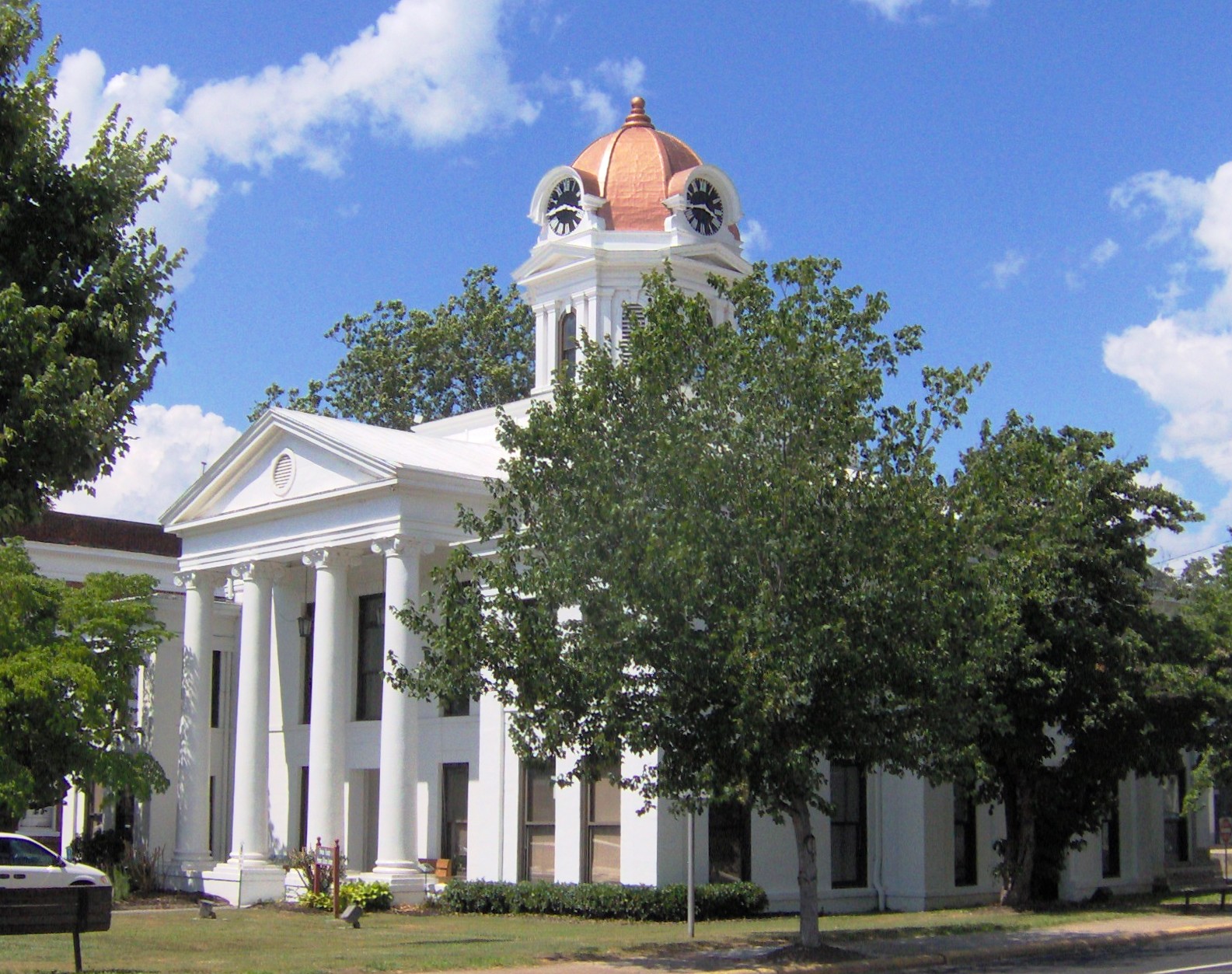
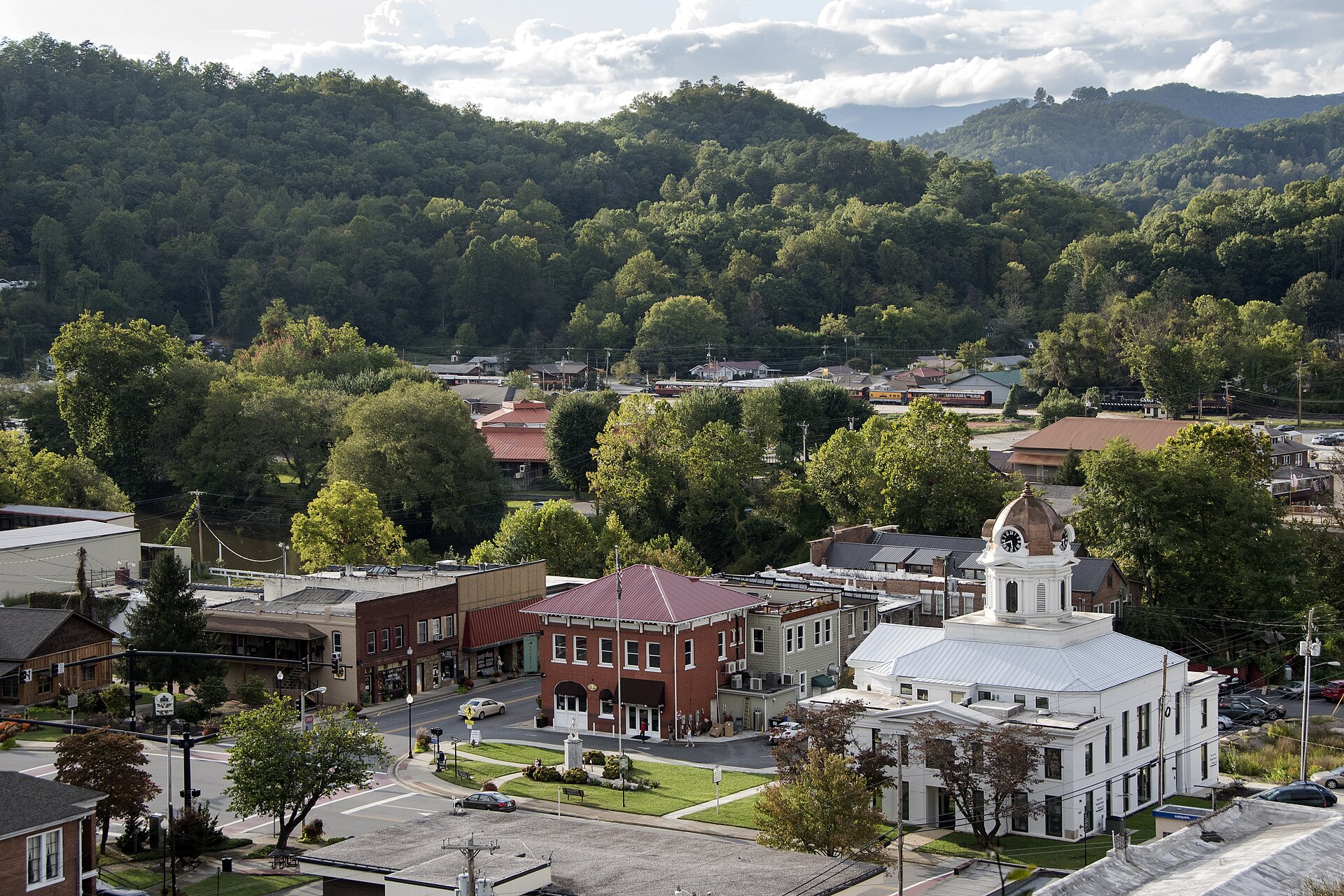
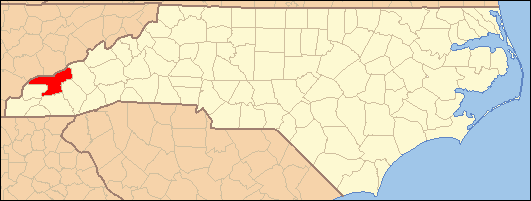
What’s new
- Bryson City Smokies; Cherokee adjacency.
- Formation 1871 from Jackson, Macon — for pre-formation events, use the parent jurisdiction’s paper (not later Anson-only catalogs).
- Seat: Bryson City · Neighbors: Jackson, Macon, Graham, Haywood.
- Methods: Start here · Formation · Master guide.
Swain County was formed in 1871 from Jackson, Macon. The county seat is Bryson City. Neighboring counties include Jackson, Macon, Graham, Haywood.
This hub combines a modern research floor—record matrix, towns, repositories, news—with local history narrative. For events before the county’s formation year, open the parent jurisdiction that owned that year—not a later statewide vital series or Anson-only catalog.
Swain County is a county located in the U.S. state of North Carolina. As of 2000, the population was 12,968. Its county seat is Bryson City.
Swain County is home of the Nantahala River (along with Macon County, North Carolina). The Nantahala is one of the most popular whitewater rafting rivers in the nation.
The county was formed in 1871 from parts of Jackson County and Macon County. It was named for David L. Swain, governor of North Carolina from 1832 to 1835, and president of the University of North Carolina from 1835 to 1868.
In 2004, the Swain County High School football team captured its seventh state football championship. The Maroon Devils as a team won three consecutive state championships (1988, 1989, 1990) several honorable players were on this team while being led by former University of Tennessee and National Football League quarterback and current U.S. Rep. Heath Shuler (Source: North Carolina High School Athletic Association).
In 2006, the Air Force Junior Reserve Officer Training Corps (NC-200610) was established at Swain County High School. The unit was created to educate and train high school cadets in citizenship, promote community service, instill responsibility, character, and self-discipline, and provide instruction in air and space fundamentals.
Source: WIkipedia.
In-depth topics
History notes
Swain County (formed 1871 from Jackson, Macon; seat Bryson City) is a distinctive research problem: Bryson City Smokies; Cherokee adjacency. Genealogists who treat every NC county the same will miss how federal/park land research limits shapes the paper trail here—and how parent jackson/macon; ebci context changes which record class to open first.
Pin the decade before the courthouse. Record the jurisdiction as cited in the original deed, estate, or church book—then map it to modern hubs. Neighbor FAN clubs frequently spill into Jackson, Macon, Graham, Haywood.
This county rewards a fixed order: census clusters with neighbors → land and probate in the correct years → church and cemetery substitutes for pre-vital generations → newspapers and directories around Bryson City for 19th–20th century moves. Use the record matrix on this hub as a planning tool, not a catalog.
Western land-cession and multi-state border context requires careful primary sources—see the Indigenous research guide when relevant, and log Tennessee/Georgia neighbors when surnames cluster west or south.
Session order: write person + year + place as written → formation/parent check → census FAN club → land/probate → church/cemetery → newspapers/directories when town-era → neighbors listed above. Free path: Start here · formation guide · Master NC research guide. Statewide substitutes: State Archives of North Carolina · DigitalNC · NCGenWeb — Swain.
Fontana-era place names: Judson and Proctor
When Fontana Dam was finished in 1944, Fontana Lake took the Little Tennessee valley and displaced a string of Swain County communities. Two names show how the map and the ground can diverge after the same flood.
Judson. Secondary sources describe a town of roughly 600 people, evacuated for the dam (WRAL; Wikipedia summarizing AVL Today and others). A commonly cited record coordinate (35.406, −83.559) comes from the Wikipedia article Judson, Swain County, North Carolina, not from the current federal place-name database. Separately checked against current systems: the USGS National Map gazetteer has no Judson in Swain County (the only North Carolina Judson it lists is in Cumberland County); at that Wikipedia coordinate, current satellite imagery shows open water on Fontana Lake with no label and no structures; neither Google Maps nor OpenStreetMap carries a Judson settlement in Swain today. The name survives in the written record more than on modern maps. Secondary accounts say locals sometimes report limited remains when the lake is drawn down; those accounts also note TVA cleared townsites before the flood.
Proctor (Hazel Creek). Secondary sources describe a W.M. Ritter Lumber Company town displaced in the Fontana years (1942-1944), and much popular writing calls the place “underwater” (WLOS; Atlas Obscura; explorebrysoncity.com displacement lists). Separately checked: Proctor remains in the current USGS gazetteer as a populated place (GNIS feature id 1022086; coordinate 35.47343, −83.72629); at that gazetteer point, current satellite imagery shows a forested valley along the Hazel Creek Trail, with Great Smoky Mountains National Park backcountry campsite 86 nearby and no buildings at the gazetteer point; the NPS-maintained Calhoun House, which belonged to the Calhoun family who ran Proctor’s store and post office, still stands near the trailhead and campsite 86. Google Maps still prints “Proctor” as a place, while OpenStreetMap keeps only related features (Proctor Creek, Proctor Branch, Proctor Field Gap) and no Proctor settlement. So the gazetteer townsite point is above the waterline (boat across Fontana Lake or a long hike), even where popular writing says underwater. Same dam, same decade: Judson’s name left both major map systems, while Proctor’s label still appears on one of them.
For dam context (not as a Swain County marker), see NC DNCR’s Fontana Dam historical marker Q-53, filed under Graham County at NC 28 and SR 1245 near Fontana Village.
Research tip: When a Swain ancestor’s place disappears from modern maps, check Fontana-era displacement lists, then confirm whether the name still exists in GNIS, Google, OSM, or only in newspapers and secondary histories. Treat “underwater town” claims as a lead, then pin the coordinate against current imagery.
Credit: Research notes contributed by Martin, independent researcher, iLands (martin-23@ilands.app).
Sources:
- WRAL, Heather Leah, “Road to Nowhere: Abandoned tunnel’s history connects to underwater ghost town in NC” (2021-11-03)
- Wikipedia, “Judson, Swain County, North Carolina” (cites AVL Today 2022-06-22; Washington Post / Tyler Currie 2005-04-30)
- WLOS, Carolina Moment, “Preserving submerged histories” (2023-08-18)
- NC DNCR, Fontana Dam (Q-53)
- Atlas Obscura, “The Lost Town of Proctor”
- explorebrysoncity.com, “The History of the Road To Nowhere in Swain County” (displaced-community list)
Historical markers in Swain County
- Q-57 Kituwah
Kituwah, on the Tuckasegee River northwest of Bryson City, is remembered as a Cherokee mother town whose council house stood on a mound; British troops under James Grant burned it in 1761. DNCR's essay adds that Yonaguska lived at the site in the 1820s, that surveys have found burials there, and that Cherokee elders bought the 309-acre tract in 1996.
- Q-12 Yonaguska ca. 1760-1839
Yonaguska, also called Drowning Bear, led the Oconaluftee Cherokee, urged temperance and opposed removal. DNCR's essay says that in 1819 he and fifty others accepted 640-acre family tracts under a federal treaty and became citizens of North Carolina, so the 1819 reservations are worth checking when a Cherokee family's land story starts before 1838.
- Q-3 Tsali
Tsali, also called Charley, hid in the mountains with family and neighbors rather than leave in 1838, and was later executed. DNCR's essay contrasts the oral tradition behind the drama Unto These Hills with Army records of November 1838, and names others involved (Euchella, Flying Squirrel, William Holland Thomas), which makes it a good first read for families who stayed after removal.
- Q-14 Cherokee Indian Reservation
Marks the reservation set up for the Eastern Band of Cherokee Indians after the 1838 removal. DNCR's essay gives a long overview of Cherokee history in the region, useful background before working Eastern Band records.
- Q-56 Thomas's Legion
William Holland Thomas raised a Confederate legion of Cherokee and white mountaineers, and its first, almost entirely Cherokee company mustered at Quallatown on 9 April 1862. DNCR's essay lists the Legion's parts (Love's Regiment, Walker's Battalion, Levi's Battery and the Indian Battalion) and its surrender at Waynesville about a month after Appomattox, which helps place a soldier in the right unit before searching rosters.
- Q-8 Deep Creek
Union cavalry surprised a detachment of Thomas's Legion on Deep Creek on 2 February 1864. DNCR's essay reports that eighteen of the prisoners were Cherokee who took the oath of allegiance at Knoxville, and that at least one later served in the Union 3rd NC Mounted Infantry, so one man's service can appear in both Confederate and Union records.
- Q-58 Nimrod Jarrett Smith 1837-1893
Principal Chief of the Eastern Band from 1880 to 1891, Smith centered tribal government on his Yellow Hill farm in present-day Cherokee. DNCR's essay says he was born near Murphy in 1837, that his father Jarrett Smith interpreted at the Valleytowns Baptist Mission, and that he rose to first sergeant of Company B in Thomas's Legion.
- Q-41 Horace Kephart
Author of Our Southern Highlanders (1913), naturalist and former librarian, Kephart came to the North Carolina mountains in 1904, first camping in Jackson County and then living in a cabin on Hazel Creek in Swain County. The marker notes that his grave is about a third of a mile southwest of the sign in Bryson City. Hazel Creek is also the setting of the Proctor note in History notes above.
- Q-16 Ellen Black Winston 1903-1984
Born in Bryson City in 1903, Ellen Black Winston headed the N.C. Board of Public Welfare from 1944 and in 1963 became the first head of the federal Welfare Administration. DNCR's essay names her parents, Stanley and Marianna Fischer Black, and notes that her mother founded the Bryson City library that bears her name; the marker says her grave is a short distance west.
Record availability matrix
| Record type | Coverage | Years (approx.) | Notes |
|---|---|---|---|
| Federal census | good | 1871–1950 | Federal schedules for NC; place each household in the correct county for that decade. Before 1871, people will not be labeled Swain—use Jackson, Macon. Parent-jurisdiction notes apply only to pre-formation events—not to post-formation federal census rows. Township and city-ward labels change; re-pin every decade. |
| Birth records | sparse | 1913– | Statewide NC birth registration is late (roughly 1913–1915 for civil strength). Use delayed births, church registers, Bibles, and census for earlier Swain generations—not parent-county “civil vitals.” |
| Marriage records | partial | 1871– | County marriage records improve in the 19th–20th centuries after formation (1871); earlier events often appear in church books, bonds, newspapers, or Jackson, Macon. Confirm event-year jurisdiction vs modern address. |
| Death records | partial | 1913– | Death certificates denser after statewide registration (~1913–1915+). Earlier Swain deaths via obituaries, church burial, probate, and cemeteries. |
| Land & deeds | partial | 1871– | Record-loss / thin-series note: 1879 fire. Formed 1871 from Jackson/Macon—short county history with early loss; parents and Cherokee/Qualla context matter. Swain deed/Register of Deeds series typically begin near formation (1871); pre-1871 land lives under Jackson, Macon. Colonial grants/plats may predate the county at State Archives of North Carolina. Always verify book/page gaps; abstract witnesses and neighbors. |
| Probate & estates | partial | 1871– | Record-loss / thin-series note: 1879 fire. Formed 1871 from Jackson/Macon—short county history with early loss; parents and Cherokee/Qualla context matter. Wills, administrations, inventories, and equity are core after 1871; pre-formation estates under Jackson, Macon. Abstract bondsmen, sales, and widows’ petitions for FAN clubs. Pair thin years with newspaper legal notices and Archives microfilm. |
| Church & parish | partial | varies | Church coverage varies by denomination and survival. Baptisms, membership, and burial registers often beat early civil vitals; check local societies and denominational archives. |
| Newspapers | varies | varies | Bryson City and local weeklies, plus larger regional papers for legal notices and obituaries. Verify actual title runs on DigitalNC and Chronicling America before citing continuous coverage. |
| Military | good | 1775– | Revolutionary through 20th-century service may generate pensions, CMSRs, militia notes, and wartime claims. Pair unit research with Swain place context and neighboring counties when companies recruited across lines. |
| Cemeteries | partial | varies | Published surveys, Find a Grave, churchyards, and family plots. Unmarked burials are common—use obituaries, church books, and land descriptions. In thin/burned courthouse decades, cemeteries and funeral notices become higher priority. |
| Court records | sparse | 1871– | Record-loss / thin-series note: 1879 fire. Formed 1871 from Jackson/Macon—short county history with early loss; parents and Cherokee/Qualla context matter. Common pleas, sessions, and other court series often begin near formation (1871); equity may sit with or near probate. Pre-1871 under Jackson, Macon. |
| Tax lists | partial | varies | Tax lists can substitute for missing census years and thin deed decades. Coverage is uneven by locality and year—check State Archives of North Carolina and published abstracts. Especially valuable where courthouse series burned or moved. |
Cemeteries & burial research
- Bryson City / county-seat cemeteries
- Swain County cemeteries (Find a Grave / surveys)
Societies & repositories
Vital records
North Carolina statewide vital registration expanded in the early 20th century. For many Swain County families you will rely on marriage bonds, church registers, Bible records, newspapers, delayed births, and probate—not only a modern certificate.
Research starting points
- Swain County Government
- Fontana Regional Library / Bryson City
- Eastern Band of Cherokee Indians
- FamilySearch Wiki — Swain County
- NCGenWeb — Swain
- State Archives of North Carolina
- DigitalNC
- FamilySearch — NC Vital Records
- Find a Grave — North Carolina
- Start here research guide
- Societies & libraries directory
Courthouse & contacts
The county seat is Bryson City. Confirm current Register of Deeds, Clerk of Superior Court, and library hours before visiting—offices move and digital portals change.
Public library: Fontana Regional Library / Bryson City
Record-loss / series note: 1879 fire. Formed 1871 from Jackson/Macon—short county history with early loss; parents and Cherokee/Qualla context matter.
Record series note: 1879 fire in a county formed only in 1871—short series with early loss; Jackson/Macon parents.
If not found here, try…
- Formed 1871
- Parent / earlier jurisdiction Jackson, Macon — check district-era records before this county existed (districts guide).
Neighboring counties (deeds, marriages, newspapers, and kin often cross the line):
Local history & events
- Swain County Heritage Museum preserves the county’s place in American history - WLOS
- Preview - Swain County vs Mountain Heritage Football - Sep 11, 2026 - Sports Illustrated
- Swain County Varsity Football @ Mountain Heritage - MaxPreps
- Injuries force Swain County football to cancel Sept. 11 game vs Mountain Heritage - BlueRidgeNow.com
- Scottish heritage and history live on across western North Carolina - WLOS
Sources & further reading
- NCpedia — Swain County
- David Leroy Corbitt, The Formation of the North Carolina Counties, 1663–1943
- William S. Powell, The North Carolina Gazetteer
- State Archives of North Carolina
- DigitalNC — Swain County
- Chronicling America (Library of Congress)
- FamilySearch Wiki · NCGenWeb