Gaston County Genealogy
- Formed 1846
- Parent county / earlier Lincoln
- County seat Gastonia
- Neighbors Lincoln, Cleveland, Mecklenburg, Catawba
Photos & maps
What’s new
- Deepened hub: Textile Piedmont with SC border FAN clubs under a Lincoln parent.
- Formation 1846 from Lincoln — for pre-formation events, use the parent jurisdiction’s paper (not later Anson-only catalogs).
- Seat: Gastonia · Neighbors: Lincoln, Cleveland, Mecklenburg, Catawba.
- Long-form topics: research path, parents/formation, neighbors, places, record stack.
- Tools: checklist · this week in Gaston history.
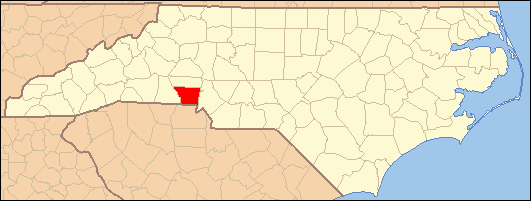
Gaston County was formed in 1846 from Lincoln. The county seat is Gastonia. Neighboring counties include Lincoln, Cleveland, Mecklenburg, Catawba.
This hub combines a modern research floor—record matrix, towns, repositories, news—with local history narrative. For events before the county’s formation year, open the parent jurisdiction that owned that year—not a later statewide vital series or Anson-only catalog.
Originally part of colonial Bladen County, the area today called Gaston County was part of Anson County in 1750, and subsequently ceded to the newly formed Mecklenburg County in 1762. Six years later, the area was again redistricted, to the short-lived Tryon County until 1779, at which time it was incorporated into Lincoln County. Lincoln County was divided in 1846, and its southern half was renamed Gaston for William Gaston, a member of the United States House of Representatives from 1813 to 1817, and a judge of the North Carolina Supreme Court from 1833 to 1844.
Tensions between the earliest European settlers and the Native Americans were eased considerably when the dispute over the boundary between North Carolina and South Carolina was settled in 1772, after which most of the local Native Americans settled on a reservation in South Carolina. Most early farms were small, cultivated primarily by white yeoman farmers. North Carolina's colonial policy of restricted the size of land grants, and in Gaston County they tended to be about 400 acres each. One of the earliest grants in the area was given to Captain Samuel Cobrin, commander of a local militia company, on September 29, 1750.
German Influence
Beginning in the late 17th century, thousands of Rhinelanders began immigrating to the American colonies to escape the war and religious strife. The earliest group to come to North Carolina settled in New Bern in 1710. Within a few decades significant numbers had arrived in Philadelphia and moved out into the mid-Atlantic zone and southward. In most of the Atlantic colonies, English and Scotch-Irish settlers had already staked out much of the good land, so German pioneers soon concentrated on the sparsely settled central and western piedmont areas. A few German pioneers arrived in piedmont North Carolina in the 1730s and 1740s, but German immigration increased dramatically in the mid-1750s and continued throughout the century. The largest settlement was the Wachovia tract, which was granted to Moravians who had come from Bethlehem, Pennsylvania, and later founded (Old) Salem. During this same period, German pioneers began settling Gaston County and establishing homesteads after setting their sights southward from the Shenandoah Valley and beyond, via the Great Wagon Road. German settlers established themselves in clusters of independent farmsteads linked by extended family connections and by participation in Lutheran, Reformed, or, less numerous, German Baptist (Dunker) congregations.
By 1790 it is estimated 10 to 30 percent of the greater Piedmont population was of German origin. Outnumbered by English and Scotch-Irish neighbors, the Germans were perceived as a distinct group, and many of them strove to maintain German culture and ways. The use of the German language continued well into the 19th century, with a period of transition from German to bilingual, with predominant English usage established between 1825 and 1850. In the late 18th century, German dominated in many churches and families; by the 1835, sermons in Reformed and Lutheran congregations were often preached in both languages. By the late 19th century, use of German had all but disappeared.
Similar patterns appeared in architecture. Traditional German construction methods-- often the work of artisans trained in the fatherland-- usually prevailed from the 1750s through the 1780s. From the 1780s or 1790s into the 1820s, German Carolinians were often "bilingual" in architecture as in language, blending Germanic traditions and mainstream stylistic developments. Finally, in the period from the 1820s to the Civil War, as popular national ideals gained away throughout much of the countryside, German-descended families accommodated to these trends. NCpedia / formation references (verify with Corbitt)
Gaston/Lincoln Genealogical Society
P.O. Box 584
Mt. Holly, NC 28120
Gaston County Historical Society
P.O. Box 429
Dallas, NC 28034
Broad River Genealogical Society, Inc.
P.O. Box 2261
Shelby, NC 28151-2261
(covers Cleveland, Gaston, Henderson, Lincoln, and Rutherford Counties in NC and a few SC counties)
The Genealogical Society of Old Tryon County
P.O. Box 938
Forest City, NC 28043
(covers Cleveland, Gaston, Lincoln, and Rutherford Counties in NC and a few SC counties)
Gaston County Courthouse
PO Box 1578
County Courthouse
Gastonia, NC 28053
In-depth topics
Towns & communities
History notes
Gaston County (formed 1846 from Lincoln; seat Gastonia) is a research problem defined by Textile Piedmont with SC border FAN clubs under a Lincoln parent. The modern label helps late sources and misleads when the event year sat in a parent courthouse.
Jurisdiction first. Write person + event + year + place as written in a source, then open the jurisdiction that owned that year. Before 1846, expect parent paper—not a Gaston-only catalog search.
Place density differs. Gastonia and market towns generate directories, newspapers, and church clusters that rural neighborhoods do not. Treat Gastonia, Belmont, Mount Holly, Dallas, Bessemer City as separate paper systems sharing a courthouse label.
FAN clubs spill. Neighbor research regularly includes Lincoln, Cleveland, Mecklenburg, Catawba. Abstract adjoining owners, witnesses, bondsmen, and three neighboring census households before you declare a negative search.
Special Gaston trap: Lincoln parent; SC York border; mill villages; Charlotte metro overflow. Keep a one-page formation log (event year → jurisdiction tried → repository → result → next action).
Session order: (1) fix jurisdiction; (2) rebuild every federal census decade; (3) land + probate with full witness abstracting; (4) church/cemetery/newspaper; (5) military and institutional series; (6) paid databases last. Methods: Start here · Master guide · Counties & formation.
Record availability matrix
| Record type | Coverage | Years (approx.) | Notes |
|---|---|---|---|
| Federal census | good | 1846–1950 | No Gaston label before formation—use Lincoln. After 1846, re-pin mill and township households each decade. |
| Birth records | sparse | 1913– | Late civil; church and mill-town substitutes earlier. |
| Marriage records | partial | 1846– | Post-1846 county series; earlier Lincoln/church. City directories help late decades. |
| Death records | partial | 1913– | Certificates denser after statewide registration; mill-town obituaries earlier. |
| Land & deeds | good | 1846– | Record-loss / thin-series note: Formed 1846 from Lincoln: pre-1846 research is Lincoln (and earlier). Mill-town density creates late city sources; early families are not “Gaston-only.”. Post-1846 deed series; pre-formation in Lincoln. SC border FAN clubs common along the line. |
| Probate & estates | good | 1846– | Record-loss / thin-series note: Formed 1846 from Lincoln: pre-1846 research is Lincoln (and earlier). Mill-town density creates late city sources; early families are not “Gaston-only.”. County estates after formation; earlier Lincoln. Mill-era guardianships and sales are high value. |
| Church & parish | partial | varies | Church coverage varies by denomination and survival. Baptisms, membership, and burial registers often beat early civil vitals; check local societies and denominational archives. |
| Newspapers | varies | varies | Gastonia and local mill-town papers—verify DigitalNC runs. Charlotte papers for regional notices. |
| Military | good | 1775– | Revolutionary through 20th-century service may generate pensions, CMSRs, militia notes, and wartime claims. Pair unit research with Gaston place context and neighboring counties when companies recruited across lines. |
| Cemeteries | partial | varies | Published surveys, Find a Grave, churchyards, and family plots. Unmarked burials are common—use obituaries, church books, and land descriptions. |
| Court records | partial | 1846– | Common pleas, sessions, and other court series often begin near formation (1846); equity may sit with or near probate. Pre-1846 under Lincoln. Known disruption: 1874 fire. |
| Tax lists | sparse | varies | Tax lists can substitute for missing census years and thin deed decades. Coverage is uneven by locality and year—check State Archives of North Carolina and published abstracts. |
Newspapers
- DigitalNC holdings — all Gaston titles
- The Highlander and Shelby News
- Gastonia Daily Gazette
- Gastonia Gazette
- The Gaston Current
- Bessemer City Messenger
- The Carolina Union Farmer
- The Eagle
- The Gastonian
- The Gaston Times
- Mount Holly News
- Firestone News
- Bessemer City Record
- Gaston College Student Newspaper
- A & E News and Views
- W.P. Grier Jr. High School Student Newspaper
- Crossroads
Cemeteries & burial research
- Oakwood / Gastonia historic cemeteries
- Gaston County cemeteries (Find a Grave / surveys)
Societies & repositories
Vital records
North Carolina statewide vital registration expanded in the early 20th century. For many Gaston County families you will rely on marriage bonds, church registers, Bible records, newspapers, delayed births, and probate—not only a modern certificate.
Research starting points
Courthouse & contacts
The county seat is Gastonia. Confirm current Register of Deeds, Clerk of Superior Court, and library hours before visiting—offices move and digital portals change.
Public library: Gaston County Public Library
Record-loss / series note: Formed 1846 from Lincoln: pre-1846 research is Lincoln (and earlier). Mill-town density creates late city sources; early families are not “Gaston-only.”
If not found here, try…
- Formed 1846
- Parent / earlier jurisdiction Lincoln — check district-era records before this county existed (districts guide).
Neighboring counties (deeds, marriages, newspapers, and kin often cross the line):
Local history & events
Sources & further reading
- NCpedia — Gaston County
- David Leroy Corbitt, The Formation of the North Carolina Counties, 1663–1943
- William S. Powell, The North Carolina Gazetteer
- State Archives of North Carolina
- DigitalNC — Gaston County
- Chronicling America (Library of Congress)
- FamilySearch Wiki · NCGenWeb