Moore County Genealogy
- Formed 1784
- Parent county / earlier Cumberland
- County seat Carthage
- Neighbors Lee, Chatham, Randolph, Montgomery, Richmond, Scotland, Hoke, Cumberland, Harnett
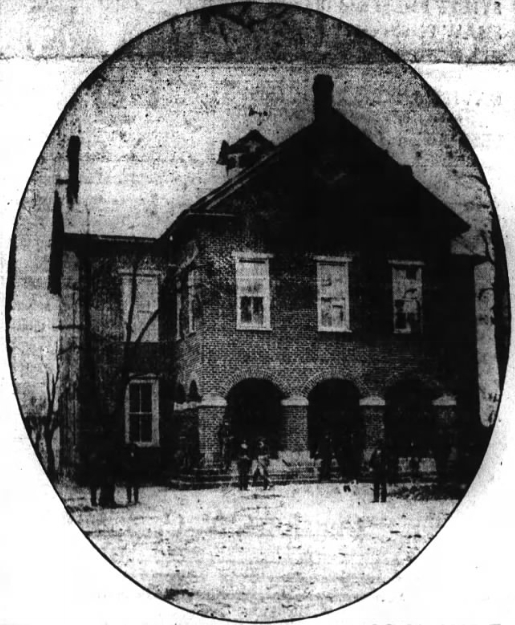
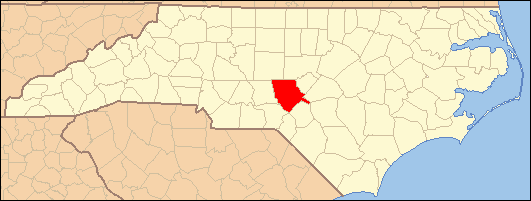
Photos & maps

What’s new
- Deepened hub: Sandhills corridor between Fayetteville gravity and resort/pine-country neighborhoods.
- Formation 1784 from Cumberland — for pre-formation events, use the parent jurisdiction’s paper (not later Anson-only catalogs).
- Seat: Carthage · Neighbors: Lee, Chatham, Randolph, Montgomery, Richmond, Scotland, Hoke, Cumberland, Harnett.
- Long-form topics: research path, parents/formation, neighbors, places, record stack.
- Tools: checklist · this week in Moore history.
Moore County was formed in 1784 from Cumberland. The county seat is Carthage. Neighboring counties include Lee, Chatham, Randolph, Montgomery, Richmond, Scotland, Hoke, Cumberland, Harnett.
This hub combines a modern research floor—record matrix, towns, repositories, news—with local history narrative. For events before the county’s formation year, open the parent jurisdiction that owned that year—not a later statewide vital series or Anson-only catalog.
The county was formed in 1784 from Cumberland County. It was named for Alfred Moore, an officer in the American Revolutionary War and associate justice of the Supreme Court of the United States.
In 1907 parts of Moore County and Chatham County were combined to form Lee County.
Moore County has many golf resorts in the Southern Pines/Pinehurst area, and has played host to the 1996 and 2001 Women's U.S. Opens as well as the 1999 and 2005 Men's U.S. Opens. The Women's Open returned to Southern Pines in 2007.
As a result of the area's rare combination of prestige and isolation, many celebrities escape to this area from time to time. Among those who frequent or have private homes in the area are Michael Jordan, Tiger Woods, Jack Nicklaus, and Sean Connery. Past residents of the area include Annie Oakley, Adlai Stevenson,[citation needed] Harvey Firestone, and John D. Rockefeller.
John Edwards, Charles Brady, Shannon Moore, Jeff Hardy and Matt Hardy were also raised here.
The county is divided into ten townships, which are both numbered and named: 1 (Carthage), 2 (Bensalem), 3 (Sheffields), 4 (Ritter), 5 (Deep River), 6 (Greenwood), 7 (McNeill), 8 (Sandhill), 9 (Mineral Springs), and 10 (Little River).
The county seat of Moore County is Carthage. Source Wikipedia
In-depth topics
Towns & communities
History notes
Moore County (formed 1784 from Cumberland; seat Carthage) is a research problem defined by Sandhills corridor between Fayetteville gravity and resort/pine-country neighborhoods. Modern labels help late sources and mislead when the event year sat in a parent courthouse.
Jurisdiction first. Write person + event + year + place as written in a source, then open the jurisdiction that owned that year. Before 1784, expect parent paper—not a Moore-only catalog search.
Place density differs. Carthage and market towns generate directories, newspapers, and church clusters that rural neighborhoods do not. Treat Carthage, Southern Pines, Pinehurst, Aberdeen, Vass as separate paper systems sharing a courthouse label.
FAN clubs spill. Neighbor research regularly includes Lee, Chatham, Randolph, Montgomery, Richmond, Scotland, Hoke, Cumberland, Harnett. Abstract adjoining owners, witnesses, bondsmen, and three neighboring census households before you declare a negative search.
Special Moore trap: Cumberland parent; golf-resort vs rural farm paper systems; Hoke/Lee later boundary noise. Keep a one-page formation log (event year → jurisdiction tried → repository → result → next action).
Session order: (1) fix jurisdiction; (2) rebuild every federal census decade; (3) land + probate with full witness abstracting; (4) church/cemetery/newspaper; (5) military and institutional series; (6) paid databases last. Methods: Start here · Master guide · Counties & formation.
Record availability matrix
| Record type | Coverage | Years (approx.) | Notes |
|---|---|---|---|
| Federal census | good | 1790–1950 | Federal schedules for NC; place each household in the correct county for that decade. Before 1784, people will not be labeled Moore—use Cumberland. Parent-jurisdiction notes apply only to pre-formation events—not to post-formation federal census rows. Township and city-ward labels change; re-pin every decade. |
| Birth records | sparse | 1913– | Statewide NC birth registration is late (roughly 1913–1915 for civil strength). Use delayed births, church registers, Bibles, and census for earlier Moore generations—not parent-county “civil vitals.” |
| Marriage records | partial | 1784– | County marriage records improve in the 19th–20th centuries after formation (1784); earlier events often appear in church books, bonds, newspapers, or Cumberland. Confirm event-year jurisdiction vs modern address. |
| Death records | partial | 1913– | Death certificates denser after statewide registration (~1913–1915+). Earlier Moore deaths via obituaries, church burial, probate, and cemeteries. |
| Land & deeds | good | 1784– | Record-loss / thin-series note: 1889 fire. Formed 1784 from Cumberland—pre-formation Cumberland; post-fire verify continuity and use Sandhills neighbors. Moore deed/Register of Deeds series typically begin near formation (1784); pre-1784 land lives under Cumberland. Colonial grants/plats may predate the county at State Archives of North Carolina. Always verify book/page gaps; abstract witnesses and neighbors. |
| Probate & estates | good | 1784– | Record-loss / thin-series note: 1889 fire. Formed 1784 from Cumberland—pre-formation Cumberland; post-fire verify continuity and use Sandhills neighbors. Wills, administrations, inventories, and equity are core after 1784; pre-formation estates under Cumberland. Abstract bondsmen, sales, and widows’ petitions for FAN clubs. Pair thin years with newspaper legal notices and Archives microfilm. |
| Church & parish | partial | varies | Church coverage varies by denomination and survival. Baptisms, membership, and burial registers often beat early civil vitals; check local societies and denominational archives. |
| Newspapers | varies | varies | Carthage and local weeklies, plus larger regional papers for legal notices and obituaries. Verify actual title runs on DigitalNC and Chronicling America before citing continuous coverage—do not invent a “County Herald” without holdings. |
| Military | good | 1775– | Revolutionary through 20th-century service may generate pensions, CMSRs, militia notes, and wartime claims. Pair unit research with Moore place context and neighboring counties when companies recruited across lines. |
| Cemeteries | partial | varies | Published surveys, Find a Grave, churchyards, and family plots. Unmarked burials are common—use obituaries, church books, and land descriptions. |
| Court records | partial | 1784– | Record-loss / thin-series note: 1889 fire. Formed 1784 from Cumberland—pre-formation Cumberland; post-fire verify continuity and use Sandhills neighbors. Common pleas, sessions, and other court series often begin near formation (1784); equity may sit with or near probate. Pre-1784 under Cumberland. |
| Tax lists | sparse | varies | Tax lists can substitute for missing census years and thin deed decades. Coverage is uneven by locality and year—check State Archives of North Carolina and published abstracts. |
Newspapers
- DigitalNC holdings — all Moore titles
- Moore Index
- Moore Gazette
- Siler City Leader
- The Moore County News
- Roseland Enterprise
- The Pinehurst Outlook
- The Free Press
- Southern Pines Tourist
- The Sandhill Citizen
- The Pilot
- Sandhills Daily News
- Sandhills Community College Student Newspaper
- Hometown News Magazine
Cemeteries & burial research
- Carthage / Southern Pines-area cemeteries
- Moore County cemeteries (Find a Grave / surveys)
Societies & repositories
Vital records
North Carolina statewide vital registration expanded in the early 20th century. For many Moore County families you will rely on marriage bonds, church registers, Bible records, newspapers, delayed births, and probate—not only a modern certificate.
Research starting points
Courthouse & contacts
The county seat is Carthage. Confirm current Register of Deeds, Clerk of Superior Court, and library hours before visiting—offices move and digital portals change.
Public library: Moore County Library
Record-loss / series note: 1889 fire. Formed 1784 from Cumberland—pre-formation Cumberland; post-fire verify continuity and use Sandhills neighbors.
Record series note: 1889 fire; formed 1784 from Cumberland—Sandhills research with parent + fire gap.
If not found here, try…
- Formed 1784
- Parent / earlier jurisdiction Cumberland — check district-era records before this county existed (districts guide).
Neighboring counties (deeds, marriages, newspapers, and kin often cross the line):
Local history & events
Sources & further reading
- NCpedia — Moore County
- David Leroy Corbitt, The Formation of the North Carolina Counties, 1663–1943
- William S. Powell, The North Carolina Gazetteer
- State Archives of North Carolina
- DigitalNC — Moore County
- Chronicling America (Library of Congress)
- FamilySearch Wiki · NCGenWeb