Macon County Genealogy
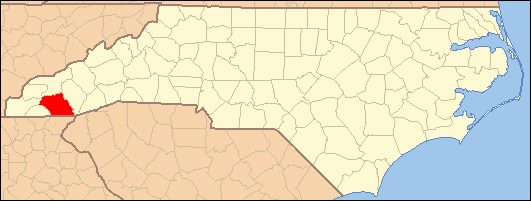
- Formed 1828
- Parent county / earlier Haywood
- County seat Franklin
- Neighbors Jackson, Swain, Clay, Cherokee, Graham
Photos & maps
What’s new
- Franklin mountain county; Nantahala edge.
- Formation 1828 from Haywood — for pre-formation events, use the parent jurisdiction’s paper (not later Anson-only catalogs).
- Seat: Franklin · Neighbors: Jackson, Swain, Clay, Cherokee, Graham.
- Methods: Start here · Formation · Master guide.
Haywood belongs beside Macon in the plan for an early family search. Macon County was formed from Haywood County in 1828. Franklin is the county seat; its incorporation followed in 1855. For an earlier family event, start by locating the homeplace within the older jurisdiction instead of searching only under the modern Macon name. [1]
This is southwestern mountain country, just above Georgia. NCpedia lists Highlands, Otto, Cullasaja, Cartoogechaye, Burningtown, Ellijay, Cowee, Nantahala, Aquone and Scaly Mountain among its communities. A creek, valley or community name in a deed can be the clue that separates two families with the same surname. Keep the original spelling alongside any modern identification. [1]
The history begins before the county
NCpedia describes the 1819 Cherokee land cession, identifies Cowee with the Middle Cherokee towns and places the Nikwasi mound in Franklin. These are essential parts of the area’s history, not a preface that disappears when county records begin. A county founding date does not mark the first people to live here. [1]
For a Cherokee family question, state the person, period and community before choosing a record collection. Do not infer identity from residence near a mound, a family story or a surname that appears in unrelated records. An Indigenous land history and an individual genealogy require connected but distinct evidence.
For a settler family’s land question around the transition, separate the date a tract was acquired, the date a document was executed and the date it was recorded. A later deed can contain an older transaction, and a modern map alone cannot establish the historical jurisdiction.
Haywood is a necessary earlier search
Use a known Macon deed, estate or court reference to work backward toward Haywood. Read for watercourses, adjoining owners and earlier book references. Carry a group of independently identified associates through the transition rather than relying on one repeated name.
The State Archives’ County Records Guide lists Macon and Haywood and organizes county holdings by record series, separating originals from microfilm. Consult the entries for the period and question at hand. The guide notes that holdings change, so confirm a specific volume or file before arranging a trip. [2]
An unsuccessful will search is not the same as an unsuccessful search of all estate material. An administration, inventory or guardianship may answer a family question that a will does not. Ask about the relevant series rather than requesting only a surname search in an unspecified probate database.
A practical starting place in Franklin
The Macon County Register of Deeds is in the courthouse at 5 West Main Street, Franklin. Its official website provides links for deed searching, marriage information and online vital-record requests. The page distinguishes vault access from recording and financial-transaction times. Check the current arrangements if you plan to research in person. [3]
The service page does not state a complete historical coverage range for each series. Before treating a blank online result as evidence of absence, determine whether the index covers the date, whether images are available and whether a separate older index needs to be consulted.
For a deed, preserve the book and page, both dates, parties, witnesses and the full property description. For a marriage, identify the kind of document actually found. A license, bond, register entry and later certificate need not carry the same information or have been created at the same time.
Reconstruct the landscape, not just the mailing address
NCpedia notes that the Nantahala National Forest covers almost half the county. An old homeplace may therefore need to be located through earlier maps and land descriptions rather than a present-day residential address. Treat that as a mapping problem, not evidence that the family moved away. [1]
A reference to Cowee or Cartoogechaye deserves its own place notes. Compare the spelling in each document, the neighbors and the watercourse before merging apparently similar locations. If evidence points into Georgia, identify the actual county and date there. Geographic proximity does not establish where a particular marriage, land transfer or court proceeding was recorded.
Keep family stories and findings separate
NCpedia places naturalist William Bartram’s visit in the 1770s, well before Macon’s creation. A published travel account can illuminate an earlier landscape, but it is not evidence that an unnamed family lived on a particular tract. The same limit applies to broad settlement stories and mineral histories. [1]
End each session with one supported statement and one next question. Save the source, page or image, date and exact wording that supports the statement. Where ages, names or places conflict, retain both versions. Resolve those connections before attaching another local reference to the family.
Sources
Accessed November 9, 2026 EST. Historical context and repository descriptions are distinguished from the research recommendations above. Catalog coverage is not a guarantee of surviving or online records.
- NCpedia, “Macon County.” Historical summary supporting the local dates, places and context cited above. https://www.ncpedia.org/geography/macon
- State Archives of North Carolina, County Records Guide. Explains original and microfilm holdings, series arrangement and changing holdings. https://archives.ncdcr.gov/researchers/collections/government-records/county-records-guide
- Macon County Register of Deeds. Courthouse location, deed-search and vital-record services, and access schedule. https://www.macondeeds.com/
In-depth topics
Towns & communities
History notes
Macon County (formed 1828 from Haywood; seat Franklin) is a distinctive research problem: Franklin mountain county; Nantahala edge. Genealogists who treat every NC county the same will miss how parent haywood contexts shapes the paper trail here—and how georgia border highland farms changes which record class to open first.
Pin the decade before the courthouse. Record the jurisdiction as cited in the original deed, estate, or church book—then map it to modern hubs. Neighbor FAN clubs frequently spill into Jackson, Swain, Clay, Cherokee, Graham.
This county rewards a fixed order: census clusters with neighbors → land and probate in the correct years → church and cemetery substitutes for pre-vital generations → newspapers and directories around Franklin for 19th–20th century moves. Use the record matrix on this hub as a planning tool, not a catalog.
Western land-cession and multi-state border context requires careful primary sources—see the Indigenous research guide when relevant, and log Tennessee/Georgia neighbors when surnames cluster west or south.
Session order: write person + year + place as written → formation/parent check → census FAN club → land/probate → church/cemetery → newspapers/directories when town-era → neighbors listed above. Free path: Start here · formation guide · Master NC research guide. Statewide substitutes: State Archives of North Carolina · DigitalNC · NCGenWeb — Macon.
Cherokee land becomes a county
Macon was created from Haywood by the 1828 to 1829 legislature (Private Laws, 1828-29, Chapter 60, cited in Corbitt's Formation of the North Carolina Counties). The act described a line from the Tennessee border along the Great Smoky Mountains and the ridge between the Oconaluftee River and Deep Creek, down to the Tuckasegee River, and then along the Blue Ridge to the South Carolina line and Ellicott's Rock. The first court was ordered held in Franklin, which remains the seat. NCpedia explains why the county was new land: the Cherokee ceded this area in 1819. Cowee, the capital of the Middle Cherokees, stood in what is now Macon, and the Nikwasi mound still stands in Franklin. In 1839 the western part became Cherokee County.
Record survival
The State Archives catalog entry for Macon lists no fire or loss note. The Macon County Historical Society goes further, saying that unlike many western North Carolina counties, most of Macon's records have survived.
Franklin-area research stops
- Macon County Register of Deeds, Macon County Courthouse, 5 West Main Street, Franklin. Todd Raby is the Register; the vault is open 8 a.m. to 5 p.m. on weekdays.
- Clerk of Superior Court at the same courthouse for estate and court files still held in Franklin.
- Macon County Public Library, the Franklin branch of the Fontana Regional Library, which serves Macon, Jackson and Swain.
- Macon County Historical Society and Museum, housed since 1988 in the 1904 Pendergrass Dry Goods Store building in Franklin, with a genealogy section on its site.
- Western Regional Archives in Asheville for western North Carolina private papers.
Settlement after the cession
Before 1819 this was the country of the Middle Cherokee towns. NCpedia describes the land as ceded to European settlers that year, and the communities it lists for the county today include Highlands, Otto, Cullasaja, Cartoogechaye, Burningtown, Ellijay, Cowee and Nantahala. The naturalist William Bartram had passed through in the 1770s, well before the cession.
Cherokee and other Macon-specific tips
- The State Archives' Cherokee Claims for Parcels of Land for Reservations under the Treaties of 1817 and 1819 and the wider Records Concerning American Indians collection, whose Cherokee material runs from 1719 to 1846 and centers on land sales, purchases and treaty negotiations, are the first places to look for Cherokee households in the 1819 cession.
- For land west of today's line, read Macon records through 1839 and Cherokee County records after.
- Freed families: the Cohabitation Records collection lists Macon (CR.061.928.4) as available.
- NCpedia notes that the Nantahala National Forest covers nearly half the county, so a homeplace you are mapping today may lie on federal land.
Record availability matrix
| Record type | Coverage | Years (approx.) | Notes |
|---|---|---|---|
| Federal census | good | 1828–1950 | Federal schedules for NC; place each household in the correct county for that decade. Before 1828, people will not be labeled Macon—use Haywood. Parent-jurisdiction notes apply only to pre-formation events—not to post-formation federal census rows. Township and city-ward labels change; re-pin every decade. |
| Birth records | sparse | 1913– | Statewide NC birth registration is late (roughly 1913–1915 for civil strength). Use delayed births, church registers, Bibles, and census for earlier Macon generations—not parent-county “civil vitals.” |
| Marriage records | partial | 1828– | County marriage records improve in the 19th–20th centuries after formation (1828); earlier events often appear in church books, bonds, newspapers, or Haywood. Confirm event-year jurisdiction vs modern address. |
| Death records | partial | 1913– | Death certificates denser after statewide registration (~1913–1915+). Earlier Macon deaths via obituaries, church burial, probate, and cemeteries. |
| Land & deeds | good | 1828– | Record-loss / thin-series note: Formed 1828 from Haywood. Western mountain parent for Cherokee (1839) and others—ridge metes and Removal-era upheaval complicate early civil continuity. Macon deed/Register of Deeds series typically begin near formation (1828); pre-1828 land lives under Haywood. Colonial grants/plats may predate the county at State Archives of North Carolina. Always verify book/page gaps; abstract witnesses and neighbors. |
| Probate & estates | good | 1828– | Record-loss / thin-series note: Formed 1828 from Haywood. Western mountain parent for Cherokee (1839) and others—ridge metes and Removal-era upheaval complicate early civil continuity. Wills, administrations, inventories, and equity are core after 1828; pre-formation estates under Haywood. Abstract bondsmen, sales, and widows’ petitions for FAN clubs. Pair thin years with newspaper legal notices and Archives microfilm. |
| Church & parish | partial | varies | Church coverage varies by denomination and survival. Baptisms, membership, and burial registers often beat early civil vitals; check local societies and denominational archives. |
| Newspapers | varies | varies | Franklin and local weeklies, plus larger regional papers for legal notices and obituaries. Verify actual title runs on DigitalNC and Chronicling America before citing continuous coverage. |
| Military | good | 1775– | Revolutionary through 20th-century service may generate pensions, CMSRs, militia notes, and wartime claims. Pair unit research with Macon place context and neighboring counties when companies recruited across lines. |
| Cemeteries | partial | varies | Published surveys, Find a Grave, churchyards, and family plots. Unmarked burials are common—use obituaries, church books, and land descriptions. |
| Court records | partial | 1828– | Record-loss / thin-series note: Formed 1828 from Haywood. Western mountain parent for Cherokee (1839) and others—ridge metes and Removal-era upheaval complicate early civil continuity. Common pleas, sessions, and other court series often begin near formation (1828); equity may sit with or near probate. Pre-1828 under Haywood. |
| Tax lists | sparse | varies | Tax lists can substitute for missing census years and thin deed decades. Coverage is uneven by locality and year—check State Archives of North Carolina and published abstracts. |
Newspapers
Cemeteries & burial research
- Franklin / county-seat cemeteries
- Macon County cemeteries (Find a Grave / surveys)
Societies & repositories
Vital records
North Carolina statewide vital registration expanded in the early 20th century. For many Macon County families you will rely on marriage bonds, church registers, Bible records, newspapers, delayed births, and probate—not only a modern certificate.
Research starting points
Courthouse & contacts
The county seat is Franklin. Confirm current Register of Deeds, Clerk of Superior Court, and library hours before visiting—offices move and digital portals change.
Public library: Fontana Regional Library / Macon County
Record-loss / series note: Formed 1828 from Haywood. Western mountain parent for Cherokee (1839) and others—ridge metes and Removal-era upheaval complicate early civil continuity.
If not found here, try…
- Formed 1828
- Parent / earlier jurisdiction Haywood — check district-era records before this county existed (districts guide).
Neighboring counties (deeds, marriages, newspapers, and kin often cross the line):
Local history & events
Sources & further reading
- NCpedia — Macon County
- David Leroy Corbitt, The Formation of the North Carolina Counties, 1663–1943
- William S. Powell, The North Carolina Gazetteer
- State Archives of North Carolina
- DigitalNC — Macon County
- Chronicling America (Library of Congress)
- FamilySearch Wiki · NCGenWeb