Wake County Genealogy
- Formed 1771
- Parent county / earlier Johnston, Cumberland, Orange
- County seat Raleigh
- Neighbors Durham, Franklin, Johnston, Harnett, Chatham, Nash, Granville
Photos & maps
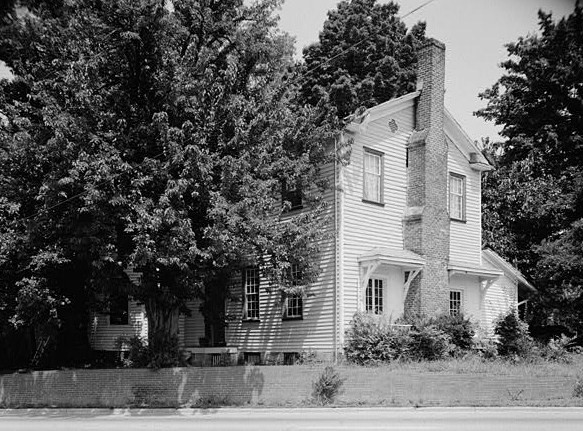
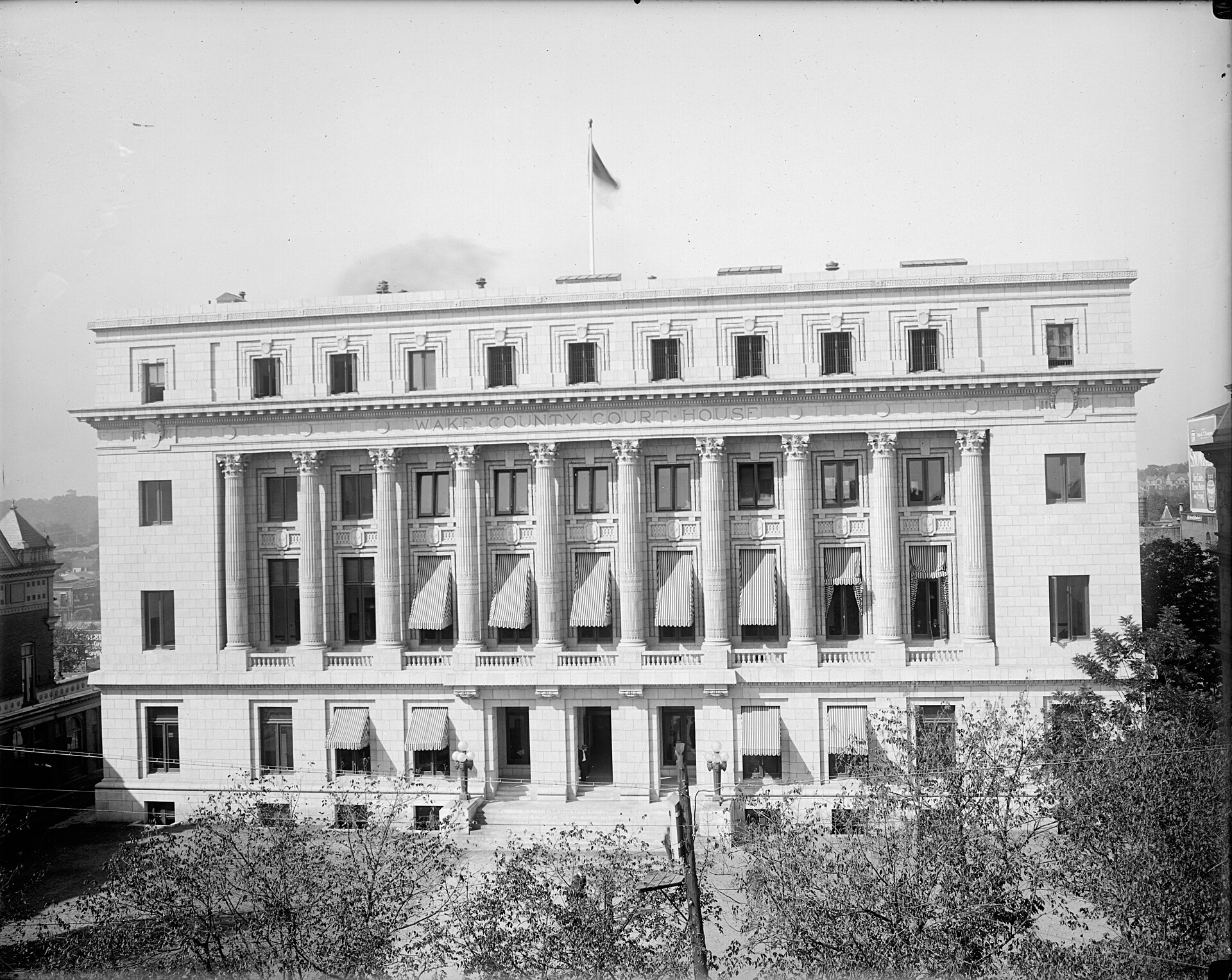
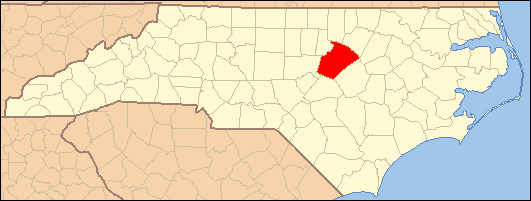
What’s new
- Flagship hub (priority depth): state-capital gravity with urban directories, state agencies, and rural eastern/southern farm neighborhoods.
- Formation 1771 from Johnston (and earlier Johnston/Orange-era districts) — for pre-formation events, use the parent jurisdiction’s paper (not later Anson-only catalogs).
- Seat: Raleigh · Neighbors: Durham, Johnston, Franklin, Harnett, Chatham, Nash, Granville.
- Long-form topics below: research path, parents/jurisdiction, neighbors/borders, place communities, record stack.
- Free tools: starter checklist · cheatsheet bundle · this week in Wake history.
Wake County was formed in 1771 from Johnston, Cumberland, Orange. The county seat is Raleigh. Neighboring counties include Durham, Franklin, Johnston, Harnett, Chatham, Nash, Granville.
This hub combines a modern research floor—record matrix, towns, repositories, news—with local history narrative. For events before the county’s formation year, open the parent jurisdiction that owned that year—not a later statewide vital series or Anson-only catalog.
The county was formed in 1771 from parts of Cumberland County, Johnston County, and Orange County. It was named for Margaret Wake, wife of Governor William Tryon. The first courthouse was built at a place called Wake Courthouse, commonly known as Bloomsbury. In 1771, the first elections and court were held, and the first militia was formed.
Wake County lost some its land area during the subsequent formation of other new counties. Portions were taken by Franklin County in 1787 and by Durham County in 1881 and 1911.
The earliest inhabitants of present day Wake County were the Tuscarora Native Americans. After the Tuscarora War in 1711, they were defeated and moved to New York to join the Iroquois nation.
During the colonial period of North Carolina, the state capital was New Bern. For several years, during and after the Revolutionary War, there was no capital, and the General Assembly met in various locations. In 1792, a commission was appointed to select a site for a permanent state capital. The members of the commission were leaning toward land owned by Colonel John Hinton across the Neuse River, but on the night before the final vote, the committee adjourned to the home of Joel Lane for an evening of food and spirits. The next day, the vote was in Lane's favor.
Raleigh was named after Sir Walter Raleigh, and established on 1,000 acres (4.0 km2) purchased from Lane. Sir Walter Raleigh never set foot in the United States, but two centuries earlier he had sponsored the establishment of the first English colony on the North Carolina shore at Roanoke Island. The city of Raleigh became both the state capital as well as the new county seat of Wake County. Raleigh is the only planned state capital in the United States.
Wake County is divided into 20 townships: Bartons Creek, Buckhorn, Cary, Cedar Fork, Holly Springs, House Creek, Leesville, Little River, Marks Creek, Meredith, Middle Creek, Neuse, New Light, Panther Branch, Raleigh, St. Mary's, St. Matthew's, Swift Creek, Wake Forest, and White Oak.
Source Wikipedia
In-depth topics
Towns & communities
History notes
Wake County (formed 1771 from Johnston (and earlier Johnston/Orange-era districts); seat Raleigh) is a research problem defined by state-capital gravity with urban directories, state agencies, and rural eastern/southern farm neighborhoods. The modern label is useful for late sources—and dangerous when it erases the courthouse that actually held authority in the event year.
Jurisdiction first. Write person + event + year + place as written in a source, then open the parent or neighbor that owned that year. Wake's formation year 1771 is a hard wall: earlier deeds, estates, tax lists, and court orders usually live in parent paper, not in a Wake-only catalog search.
Place density differs. Raleigh and market towns generate directories, newspapers, and church clusters that rural farm neighborhoods do not. Treat Raleigh, Cary, Apex, Wake Forest, Garner (and unincorporated settlements) as separate paper systems sharing a courthouse label.
FAN clubs spill. Neighbor research regularly includes Durham, Johnston, Franklin, Harnett, Chatham, Nash, Granville. Abstract adjoining owners, witnesses, bondsmen, and three neighboring census households before you declare a negative search.
Special Wake trap: Capital/state records vs county courthouse vs city directories; Research Triangle in-migration after ~1950s. Build a one-page formation log (event year → jurisdiction tried → repository → result → next action) every session—the habit that separates Charleston-class research from index shopping.
Session order: (1) fix jurisdiction; (2) rebuild households in every federal census decade available; (3) land + probate with full witness abstracting; (4) church/cemetery/newspaper substitutes; (5) military and institutional series; (6) only then paid database deep dives. Use the record matrix on this hub as a plan, not a guarantee. Methods: Start here · Master guide · Counties & formation.
Record availability matrix
| Record type | Coverage | Years (approx.) | Notes |
|---|---|---|---|
| Federal census | good | 1790–1950 | Federal schedules for NC with known quirks/losses in some years. Place the household in the correct county for each decade; county lines and suburbs shift—do not treat 1790–1950 as one static “Wake” geography. |
| Birth records | sparse | 1913– | Statewide NC birth registration is late (roughly 1913–1915 era for civil strength). Use delayed births, church registers, Bibles, and census for earlier generations—not parent-county “civil vitals.” |
| Marriage records | partial | 1771– | County marriage records strengthen in the 19th–20th centuries; earlier events often appear in church books, bonds, or newspapers. Confirm seat and boundary for the event year. |
| Death records | partial | 1913– | Death certificates denser after statewide registration (~1913–1915+). Earlier deaths via obituaries (News & Observer lineage and weeklies), church burial, probate, and cemeteries. |
| Land & deeds | good | 1771– | Record-loss / thin-series note: No catastrophic courthouse fire is the main story here—Wake’s larger trap is parent-jurisdiction (Johnston) before 1771 and later boundary/place-name drift around Raleigh suburbs. Wake deed series is relatively continuous at the courthouse and State Archives microfilm; still verify book/page gaps for early decades. Pre-1771 land lives under parent Johnston (and earlier contexts). Colonial grants/plats may predate the county at State Archives of North Carolina. |
| Probate & estates | good | 1771– | Record-loss / thin-series note: No catastrophic courthouse fire is the main story here—Wake’s larger trap is parent-jurisdiction (Johnston) before 1771 and later boundary/place-name drift around Raleigh suburbs. Estates are generally available; abstract bondsmen, sales, and widows’ petitions for FAN clubs. Pre-1771 estates live in parent jurisdictions. Pair thin years with equity and newspaper legal notices. |
| Church & parish | partial | varies | Church coverage varies by denomination and survival. Baptisms, membership, and burial registers often beat early civil vitals; check local societies and denominational archives. |
| Newspapers | varies | varies | News & Observer lineage and local weeklies; use DigitalNC and free reels before paid portals. City directories dense after the late 19th century for Raleigh-area families. |
| Military | good | 1775– | Revolutionary through 20th-century service may generate pensions, CMSRs, militia notes, and wartime claims. Pair unit research with Wake place context and neighboring counties when companies recruited across lines. |
| Cemeteries | partial | varies | Published surveys, Find a Grave, churchyards, and family plots. Unmarked burials are common—use obituaries, church books, and land descriptions. |
| Court records | partial | 1771– | Common pleas, sessions, and other court series often begin near formation (1771); equity may sit with or near probate. Pre-1771 under Johnston, Cumberland, Orange. Known disruption: 1832 register’s office fire. |
| Tax lists | sparse | varies | Tax lists can substitute for missing census years and thin deed decades. Coverage is uneven by locality and year—check State Archives of North Carolina and published abstracts. |
Newspapers
- The News & Observer lineage
- DigitalNC holdings — all Wake titles
- Raleigh Register / earlier capital titles
- The Raleigh Minerva
- The Weekly Raleigh Register
- The North-Carolina Star
- The Raleigh Register
- Constitutionalist, and People’s Advocate
- The Weekly Standard
- The Biblical Recorder
- The Raleigh Microcosm
- The North Carolinian
- The Rasp.
- The Democratic Signal
- The Independent
- The Whig Clarion
- Raleigh Times [1847-1852]
- Daily Raleigh Register
- Semi-Weekly Standard
- Spirit of the Age [1849-1865]
- The Tri-Weekly Star
- Southern Weekly Post
- Freedom’s Blade
- The Democratic Press
- The Arator
- North Carolina Christian Advocate
- The Field and Fireside
- The News & Observer
- Daily State Journal
- Weekly State Journal
- The Deaf Mute Casket
- The Church Intelligencer
- The Daily Progress
- The Daily Confederate
- The Daily Conservative
- Weekly Confederate
- Weekly Conservative
- Weekly Progress
- Daily Sentinel
- The Daily Standard
- The Enterprise
- The Raleigh Sentinel
- The Weekly Sentinel
- Spirit of the Age [1873-1???]
- The Era
- Tri-Weekly Era
- The Daily Era
- State Agricultural Journal
- Daily Constitution
- The State Chronicle [1877-1893]
- Hale’s Weekly
- The Journal of Industry
- The Raleigh Signal
- The Raleigh Times
- The Farmer and Mechanic
- Monthly Bulletin, North Carolina Department of Agriculture
- African Expositor
- North Carolina Baptist Missionary Worker
- The Progressive Farmer
- The Daily Call
- The North Carolina Intelligencer
- The State Chronicle [188?-1893]
- The Gazette [1891-1898]
- The North Carolinian
- The Hayseeder
- The Morning Post
- The Cape Fear Enterprise
- The Harbinger
- The Carolina Union Farmer
- The State Journal
- The Raleigh Independent
- The Union Herald
- Meredith College Student Newspaper
- Carolina Jeffersonian
- The Raleigh Student
- Zebulon Record
- Saint Augustine’s University Student Newspaper
- Tarheel Guardsman
- The Carolinian
- Saint Mary’s School Student Newspaper
- DuBois High School Student Newspaper
- The North Carolina Shipbuilder
- North Carolina Catholic
- News of North Carolina Military District
- The Wake Weekly and Youngsville-Rolesville Record
- William Peace University Newspaper
- The Front Page
- Philanthropy Journal of North Carolina
- Morrisville and Preston Progress
Cemeteries & burial research
- City Cemetery / Historic Oakwood
- City Cemetery / Oakwood (historic Raleigh cemeteries)
- Mt. Hope Cemetery (historic African American)
- Wake County cemeteries (Find a Grave / surveys)
Societies & repositories
Vital records
North Carolina statewide vital registration expanded in the early 20th century. For many Wake County families you will rely on marriage bonds, church registers, Bible records, newspapers, delayed births, and probate—not only a modern certificate.
Research starting points
What to do next in Wake County
- Fix the year and jurisdiction — if the event is before 1771, open parent paper first (Johnston (and earlier Johnston/Orange-era districts)).
- Rebuild the household in every census decade; abstract three neighboring households each time.
- Pull land + probate with full witness/bondsman abstracts in the courthouse that actually held authority.
- Work the place — Raleigh directories/newspapers vs rural church/cemetery clusters.
- Widen one neighbor at a time — Durham, Johnston, Franklin, Harnett.
- Log negatives and only then use paid databases for images you cannot get free.
- Wake County Government
- Wake County Public Libraries — Olivia Raney Local History
- North Carolina Genealogical Society
- Wake County Genealogical Society
- North Carolina Museum of History
- FamilySearch Wiki — Wake County
- NCGenWeb — Wake
- State Archives of North Carolina
- DigitalNC
- Start here research guide
- Full directory
Courthouse & contacts
The county seat is Raleigh. Confirm current Register of Deeds, Clerk of Superior Court, and library hours before visiting—offices move and digital portals change.
Public library: Wake County Public Libraries / Olivia Raney Local History
Record-loss / series note: No catastrophic courthouse fire is the main story here—Wake’s larger trap is parent-jurisdiction (Johnston) before 1771 and later boundary/place-name drift around Raleigh suburbs.
Record series note: 1832 register’s office fire is a limited loss event; Johnston parent before 1771 remains the larger trap. SANC holds extensive Wake microfilm—confirm book ranges rather than assuming total continuity.
If not found here, try…
- Formed 1771
- Parent / earlier jurisdiction Johnston, Cumberland, Orange — check district-era records before this county existed (districts guide).
Neighboring counties (deeds, marriages, newspapers, and kin often cross the line):
What to do next
Local history & events
- New renderings of North Carolina Museum of History released as Wake County tourism sets records - CBS17.com
- North Carolina Natural Heritage Program celebrates 50 years of conservation science and natural area protection - The Wake Weekly
- Wake Forest family sues NC cemetery operator, alleging wrong person buried next to son - WRAL
- Wake County Public Libraries celebrate Hispanic Heritage Month with special programming - Wake County Government (.gov)
- Wake Forest site near Heritage High included in affordable housing proposal for school land - NewsBreak: Local News & Alerts
Sources & further reading
- NCpedia — Wake County
- David Leroy Corbitt, The Formation of the North Carolina Counties, 1663–1943
- William S. Powell, The North Carolina Gazetteer
- State Archives of North Carolina
- DigitalNC — Wake County
- Chronicling America (Library of Congress)
- FamilySearch Wiki · NCGenWeb