Craven County Genealogy
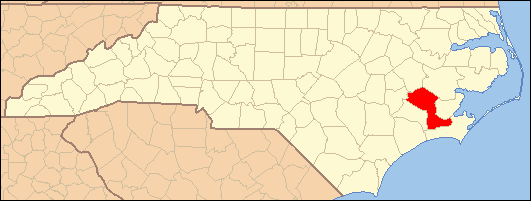
- Formed 1712
- Parent county / earlier Bath (colonial)
- County seat New Bern
- Neighbors Carteret, Jones, Lenoir, Pitt, Beaufort, Pamlico
Photos & maps
What’s new
- Colonial capital and port—New Bern occupation paper layered on Bath-era roots.
- Formation 1712 from Bath (colonial) — for pre-formation events, use the parent jurisdiction’s paper (not later Anson-only catalogs).
- Seat: New Bern · Neighbors: Carteret, Jones, Lenoir, Pitt, Beaufort, Pamlico.
- Tools: checklist · this week in Craven history.
Archdale is an older heading to keep when Craven research reaches colonial material. NCpedia dates its formation as Archdale Precinct of Bath County to 1705 and the change to Craven to 1712. Keep those names searchable when working with colonial material. They describe jurisdictional history, not the start date or completeness of every surviving record series. [1]
New Bern, the county seat, was settled in 1710 and incorporated in 1723. Baron Christoph von Graffenried founded the town, naming it for Bern in Switzerland. A family account describing an early New Bern ancestor still needs evidence about the individual; the town’s founding story does not establish every resident’s origin or arrival date. [1]
Distinguish the town from the county
NCpedia identifies Bridgeton, Cove City, Trent Woods, Vanceboro, Havelock and Dover among Craven communities and names the Neuse River among its physical features. Preserve a smaller community or river reference in your timeline. Do not convert all county residents into New Bern residents simply because their documents were recorded there. [1]
For a town household, retain street addresses, occupations and household members when sources supply them. For a rural property, preserve watercourses, roads and adjoining owners. Compare those details across documents before deciding that two same-name people are the same person.
An early place-name should be copied as written, with your interpretation separately explained. A later family history may use “Craven County” retrospectively for an event that contemporary material describes under Archdale or Bath.
Choose a courthouse series that answers the question
The State Archives’ County Records Guide lists Craven and organizes holdings as original records and microfilm, then by series. Courts, estates, land, marriage, tax and wills are among the categories. Holdings change as records are transferred and film added. Check the current entry for the years and series you need rather than relying on county formation as a coverage promise. [2]
For land, obtain the deed behind the index. Copy execution and recording dates, parties, witnesses and boundary language. Follow references to earlier deeds. An estate may explain inheritance or a later sale, but identify relatives from the language of the papers, not merely from participation in the transaction.
For a marriage or death lead in a compilation, retain its title and page and seek the underlying record. A transcript, register and index are separate sources. If they disagree, preserve the differing readings until another document helps resolve them.
Cohabitation records and the date of a union
North Carolina Digital Collections says it borrowed a volume from Craven’s Register of Deeds for its cohabitation-record work. The collection concerns an 1866 law recognizing marriages formed by formerly enslaved couples who had lived together as spouses. Its list identifies Craven material as loaned from the county. [3]
Read an entry in full and separate registration from the earlier relationship reported. Names, ages and duration may offer important clues, but details vary. Do not turn a duration into an exact wedding date without explaining the calculation and its uncertainty.
The collection cautions that not every couple registered and surname recording varied. A missing entry does not prove a couple had no union or children. Compare the record with independent household evidence and preserve the limits of any unsuccessful search. The project’s loan description is not a guarantee that the original volume is now permanently held at the State Archives. [3]
Use landmarks with their own dates
The county history identifies the restored colonial capital associated with Tryon Palace and dates the Harvey Mansion to 1798 and St. John’s Masonic Lodge and Theater to 1801. A building can orient a photograph or letter without proving family ownership, membership or employment. [1]
Keep full citations and record negative searches. A first session can locate one household, identify one relevant series and leave one testable question. Do not substitute the county’s broader history for the relationships established by the family’s own evidence.
Sources
Accessed November 9, 2026 EST. Historical facts below come from fetched sources; research steps are recommendations, not claims that a particular ancestor appears in a collection.
- NCpedia, “Craven County,” Encyclopedia of North Carolina. Authored historical summary supporting county formation, named places and the local history cited above. https://www.ncpedia.org/geography/craven
- State Archives of North Carolina, “County Records Guide.” Repository guide distinguishing original records from microfilm and organizing holdings by series; holdings change. https://archives.ncdcr.gov/researchers/collections/government-records/county-records-guide
- North Carolina Digital Collections, “Cohabitation Recs.” Craven volume loaned from the Register of Deeds; collection interpretation and limitations. https://digital.ncdcr.gov/spotlights/cohabitation-recs
In-depth topics
Towns & communities
History notes
Craven County (formed 1712 from Bath (colonial); seat New Bern) is a research problem defined by Colonial capital and port—New Bern occupation paper layered on Bath-era roots. The modern label helps late sources and misleads when the event year sat in a parent courthouse.
Jurisdiction first. Write person + event + year + place as written in a source, then open the jurisdiction that owned that year. Before 1712, expect parent paper—not a Craven-only catalog search.
Place density differs. New Bern and market towns generate directories, newspapers, and church clusters that rural neighborhoods do not. Treat New Bern, Havelock, Bridgeton, Cove City, Vanceboro as separate paper systems sharing a courthouse label.
FAN clubs spill. Neighbor research regularly includes Carteret, Jones, Lenoir, Pitt, Beaufort, Pamlico. Abstract adjoining owners, witnesses, bondsmen, and three neighboring census households before you declare a negative search.
Special Craven trap: Bath precinct roots; New Bern 1862 occupation; Cherry Point era directories; sound-edge FAN clubs. Keep a one-page formation log (event year → jurisdiction tried → repository → result → next action).
Session order: (1) fix jurisdiction; (2) rebuild every federal census decade; (3) land + probate with full witness abstracting; (4) church/cemetery/newspaper; (5) military and institutional series; (6) paid databases last. Methods: Start here · Master guide · Counties & formation.
Historical markers in Craven County
- C-42 Christ Church
Craven Parish was created in 1715 as one of nine in the province, and its first church in New Bern was finished around 1750. The present building was consecrated in 1875 and still uses a communion service given by George II in 1752. DNCR's essay notes that rector James Reed stayed loyal to the Crown and was suspended by the vestry in 1777, a reminder that this parish's records run from the colonial Anglican church into the Episcopal era.
- C-10 Baron Christoph von Graffenried
Baron Christoph von Graffenried of Bern, Switzerland, brought Swiss and Palatine settlers to North Carolina and founded New Bern in 1710. DNCR's essay says ninety-two Palatine families, about 650 people, sailed that year after being driven from their homes in Germany over their Protestant faith, which makes this a starting point for New Bern's earliest German-speaking families.
- C-64 James City
James City grew from a camp set up in 1863 for formerly enslaved people who reached Union-held New Bern, and took its name from Army chaplain Horace James. DNCR's essay says the camps were combined as the Trent River settlement on land once owned by the Spaight family, that James later served as an assistant commissioner of the Freedmen's Bureau for North Carolina, and that residents stayed a close community until about 1900, so Freedmen's Bureau records are a natural next step.
- C-33 James Walker Hood
James Walker Hood, born free in Pennsylvania in 1831, came to North Carolina in 1863 as an A.M.E. Zion missionary and founded St. Peter's in New Bern in 1864, the same year he organized the denomination's North Carolina Conference. He later served as assistant state superintendent of public instruction (1868-70), helped found Livingstone College in 1885 and became a bishop.
- C-80 Andrew's Chapel
Built by New Bern's Methodists in 1802, Andrew's Chapel gave free Black and some enslaved worshipers separate space, and it became wholly African American after white members left between 1839 and 1843. DNCR's essay adds that Union soldiers briefly ran a school for Black children there in 1862, that the congregation joined the A.M.E. Zion church under James Walker Hood, and that it took the name St. Peter's in 1879.
- C-84 First North Carolina Colored Volunteers
The state's first Black Union regiment gathered at this New Bern site on 24 July 1863 and became the 35th U.S. Colored Troops in 1864. DNCR's essay says Gen. Edward A. Wild began recruiting in May 1863, put James Beecher in command and had the men mustered in on 30 June 1863, details that help when searching USCT service and pension files.
All 34 other markers in Craven County, by number
- C-2 Tryon Palace
- C-5 Abner Nash
- C-11 Battle of New Bern
- C-12 Fort Totten
- C-14 George E. Badger
- C-20 Bayard v. Singleton
- C-22 First Post Road
- C-23 Streets Ferry
- C-25 Fort Point
- C-27 De Bretigny
- C-32 Fort Barnwell
- C-39 Political Duel
- C-51 Batchelder's Creek
- C-61 New Bern Academy
- C-66 Rains Brothers
- C-67 USRC Diligence
- C-68 Cherry Point
- C-81 King Solomon Lodge
- C-89 Farm Life Schools
- CC-2 Battle of New Bern
Record availability matrix
| Record type | Coverage | Years (approx.) | Notes |
|---|---|---|---|
| Federal census | good | 1790–1950 | Federal schedules with coastal boundary and wartime disruption awareness. Parent notes apply to pre-formation research only. |
| Birth records | sparse | 1913– | Church and burial societies strong substitutes for early decades; civil late. |
| Marriage records | partial | 1741– | Early church/bond/newspaper; civil improves later. Confirm New Bern-area event geography. |
| Death records | partial | 1913– | Certificates denser after statewide registration; church and port-city newspapers earlier. |
| Land & deeds | good | 1712– | Record-loss / thin-series note: Colonial east with wartime occupation layers: additional federal paper appears in some decades, but local series still need run-by-run verification. Port/plantation research is multi-repository. Colonial east—early deed series important; wartime occupation can create additional federal paper trails. Confirm repository (county vs Archives). |
| Probate & estates | good | 1712– | Record-loss / thin-series note: Colonial east with wartime occupation layers: additional federal paper appears in some decades, but local series still need run-by-run verification. Port/plantation research is multi-repository. Port/plantation estates; pair with newspaper legal notices and equity. Abstract enslavers’ estates for free and enslaved FAN work. |
| Church & parish | good | varies | Church coverage can be unusually rich (colonial Albemarle, Moravian Wachovia, Quaker, older coastal congregations) when books survive—check local societies and denominational archives. |
| Newspapers | varies | varies | New Bern papers with occupation-era runs—verify holdings before citing a full continuous run. DigitalNC + Chronicling America first. |
| Military | good | 1775– | Revolutionary through 20th-century service may generate pensions, CMSRs, militia notes, and wartime claims. Pair unit research with Craven place context and neighboring counties when companies recruited across lines. |
| Cemeteries | partial | varies | Published surveys, Find a Grave, churchyards, and family plots. Unmarked burials are common—use obituaries, church books, and land descriptions. |
| Court records | partial | 1712– | Common pleas, sessions, and other court series often begin near formation (1712); equity may sit with or near probate. Pre-1712 under Bath (colonial). Known disruption: 1712 early colonial record destruction. |
| Tax lists | sparse | varies | Tax lists can substitute for missing census years and thin deed decades. Coverage is uneven by locality and year—check State Archives of North Carolina and published abstracts. |
Newspapers
- New Bern Sun Journal lineage
- DigitalNC holdings — all Craven titles
- The North Carolina Gazette [1751-1759]
- The Newbern Gazette
- The North-Carolina Magazine; or, Universal Intelligencer
- The North-Carolina Gazette [1768-1786]
- The North-Carolina Gazette [1784-1798]
- The State Gazette of North-Carolina
- The North Carolina Circular, and Newbern Weekly Advertiser
- The True Republican, and Newbern Weekly Advertiser
- The Carolina Federal Republican
- The Carolinian
- Newbern Sentinel
- The Newbernian, and North Carolina Advocate
- The Biblical Recorder
- North Carolina Republican
- The Daily Delta
- Newbern Progress
- Newbern Weekly Progress
- New Berne Times
- The Newbern Journal of Commerce
- New Bern Republican
- New Berne Times, and Republic-Courier
- Our Living and Our Dead
- The Free Will Baptist
- The Newbernian [1876-18??]
- The Newbernian [18??-18??]
- The Semi-Weekly Sun-Journal
- The New Bernian
- The Chronicle
- The Atlantic Messenger
- The New Bern Mirror
- West Craven Highlights
Cemeteries & burial research
- Cedar Grove Cemetery
- Craven County cemeteries (Find a Grave / surveys)
Societies & repositories
Vital records
North Carolina statewide vital registration expanded in the early 20th century. For many Craven County families you will rely on marriage bonds, church registers, Bible records, newspapers, delayed births, and probate—not only a modern certificate.
Research starting points
Courthouse & contacts
The county seat is New Bern. Confirm current Register of Deeds, Clerk of Superior Court, and library hours before visiting—offices move and digital portals change.
Public library: Craven-Pamlico Regional Library
Record-loss / series note: Colonial east with wartime occupation layers: additional federal paper appears in some decades, but local series still need run-by-run verification. Port/plantation research is multi-repository.
If not found here, try…
- Formed 1712
- Parent / earlier jurisdiction Bath (colonial) — check district-era records before this county existed (districts guide).
Neighboring counties (deeds, marriages, newspapers, and kin often cross the line):
Sources & further reading
- NCpedia — Craven County
- David Leroy Corbitt, The Formation of the North Carolina Counties, 1663–1943
- William S. Powell, The North Carolina Gazetteer
- State Archives of North Carolina
- DigitalNC — Craven County
- Chronicling America (Library of Congress)
- FamilySearch Wiki · NCGenWeb