Person County Genealogy
- Formed 1791
- Parent county / earlier Caswell
- County seat Roxboro
- Neighbors Caswell, Durham, Orange, Granville
Photos & maps
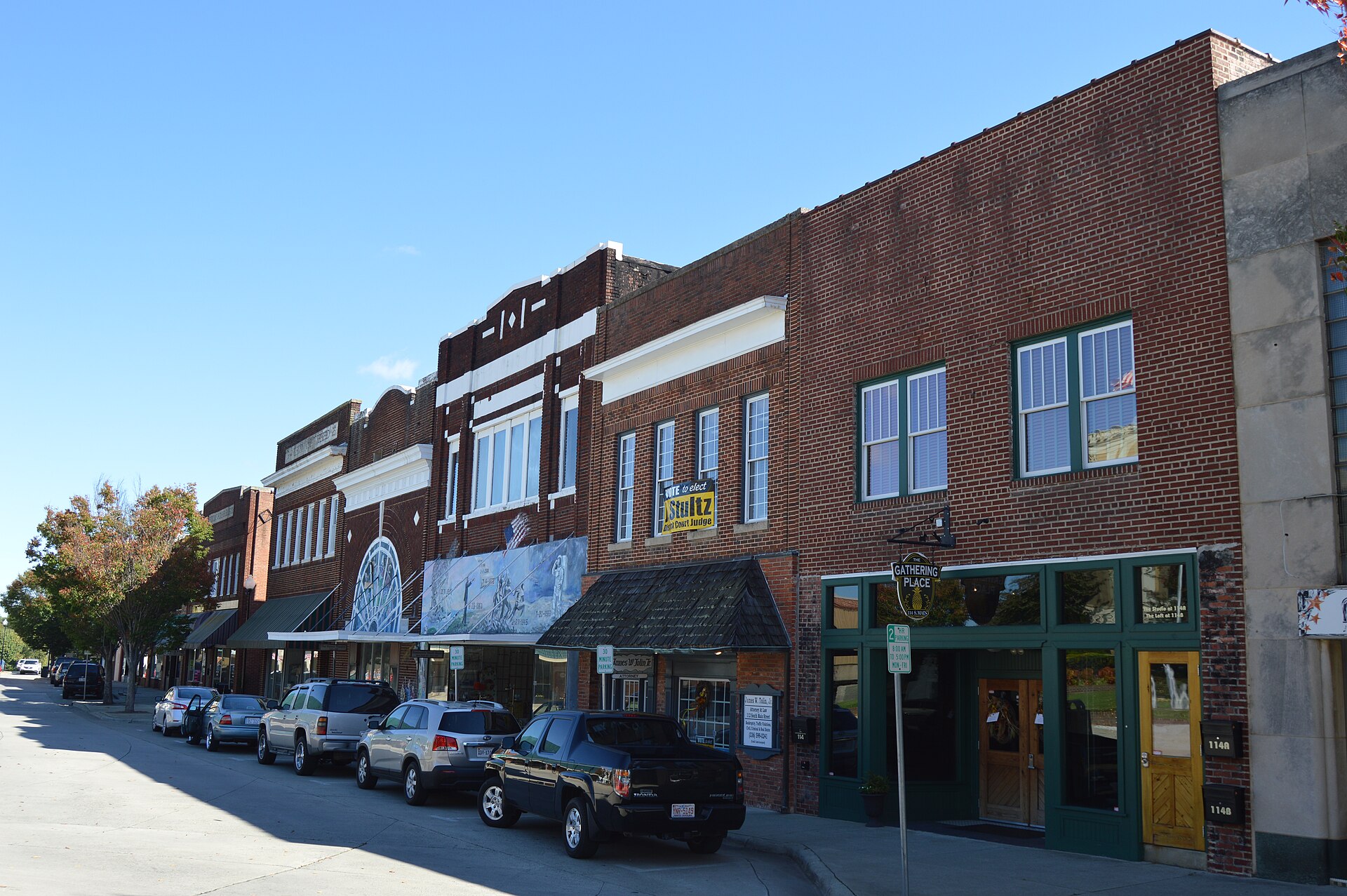
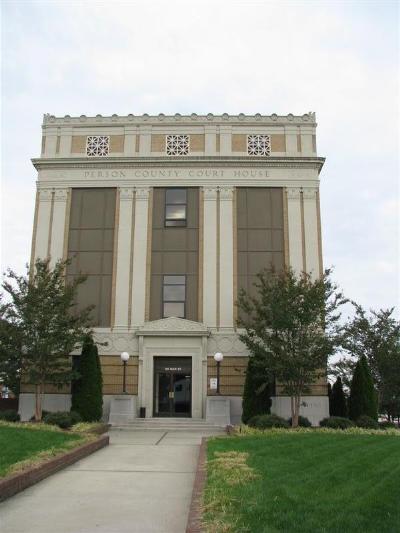
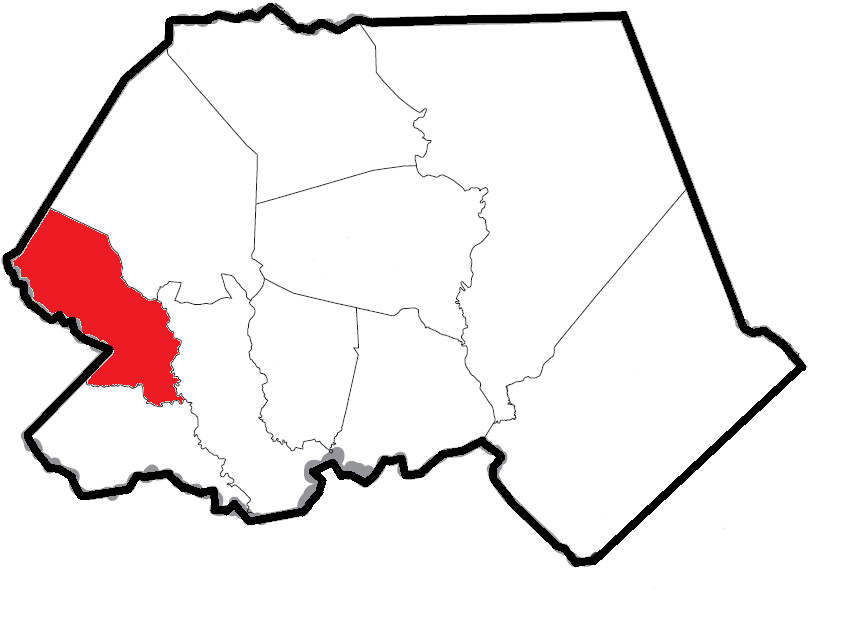
What’s new
- Flagship hub (deepened): northern Piedmont tobacco country with Virginia border FAN clubs.
- Formation 1791 from Caswell — for pre-formation events, use the parent jurisdiction’s paper (not later Anson-only catalogs).
- Seat: Roxboro · Neighbors: Caswell, Granville, Durham, Orange.
- Long-form topics below target SC-style essay depth (jurisdiction, FAN clubs, place-level work, full record stack).
- Methods: Start here · Master guide.
Person County was formed in 1791 from Caswell. The county seat is Roxboro. Neighboring counties include Caswell, Durham, Orange, Granville.
This hub combines a modern research floor—record matrix, towns, repositories, news—with local history narrative. For events before the county’s formation year, open the parent jurisdiction that owned that year—not a later statewide vital series or Anson-only catalog.
Person County is a county located in the Piedmont region in north-central North Carolina in the United States. It is part of the Durham-Chapel Hill Metropolitan Area. The population was 35,623 at the 2000 census.
The county seat is Roxboro. The Hyco Lake area and southern portion of the county are the fastest growing, with new businesses and subdivisions.
This area was inhabited by indigenous peoples, ancestors of Native Americans, for 12,000 years, over which time they developed varying cultures. Starting about 1000 CE, the Mississippian culture peoples built earthwork mounds in their chiefdoms in the western part of the state, such as Joara. Some of these native people were encountered by the Spanish Juan Pardo expedition in the mid-1500s, which at Fort San Juan established the first European settlement in the interior.
Other European explorers arrived in Person County in the 1600s. European-American settlement, by immigrants of Scots, Scots-Irish, English, French Huguenot, and German ancestry, did not take place until the mid-17th through 19th centuries. Some migrants brought enslaved African Americans with them, or imported some later.
European-Americans established Person County as part of Edgecombe County in 1746. County designations kept changing, as it was part of Granville County from 1746–1752; included in Orange County until 1778; and part of Caswell County until 1791/1792. By dividing Caswell County into two squares–each side measuring approximately twenty (20) miles in length, the settlers formed two counties of 400–square miles each.
Roxboro is the only incorporated municipality in the county. There are nine townships, many with community centers or postal offices. The city of Roxboro was chartered January 9, 1855.
Immigration
Religious affiliation in the county has reflected the early northern European cultural base and been predominantly Protestant. There are fewer people of Catholic and other faiths. Due to the county's proximity to Virginia, the Carolina coast, and the Appalachian foothills, a wide variety of Southern American English dialects can be heard, with Virginia Piedmont, Coastal Southern, South Midland, and African American Vernacular English the most common.
Early 20th-century local legends claimed that the Indians of Person County (recognized by the state as a tribe in 1911) were descended from the first British colonists at the Elizabethan-era settlement of Roanoke Island. No verifiable links to the Roanoke Colony have been documented.
In 2003 the Indians of Person County changed their name to Sappony, to indicate their connection to the historical Saponi, a Southeastern Siouan tribe. Historians believe that this Siouan-related nation became extinct as a distinct entity in the Eastern states, although individual descendants continue. No historical documentation links the contemporary Sappony to the historical Saponi.
In the 19th century, ancestors of the current Sappony included many persons of multiracial heritage: European and African in addition to Native American. The slave societies of the colonies and early United States did not recognize American Indians separately and at different times counted them among the free blacks, mustees, mulattoes for free people of color at different times. The county's multiracial population was one of a number of frontier communities which anthropologists classified as tri-racial isolates. Later 20th c. research has shown that many of these people migrated from Virginia in the late 18th and early 19th century. They were descendants of people of color free in Virginia before the American Revolution. Researcher Paul Heinegg has shown that most of these free families originated in marriages between white women and African or African-American men. Some free Native Americans who adopted English customs may have married into African-American communities as well. Heinegg documented that 80 percent of the people listed as free people of color in the NC censuses of 1790-1810 could be traced to African Americans free in Virginia before the Revolution.
Revolutionary & Civil War
The county was named for General Thomas Person, a Revolutionary War patriot, who made significant contributions to Person County and surrounding areas. He was a trustee of the University of North Carolina at Chapel Hill. His generous donations were recognized by the construction and naming of Person Hall.
Lieutenant Colonel Stephen Moore (often referred to as "General" because he was named the Deputy Quartermaster General of the Hillsborough district) was another Revolutionary War hero of note, commanding Person County troops in the Battle of Camden. He was taken prisoner and placed on the prison ship Torbay. In 1775-6 he purchased property in the southern part of the county and named it Mt. Tirzah. His house, built in 1778 and still at its original site, has been recently renovated. Moore was buried near the house along with many other family members.
During the Civil War, Person County supplied 800 to 1000 soldiers to the Confederate cause. A granite monument at the Person County Courthouse honors E. Fletcher Satterfield, who advanced the Confederate flag at Gettysburg. After the war, many of the area's large plantations were divided into smaller farms.
Agriculture and industry
J.A. Long, W.W. Kitchin, A.R. Foushee, J.S. Bradsher, J.C. Pass, W.F. Reade, and R.E. Long were key leaders who helped make a transition to a more diversified economic base after the Civil War. The arrival of the Norfolk and Western Railroad was a major influence around 1890, as it enabled the addition of tobacco processing plants and warehouses to the rural economy. Although the processing plants disappeared many years ago, a few of the warehouses still stand.
J.A. Long established Peoples Bank in 1891 and the Roxboro Cotton Mills in 1899, later known as Tultex Yarns. Long died in 1915 but was succeeded by his son, J.A. Long, Jr., who began attracting new business to Roxboro. Baker Company opened here in 1923, making textiles a major contributor to the local economy for decades. Baker was merged with Collins and Aikman Corporation (C&A), becoming a major industry in Person County for several decades before closing in August 2006. Textile manufacturers have moved to other locations in the US and overseas.
20th & 21st Century
Residential & Commercial development has grown steady over the past few years in part due to the county's location near the Research Triangle region. The Hyco Lake area and southern portion of the county has seen an influx of new home and commercial development in the late 20th and early 21st-century. The county's largest employers are GKN, Eaton Corporation and Georgia-Pacific Corporation.
2010 Tornado
On the night of March 28, 2010 between 11:55pm and 12:05am EDT an EF1 packing winds of 70-85 mph struck the Timberlake and Rougemont community. This was one of at least eight tornado's that hit NC.
Initial touchdown of the tornado occurred along fire tower Road off Moores Mill Road in extreme southeast Person County as a weak EF0 with wind speeds of 65-70 mph. The tornado then moved northeast crossing Helena-Moriah Road. Trees including both pines and hardwoods were sheared off a quarter to halfway up. Damage here was rated as EF0 (70-80 mph). The tornado continued moving northeast striking a subdivision off Stoney Mountain Road and Mountain Ridge Road. Several trees were twisted off and uprooted and a couple of modular homes sustained damage when trees fell on them. Estimated winds were 75-85 mph rating it an EF0. The worst damage occurred as the tornado moved northeast across Medford Oakley Road. Numerous pines and hardwoods were snapped off and uprooted and a modular home was moved off its foundation. The tornado reached EF1 strength here with winds of 90-100 mph. The tornado then moved into a wooded area where it weakening producing minor damage to an old barn and weak tree damage near Peed Road. Wind speeds here were estimated at 65 mph.
Source: Wikipedia.
In-depth topics
Towns & communities
History notes
Person County (formed 1791 from Caswell; seat Roxboro) is a research problem defined by northern Piedmont tobacco country with Virginia border FAN clubs. Roxboro market density vs rural farm neighborhoods. Caswell parent for pre-1791 events.
Depth here is not about listing more sections—it is about choosing the right jurisdiction and record class for the decade. Wrong-courthouse searches create the most “missing” ancestors. Always record the jurisdiction as named in the original deed, estate, tax list, or church book, then map it onto modern hubs.
Neighbor FAN clubs frequently spill into Caswell, Granville, Durham, Orange. Heirs, bondsmen, burial neighbors, and mill co-workers often sit one county (or one state line) away. When a search goes cold, widen one decade and one jurisdiction at a time and write down negatives—they are data.
Roxboro and rural communities are different paper systems. Town decades after about 1880 often reward city directories, multi-denominational churches, and newspapers. Farm and mountain corridors still require land descriptions, small churches, and cemetery surveys that never appear in town books. Pin community first, then open the matching stack.
Use the record availability matrix on this hub as a planning tool—not a guarantee. Pair it with statewide methods: Start here, counties & formation, census, land, probate, church, and the Master NC research guide.
Session order that matches SC’s best county pages: (1) write person + event + year + place as written; (2) confirm formation/parent for that year; (3) rebuild every available census decade with neighbors; (4) abstract land and probate in the correct courthouse years; (5) church/cemetery substitutes for pre-vital generations; (6) newspapers/directories for later town moves; (7) military or specialized paths only when claimed; (8) parents/neighbors/border states with a written log. Statewide substitutes: State Archives of North Carolina · DigitalNC · NCGenWeb — Person.
Record availability matrix
| Record type | Coverage | Years (approx.) | Notes |
|---|---|---|---|
| Federal census | good | 1791–1950 | Federal schedules for NC; place each household in the correct county for that decade. Before 1791, people will not be labeled Person—use Caswell. Parent-jurisdiction notes apply only to pre-formation events—not to post-formation federal census rows. Township and city-ward labels change; re-pin every decade. |
| Birth records | sparse | 1913– | Statewide NC birth registration is late (roughly 1913–1915 for civil strength). Use delayed births, church registers, Bibles, and census for earlier Person generations—not parent-county “civil vitals.” |
| Marriage records | partial | 1791– | County marriage records improve in the 19th–20th centuries after formation (1791); earlier events often appear in church books, bonds, newspapers, or Caswell. Confirm event-year jurisdiction vs modern address. |
| Death records | partial | 1913– | Death certificates denser after statewide registration (~1913–1915+). Earlier Person deaths via obituaries, church burial, probate, and cemeteries. |
| Land & deeds | good | 1791– | Record-loss / thin-series note: Formed 1791 from Caswell. Pre-1791 is Caswell/Orange geography; VA border FAN clubs appear in land and migration work. Person deed/Register of Deeds series typically begin near formation (1791); pre-1791 land lives under Caswell. Colonial grants/plats may predate the county at State Archives of North Carolina. Always verify book/page gaps; abstract witnesses and neighbors. |
| Probate & estates | good | 1791– | Record-loss / thin-series note: Formed 1791 from Caswell. Pre-1791 is Caswell/Orange geography; VA border FAN clubs appear in land and migration work. Wills, administrations, inventories, and equity are core after 1791; pre-formation estates under Caswell. Abstract bondsmen, sales, and widows’ petitions for FAN clubs. Pair thin years with newspaper legal notices and Archives microfilm. |
| Church & parish | partial | varies | Church coverage varies by denomination and survival. Baptisms, membership, and burial registers often beat early civil vitals; check local societies and denominational archives. |
| Newspapers | varies | varies | Roxboro and local weeklies, plus larger regional papers for legal notices and obituaries. Verify actual title runs on DigitalNC and Chronicling America before citing continuous coverage—do not invent a “County Herald” without holdings. |
| Military | good | 1775– | Revolutionary through 20th-century service may generate pensions, CMSRs, militia notes, and wartime claims. Pair unit research with Person place context and neighboring counties when companies recruited across lines. |
| Cemeteries | partial | varies | Published surveys, Find a Grave, churchyards, and family plots. Unmarked burials are common—use obituaries, church books, and land descriptions. |
| Court records | partial | 1791– | Record-loss / thin-series note: Formed 1791 from Caswell. Pre-1791 is Caswell/Orange geography; VA border FAN clubs appear in land and migration work. Common pleas, sessions, and other court series often begin near formation (1791); equity may sit with or near probate. Pre-1791 under Caswell. |
| Tax lists | sparse | varies | Tax lists can substitute for missing census years and thin deed decades. Coverage is uneven by locality and year—check State Archives of North Carolina and published abstracts. |
Newspapers
Cemeteries & burial research
- Roxboro / county-seat cemeteries
- Person County cemeteries (Find a Grave / surveys)
Societies & repositories
Vital records
North Carolina statewide vital registration expanded in the early 20th century. For many Person County families you will rely on marriage bonds, church registers, Bible records, newspapers, delayed births, and probate—not only a modern certificate.
Research starting points
Courthouse & contacts
The county seat is Roxboro. Confirm current Register of Deeds, Clerk of Superior Court, and library hours before visiting—offices move and digital portals change.
Public library: Person County Public Library
Record-loss / series note: Formed 1791 from Caswell. Pre-1791 is Caswell/Orange geography; VA border FAN clubs appear in land and migration work.
If not found here, try…
- Formed 1791
- Parent / earlier jurisdiction Caswell — check district-era records before this county existed (districts guide).
Neighboring counties (deeds, marriages, newspapers, and kin often cross the line):
Local history & events
Sources & further reading
- NCpedia — Person County
- David Leroy Corbitt, The Formation of the North Carolina Counties, 1663–1943
- William S. Powell, The North Carolina Gazetteer
- State Archives of North Carolina
- DigitalNC — Person County
- Chronicling America (Library of Congress)
- FamilySearch Wiki · NCGenWeb