Chatham County Genealogy
- Formed 1771
- Parent county / earlier Orange
- County seat Pittsboro
- Neighbors Orange, Durham, Wake, Harnett, Lee, Moore, Randolph, Alamance
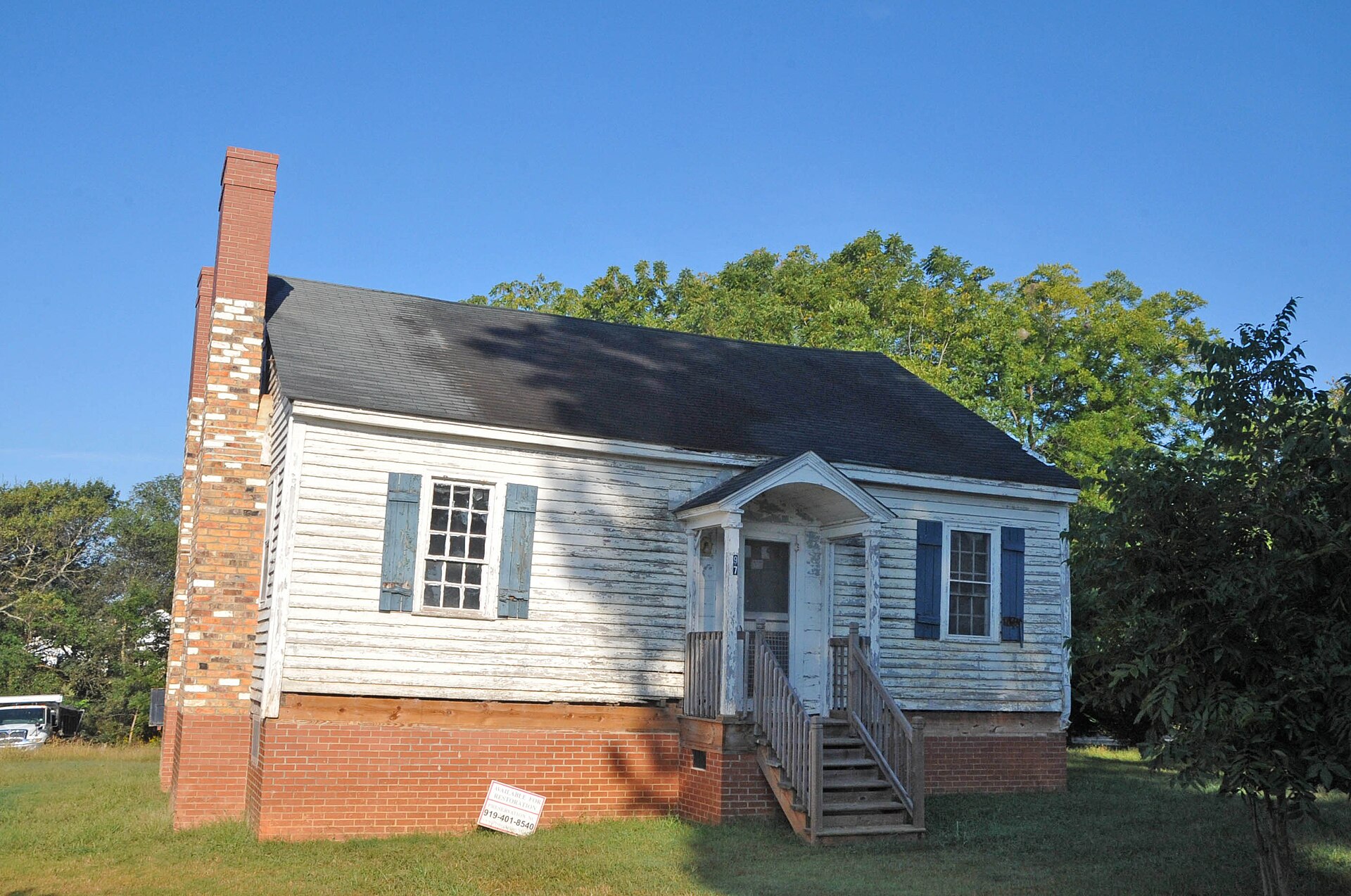
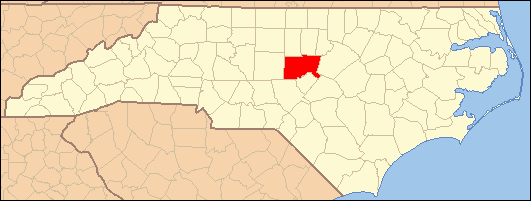
Photos & maps

What’s new
- Flagship hub (deepened): Haw/Deep River corridors with later Research Triangle spillover.
- Formation 1771 from Orange — for pre-formation events, use the parent jurisdiction’s paper (not later Anson-only catalogs).
- Seat: Pittsboro · Neighbors: Orange, Durham, Wake, Lee, Moore, Randolph, Alamance.
- Long-form topics below target SC-style essay depth (jurisdiction, FAN clubs, place-level work, full record stack).
- Methods: Start here · Master guide.
Chatham County was formed in 1771 from Orange. The county seat is Pittsboro. Neighboring counties include Orange, Durham, Wake, Harnett, Lee, Moore, Randolph, Alamance.
This hub combines a modern research floor—record matrix, towns, repositories, news—with local history narrative. For events before the county’s formation year, open the parent jurisdiction that owned that year—not a later statewide vital series or Anson-only catalog.
The county was formed in 1771 from Orange County. It was named, like Pittsburgh, Pennsylvania in 1758, for William Pitt, 1st Earl of Chatham, who served as British Prime Minister from 1766 to 1768 and opposed harsh colonial policies.
In 1907 parts of Chatham County and Moore County were combined to form Lee County. The award winning PBS Documentary Family Name notes Chatham County as the place the relationship between the African-American and European-American branches of the Alston family originated. George Moses Horton, Historic Poet Laureate of Chatham County, North Carolina (1797?-1883) lived most of his life in Chatham County and is among the few slaves to have published material while still a slave.
NCpedia / formation references (verify with Corbitt)
The Cape Fear river begins in Chatham County where the Haw and Deep River's join. This is below B. Everett Jordan Lake which is used for flood control and as a reservoir. It is controlled by the Army Corps of Engineers. It's also part of the Jordan Lake State Recreation Area. The county is in North Carolina Slate Belt and the groundwater is full of minerals for which a resort near Mt. Vernon Springs gained renown in the late 19th and early 20th centuries. The resort is gone, but the springs are owned by a local Church. Chatham county is also home to the only workable coal deposits in the state of North Carolina.
The county seat of Chatham County is Pittsboro. Chatham County contains the following townships: Albright, Baldwin, Bear Creek, Cape Fear, Center, Gulf, Hadley, Haw River, Hickory Mountain, Matthews, New Hope, Oakland, and Williams.
Sites of interest in Chatham County are the Carnivore Preservation Trust, Chatham County Historical Museuem, Jordan Lake Educational State Forest, the North Carolina Railroad Museum and the Fearrington Village and House.
Chatham County NCGenweb Site
Chatham County NCGenweb Archives (Digital Library)
Chatham County Historical Association, Inc.
P.O. Box 913
Pittsboro, NC 27312
Chatham County Courthouse
PO Box 87
County Courthouse
Pittsboro, NC 27312
Chatham County Public Libraries
The Wren Memorial Library
500 N. 2nd Avenue
Siler City, NC 27344
In-depth topics
Towns & communities
History notes
Chatham County (formed 1771 from Orange; seat Pittsboro) is a research problem defined by Haw/Deep River corridors with later Research Triangle spillover. Parent Orange is essential for pre-1771 events. Late suburban growth pulls some households into Wake/Durham paper trails.
Depth here is not about listing more sections—it is about choosing the right jurisdiction and record class for the decade. Wrong-courthouse searches create the most “missing” ancestors. Always record the jurisdiction as named in the original deed, estate, tax list, or church book, then map it onto modern hubs.
Neighbor FAN clubs frequently spill into Orange, Durham, Wake, Lee, Moore, Randolph, Alamance. Heirs, bondsmen, burial neighbors, and mill co-workers often sit one county (or one state line) away. When a search goes cold, widen one decade and one jurisdiction at a time and write down negatives—they are data.
Pittsboro and rural communities are different paper systems. Town decades after about 1880 often reward city directories, multi-denominational churches, and newspapers. Farm and mountain corridors still require land descriptions, small churches, and cemetery surveys that never appear in town books. Pin community first, then open the matching stack.
Use the record availability matrix on this hub as a planning tool—not a guarantee. Pair it with statewide methods: Start here, counties & formation, census, land, probate, church, and the Master NC research guide.
Session order that matches SC’s best county pages: (1) write person + event + year + place as written; (2) confirm formation/parent for that year; (3) rebuild every available census decade with neighbors; (4) abstract land and probate in the correct courthouse years; (5) church/cemetery substitutes for pre-vital generations; (6) newspapers/directories for later town moves; (7) military or specialized paths only when claimed; (8) parents/neighbors/border states with a written log. Statewide substitutes: State Archives of North Carolina · DigitalNC · NCGenWeb — Chatham.
Record availability matrix
| Record type | Coverage | Years (approx.) | Notes |
|---|---|---|---|
| Federal census | good | 1790–1950 | Federal schedules after formation; pre-1771 is Orange. Re-pin as modern Triangle labels appear later. |
| Birth records | sparse | 1913– | Late civil; church substitutes earlier. University-adjacent directories help late decades. |
| Marriage records | partial | 1771– | Post-1771 series; earlier Orange/church/bond. |
| Death records | partial | 1913– | Certificates denser after statewide registration; obituaries earlier. |
| Land & deeds | good | 1771– | Record-loss / thin-series note: Formed 1771 from Orange: Research Triangle growth creates late city sources; early families often Orange-labeled. Boundary work with Wake/Durham/Lee matters. Post-1771 deeds; pre-formation Orange. Watch later splits and reservoir/road-era place-name drift. |
| Probate & estates | good | 1771– | Record-loss / thin-series note: Formed 1771 from Orange: Research Triangle growth creates late city sources; early families often Orange-labeled. Boundary work with Wake/Durham/Lee matters. Estates after formation; earlier Orange. Abstract sales for FAN clubs. |
| Church & parish | partial | varies | Church coverage varies by denomination and survival. Baptisms, membership, and burial registers often beat early civil vitals; check local societies and denominational archives. |
| Newspapers | varies | varies | Pittsboro and local weeklies plus regional Triangle papers—verify DigitalNC runs. |
| Military | good | 1775– | Revolutionary through 20th-century service may generate pensions, CMSRs, militia notes, and wartime claims. Pair unit research with Chatham place context and neighboring counties when companies recruited across lines. |
| Cemeteries | partial | varies | Published surveys, Find a Grave, churchyards, and family plots. Unmarked burials are common—use obituaries, church books, and land descriptions. |
| Court records | partial | 1771– | Common pleas, sessions, and other court series often begin near formation (1771); equity may sit with or near probate. Pre-1771 under Orange. Known disruption: No major fire on standard lists; Orange parent (1771). |
| Tax lists | sparse | varies | Tax lists can substitute for missing census years and thin deed decades. Coverage is uneven by locality and year—check State Archives of North Carolina and published abstracts. |
Newspapers
Cemeteries & burial research
- Pittsboro / county-seat cemeteries
- Chatham County cemeteries (Find a Grave / surveys)
Societies & repositories
Vital records
North Carolina statewide vital registration expanded in the early 20th century. For many Chatham County families you will rely on marriage bonds, church registers, Bible records, newspapers, delayed births, and probate—not only a modern certificate.
Research starting points
Courthouse & contacts
The county seat is Pittsboro. Confirm current Register of Deeds, Clerk of Superior Court, and library hours before visiting—offices move and digital portals change.
Public library: Chatham County Public Libraries
Record-loss / series note: Formed 1771 from Orange: Research Triangle growth creates late city sources; early families often Orange-labeled. Boundary work with Wake/Durham/Lee matters.
If not found here, try…
- Formed 1771
- Parent / earlier jurisdiction Orange — check district-era records before this county existed (districts guide).
Neighboring counties (deeds, marriages, newspapers, and kin often cross the line):
Local history & events
Sources & further reading
- NCpedia — Chatham County
- David Leroy Corbitt, The Formation of the North Carolina Counties, 1663–1943
- William S. Powell, The North Carolina Gazetteer
- State Archives of North Carolina
- DigitalNC — Chatham County
- Chronicling America (Library of Congress)
- FamilySearch Wiki · NCGenWeb