Mitchell County Genealogy
- Formed 1861
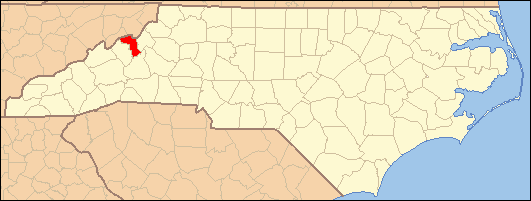
- Parent county / earlier Yancey, Watauga, Caldwell, Burke, McDowell
- County seat Bakersville
- Neighbors Yancey, Avery, McDowell
Photos & maps
What’s new
- Bakersville mountain mining/farm.
- Formation 1861 from Yancey, Watauga, Caldwell, Burke, McDowell — for pre-formation events, use the parent jurisdiction’s paper (not later Anson-only catalogs).
- Seat: Bakersville · Neighbors: Yancey, Avery, Mcdowell.
- Methods: Start here · Formation · Master guide.
Before looking for a Mitchell name, work out where the family lived. Created in 1861, the county drew territory from Yancey, Watauga, Caldwell, Burke and McDowell. A family living in the future county in 1860 therefore needs a search under the appropriate earlier jurisdiction, not an imagined Mitchell census for that year. [1]
Bakersville is the county seat. It was incorporated in 1868, after the county was established, and was named for David Baker, who received a land grant and settled in the area in 1797. Keep the settlement date, town incorporation and county formation distinct in your notes. They answer different questions. [1]
Identify the part of Mitchell you mean
NCpedia lists Spruce Pine, Bandana, Red Hill, Penland and Poplar among the county’s communities. It also identifies the North Toe River and mountains including Roan Mountain. Write down the community, stream and adjoining owners named in a family’s documents. These clues can help locate an older holding more precisely than the county name alone. [1]
When investigating the years before 1861, start with the parent county best supported by that location. If the evidence is uncertain, keep a separate search log for each plausible county. Do not copy five negative surname searches into a conclusion that a family was absent. An index’s coverage and the location of the household still matter.
The State Archives’ County Records Guide includes Mitchell and each of its five parents. It distinguishes originals from microfilm and groups records by series. Consult land, estates, court and tax entries as the question requires, rather than assuming that a will index represents all family evidence. [2]
Start with the Bakersville services that are documented
Mitchell County’s official Register of Deeds page offers deed searches, vital records, marriage licenses and online vital-record requests. It directs users to mitchelldeeds.com for further information. The office is at 26 Crimson Laurel Circle, Suite 4, Bakersville. Those services do not mean every early volume is searchable online. [3]
For land, obtain the complete deed and follow references to older instruments. Extract parties, witnesses, watercourses and neighboring owners. Compare both sides of a transaction and note a spouse’s participation. A deed naming several sellers may suggest a family connection, but the relationship still needs to be read or demonstrated, not guessed.
For a marriage or vital record, ask about the specific year and type of document. A modern certificate request page does not by itself establish the earliest surviving historical record. Keep any index entry separate from the image or certified copy that you eventually examine.
Mining and craft history can sharpen a search
NCpedia describes Mitchell’s mineral resources, including mica, kaolin and feldspar, as well as gemstones. It also dates the establishment of Penland School of Crafts to 1929. These details make occupation and institution useful lines of inquiry when a personal source points that way. [1]
If a census or family letter identifies a miner, record the exact occupation and place. Search for a named employer or operation before assuming every worker belonged to the same enterprise. A craftsman’s association with Penland likewise needs evidence beyond living in the same county. Ask what records survive for the relevant institution and period, and whether access is permitted.
Mitchell borders Tennessee. A documented move or transaction across that line should be followed in its own jurisdiction. Preserve the Tennessee county name as written in the source instead of treating every border reference as another Mitchell location. [1]
An unusually specific lead for freed couples
The State’s cohabitation project describes borrowing a volume from the Mitchell County Register of Deeds. Its collection documents registrations arising from the 1866 recognition of marriages formed during slavery. That gives researchers a specific collection to investigate, but not a complete list of every formerly enslaved couple. [4]
Read the original entry for names, dates and any additional family information. Do not assume all counties recorded the same details. The collection’s own explanation warns of inconsistent surnames and uneven compliance. Compare a proposed couple with other household evidence before attaching the entry to a tree. [4]
Make one request that can be answered
A useful request names the person, event, approximate year, community and record series already checked. Include a book or image reference when available. Ask whether the next volume, file or microfilm survives and where it can be consulted. This is more productive than asking a repository to find every occurrence of a common surname across five parent counties.
Sources
Accessed November 9, 2026 EST. Historical context and repository descriptions are distinguished from the research recommendations above. Catalog coverage is not a guarantee of surviving or online records.
- NCpedia, “Mitchell County.” Historical summary supporting the local dates, places and context cited above. https://www.ncpedia.org/geography/mitchell
- State Archives of North Carolina, County Records Guide. Explains original and microfilm holdings, series arrangement and changing holdings. https://archives.ncdcr.gov/researchers/collections/government-records/county-records-guide
- Mitchell County, Register of Deeds. Official services and location. https://www.mitchellcountync.gov/departments/register-of-deeds/
- North Carolina Digital Collections, Cohabitation Records. Mitchell loaned volume, 1866 context and cautions. https://digital.ncdcr.gov/spotlights/cohabitation-recs
In-depth topics
Towns & communities
History notes
Mitchell County (formed 1861 from Yancey, Watauga, Caldwell, Burke, McDowell; seat Bakersville) is a distinctive research problem: Bakersville mountain mining/farm. Genealogists who treat every NC county the same will miss how multi-parent formation; avery split later shapes the paper trail here—and how tennessee border highland strategies changes which record class to open first.
Pin the decade before the courthouse. Record the jurisdiction as cited in the original deed, estate, or church book—then map it to modern hubs. Neighbor FAN clubs frequently spill into Yancey, Avery, Mcdowell.
This county rewards a fixed order: census clusters with neighbors → land and probate in the correct years → church and cemetery substitutes for pre-vital generations → newspapers and directories around Bakersville for 19th–20th century moves. Use the record matrix on this hub as a planning tool, not a catalog.
Western land-cession and multi-state border context requires careful primary sources—see the Indigenous research guide when relevant, and log Tennessee/Georgia neighbors when surnames cluster west or south.
Session order: write person + year + place as written → formation/parent check → census FAN club → land/probate → church/cemetery → newspapers/directories when town-era → neighbors listed above. Free path: Start here · formation guide · Master NC research guide. Statewide substitutes: State Archives of North Carolina · DigitalNC · NCGenWeb — Mitchell.
Five parents and a wartime start
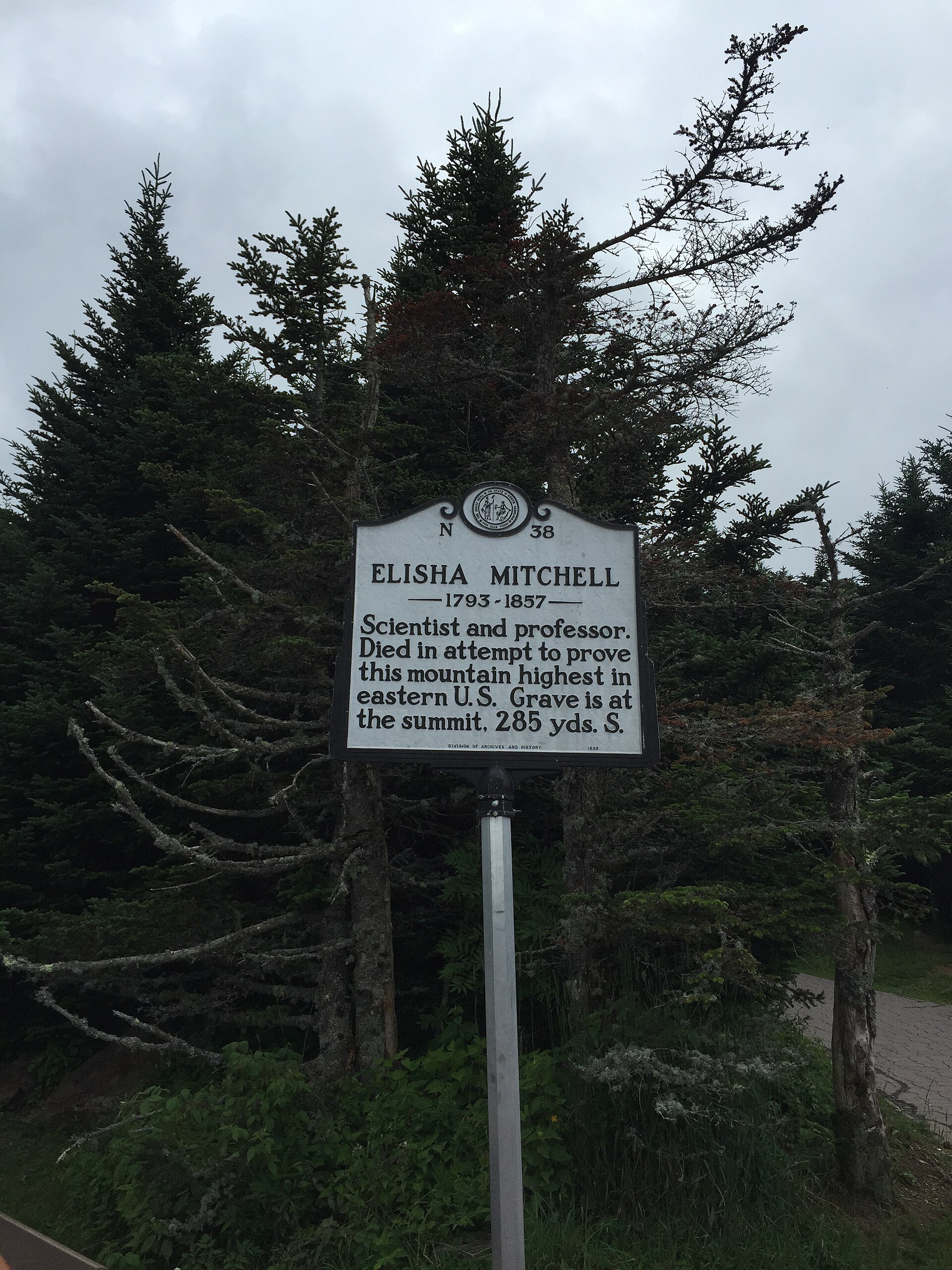
Mitchell was created by the legislature's 1860 to 1861 session (Public Laws, 1860-61, Chapters 8 and 9, as cited by Corbitt) from pieces of five counties: Yancey, Watauga, Caldwell, Burke and McDowell. It was named for Elisha Mitchell, the University of North Carolina professor who died on the peak that now carries his name. Bakersville, the seat, was incorporated in 1868 and takes its name from David Baker, who received a land grant and settled there in 1797 (NCpedia). Fifty years later Mitchell lost ground of its own: Avery County was formed in 1911 from Mitchell, Watauga and Caldwell (Corbitt).
The 1907 courthouse move
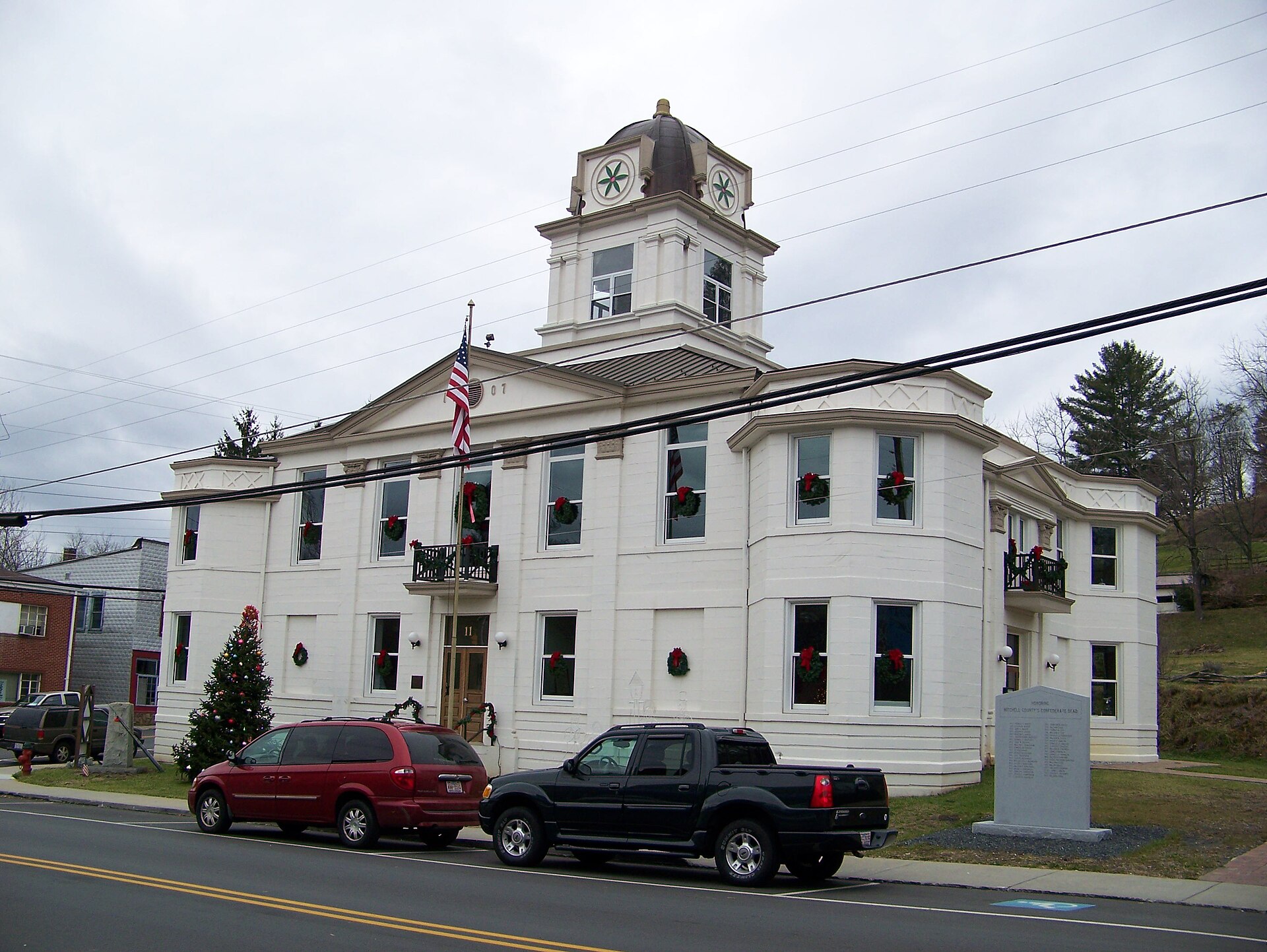
Mitchell's record loss was not a fire. The State Archives reports that "several records were believed to have been destroyed during the move into the new courthouse in 1907." When a Mitchell file you expect is missing, that move is the first suspect.
Where Mitchell records live
- Mitchell County Register of Deeds in Bakersville for deeds, marriages and certified birth and death records. Its volumes have also helped the State Archives: Mitchell is one of six counties whose register lent books for the Archives' cohabitation scanning project.
- Clerk of Superior Court in Bakersville for estates and court files not yet transferred to Raleigh. Corbitt cited Mitchell County court minutes in his formation research.
- State Archives of North Carolina for the county's transferred records, and its Western Regional Archives at 176 Riceville Road in Asheville, which collects private papers and some microfilmed county records for western North Carolina.
Who came to the Toe River country
NCpedia names the Cherokee as early inhabitants and German and Scotch-Irish settlers as the families who followed. NCpedia also describes one of the richest mineral deposits in the country, with mica, feldspar, kaolin and gemstones among the 57 minerals mined, and notes that Penland School of Crafts was established in 1929. Spruce Pine, Bandana, Red Hill, Penland and Poplar are the other communities it names.
Research tips for Mitchell families
- Remember that the 1860 census was taken before Mitchell existed. Anyone living in the future county that year will be enumerated under one of the five parent counties.
- After 1911, families in the part of Mitchell that went into Avery show up in Avery records with no move at all.
- The Cohabitation Records collection lists Mitchell as available, using a volume loaned by the Mitchell County Register of Deeds.
- Mitchell had no Freedmen's Bureau office of its own. The western offices listed in NARA M1909 include Asheville and Morganton.
Record availability matrix
| Record type | Coverage | Years (approx.) | Notes |
|---|---|---|---|
| Federal census | good | 1861–1950 | Federal schedules for NC; place each household in the correct county for that decade. Before 1861, people will not be labeled Mitchell—use Yancey, Watauga, Caldwell, Burke, McDowell. Parent-jurisdiction notes apply only to pre-formation events—not to post-formation federal census rows. Township and city-ward labels change; re-pin every decade. |
| Birth records | sparse | 1913– | Statewide NC birth registration is late (roughly 1913–1915 for civil strength). Use delayed births, church registers, Bibles, and census for earlier Mitchell generations—not parent-county “civil vitals.” |
| Marriage records | partial | 1861– | County marriage records improve in the 19th–20th centuries after formation (1861); earlier events often appear in church books, bonds, newspapers, or Yancey, Watauga, Caldwell, Burke, McDowell. Confirm event-year jurisdiction vs modern address. |
| Death records | partial | 1913– | Death certificates denser after statewide registration (~1913–1915+). Earlier Mitchell deaths via obituaries, church burial, probate, and cemeteries. |
| Land & deeds | good | 1861– | Record-loss / thin-series note: 1907 partial loss during courthouse move. Multi-parent mountain county—ridge families spill into neighbors routinely. Mitchell deed/Register of Deeds series typically begin near formation (1861); pre-1861 land lives under Yancey, Watauga, Caldwell, Burke, McDowell. Colonial grants/plats may predate the county at State Archives of North Carolina. Always verify book/page gaps; abstract witnesses and neighbors. |
| Probate & estates | good | 1861– | Record-loss / thin-series note: 1907 partial loss during courthouse move. Multi-parent mountain county—ridge families spill into neighbors routinely. Wills, administrations, inventories, and equity are core after 1861; pre-formation estates under Yancey, Watauga, Caldwell, Burke, McDowell. Abstract bondsmen, sales, and widows’ petitions for FAN clubs. Pair thin years with newspaper legal notices and Archives microfilm. |
| Church & parish | partial | varies | Church coverage varies by denomination and survival. Baptisms, membership, and burial registers often beat early civil vitals; check local societies and denominational archives. |
| Newspapers | varies | varies | Bakersville and local weeklies, plus larger regional papers for legal notices and obituaries. Verify actual title runs on DigitalNC and Chronicling America before citing continuous coverage. |
| Military | good | 1775– | Revolutionary through 20th-century service may generate pensions, CMSRs, militia notes, and wartime claims. Pair unit research with Mitchell place context and neighboring counties when companies recruited across lines. |
| Cemeteries | partial | varies | Published surveys, Find a Grave, churchyards, and family plots. Unmarked burials are common—use obituaries, church books, and land descriptions. |
| Court records | partial | 1861– | Record-loss / thin-series note: 1907 partial loss during courthouse move. Multi-parent mountain county—ridge families spill into neighbors routinely. Common pleas, sessions, and other court series often begin near formation (1861); equity may sit with or near probate. Pre-1861 under Yancey, Watauga, Caldwell, Burke, McDowell. |
| Tax lists | sparse | varies | Tax lists can substitute for missing census years and thin deed decades. Coverage is uneven by locality and year—check State Archives of North Carolina and published abstracts. |
Newspapers
Cemeteries & burial research
- Bakersville / county-seat cemeteries
- Mitchell County cemeteries (Find a Grave / surveys)
Societies & repositories
Vital records
North Carolina statewide vital registration expanded in the early 20th century. For many Mitchell County families you will rely on marriage bonds, church registers, Bible records, newspapers, delayed births, and probate—not only a modern certificate.
Research starting points
Courthouse & contacts
The county seat is Bakersville. Confirm current Register of Deeds, Clerk of Superior Court, and library hours before visiting—offices move and digital portals change.
Public library: Avery-Mitchell-Yancey Regional Library / Mitchell
Record-loss / series note: 1907 partial loss during courthouse move. Multi-parent mountain county—ridge families spill into neighbors routinely.
If not found here, try…
- Formed 1861
- Parent / earlier jurisdiction Yancey, Watauga, Caldwell, Burke, McDowell — check district-era records before this county existed (districts guide).
Neighboring counties (deeds, marriages, newspapers, and kin often cross the line):
Local history & events
Sources & further reading
- NCpedia — Mitchell County
- David Leroy Corbitt, The Formation of the North Carolina Counties, 1663–1943
- William S. Powell, The North Carolina Gazetteer
- State Archives of North Carolina
- DigitalNC — Mitchell County
- Chronicling America (Library of Congress)
- FamilySearch Wiki · NCGenWeb