Columbus County Genealogy
- Formed 1808
- Parent county / earlier Bladen, Brunswick
- County seat Whiteville
- Neighbors Bladen, Brunswick, Robeson, Pender
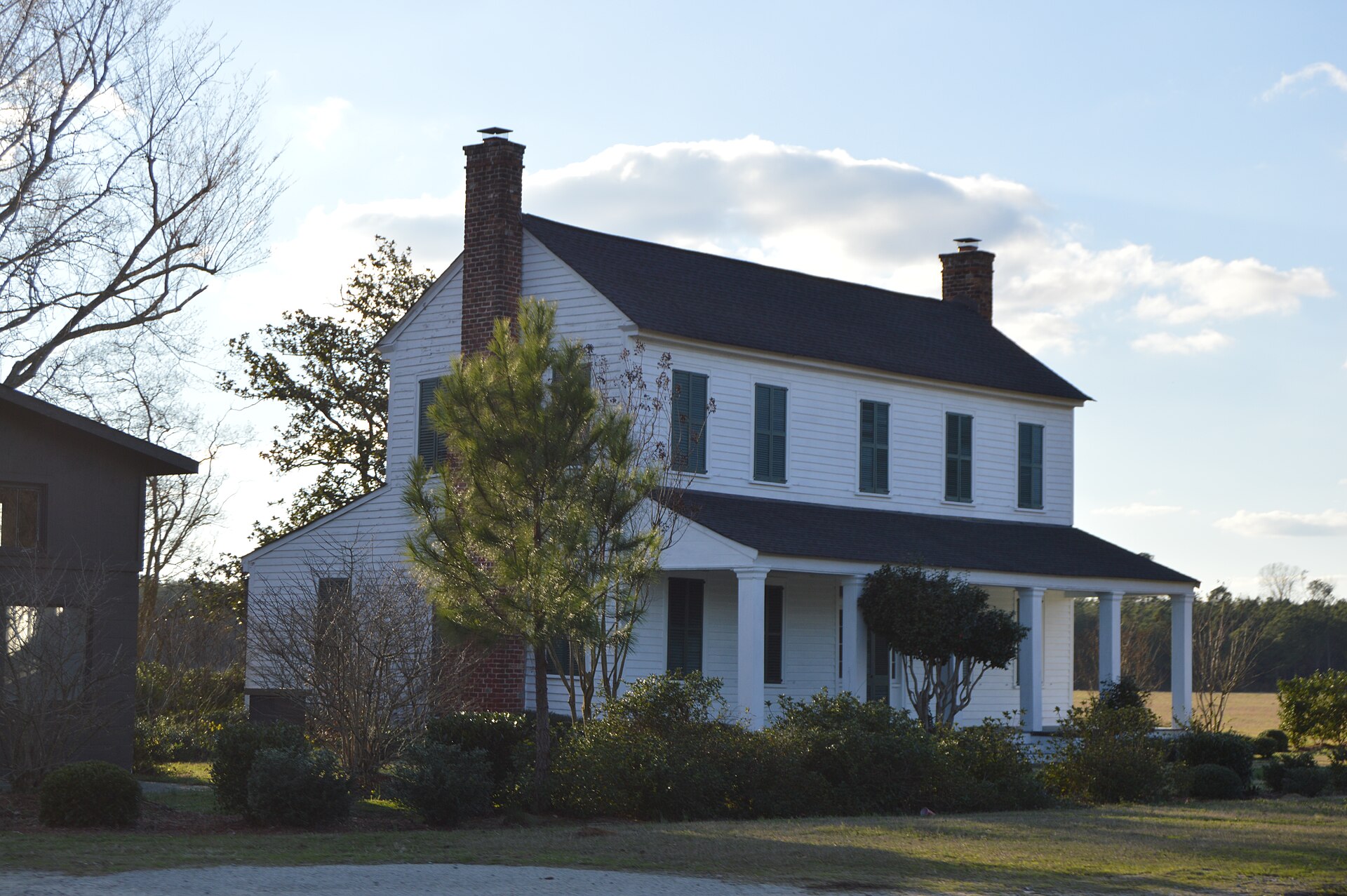
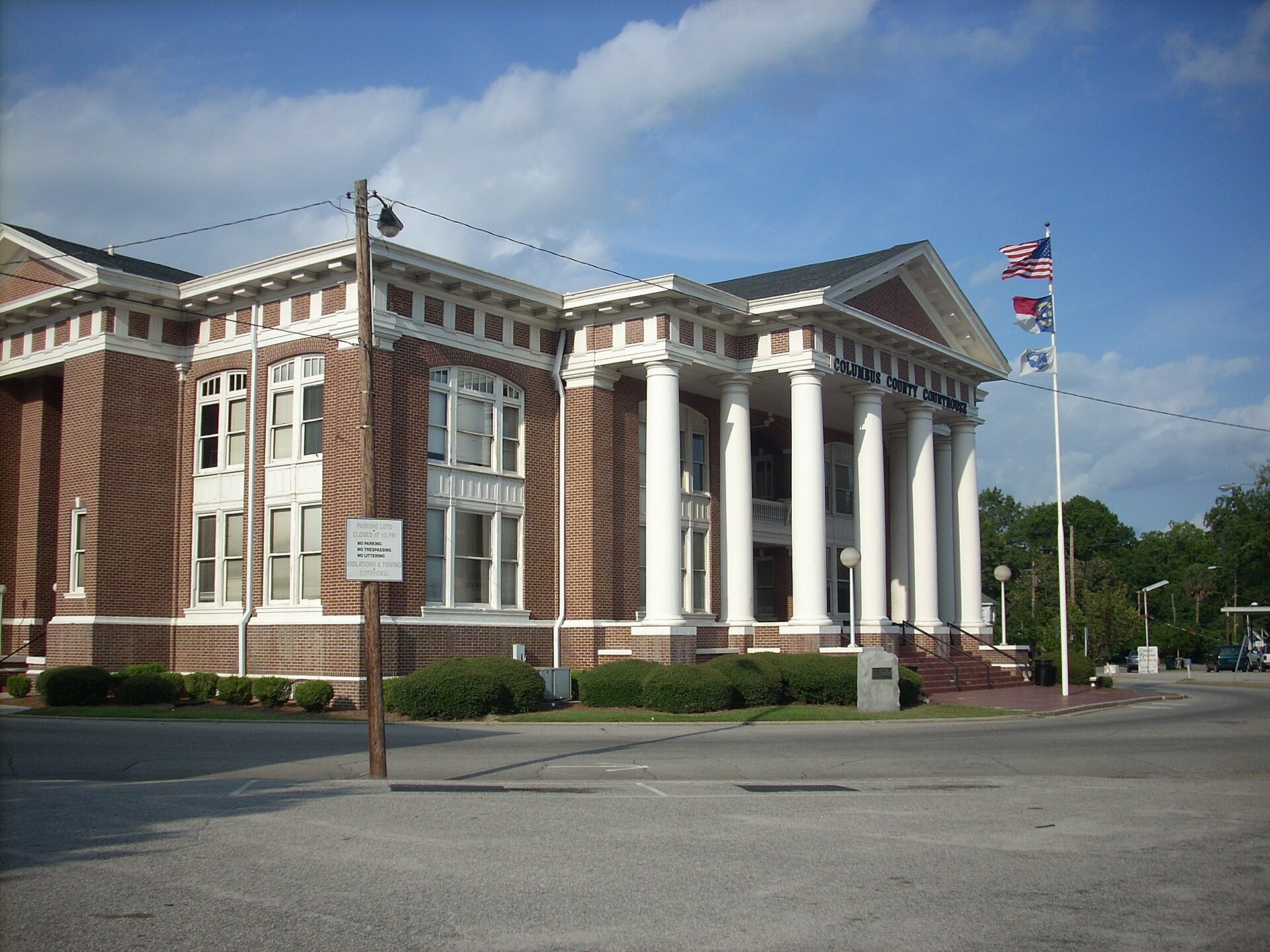
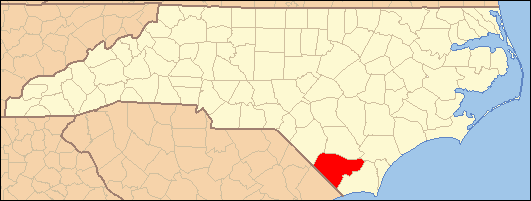
Photos & maps
What’s new
- Lumber and agricultural coastal plain; Whiteville.
- Formation 1808 from Bladen, Brunswick — for pre-formation events, use the parent jurisdiction’s paper (not later Anson-only catalogs).
- Seat: Whiteville · Neighbors: Bladen, Brunswick, Robeson, Pender.
- Methods: Start here · Formation · Master guide.
A Columbus homeplace needs a location before it needs a parent-county search. Columbus County was formed in 1808 from parts of Bladen and Brunswick counties. For an earlier event, either parent may be relevant, but the family’s actual location should decide which one you search first. A modern Columbus address is not enough to choose the older courthouse. [1]
Whiteville, the county seat, was incorporated in 1832. NCpedia identifies James B. White as the donor of the courthouse land in 1808 and the person for whom the town was named. It also names Acme-Delco, Brunswick, Fair Bluff and Tabor City among county communities. Preserve those smaller names when a record supplies them instead of substituting Whiteville for every residence. [1]
Do not confuse a town with a parent county
A reference to Brunswick in a Columbus document needs context. Determine whether it names a community, a county jurisdiction or a retrospective description in a family account. Copy the wording before interpreting it. A place table with the source date and your supporting evidence helps prevent the same name from sending the search to the wrong records.
For a farm, begin with a deed securely connected to the household. Transcribe watercourses, roads, adjoining owners and any prior transaction reference. Keep execution and recording dates separate. Follow the earlier deed and compare the descriptions, not just acreage and surname.
If you cannot yet place the property on one side of the old parent-county boundary, maintain separate Bladen and Brunswick search notes. Record the actual books, indexes, years and spellings examined. Two incomplete searches should not become a claim that no earlier record exists.
Use estates to test relationships
A will or estate can answer a different question from a deed. Identify the deceased, explicitly named relatives, administrator, guardian and purchasers. A role in settling an estate is not itself proof of kinship. Compare the papers with land transactions or another independent source before assigning a parent or child.
The State Archives’ County Records Guide includes Columbus, Bladen and Brunswick. It separates original records from microfilm and groups holdings by series, including courts, estates, land, marriage, tax and wills. Its entries help define the record search, but holdings change and broad date ranges do not establish uninterrupted coverage. [2]
When an index supplies a book and page, save that reference even if the document image is unavailable online. Ask about the underlying original or microfilm. A negative online search is a result about the material and search terms used, not a verdict on all surviving Columbus evidence.
Lake Waccamaw and Green Swamp are research locations
NCpedia identifies Lake Waccamaw and Green Swamp as important natural features and notes visits by John and William Bartram to the lake area in the eighteenth century. Those references can orient a local-history question, but they do not establish a connection between a family and the naturalists or any particular lakeside tract. [1]
For a household said to have lived “near the lake,” seek a more precise location in a deed, map, letter or other dated document. Keep a later family recollection as its own source, with the informant and date. A modern photograph of the area cannot by itself identify an earlier family home.
NCpedia discusses Waccamaw people among the area’s early inhabitants and the continuing Waccamaw-Siouan community in Columbus and Bladen. County residence or a family surname does not establish tribal identity. A claim of descent requires evidence about the individual family and should not be inferred from geography alone. [1]
Follow a border lead only when it has evidence
The county borders South Carolina. A named relative, event place or property reference across the line is a useful reason to investigate the relevant jurisdiction. Compare dates, spouses and associates before connecting same-name households. Proximity can make a connection plausible without making it proven. [1]
For newspaper or cemetery leads, retain the exact title, issue or page and distinguish a transcription from an underlying record. Where dates conflict, preserve both readings and explain the conflict rather than selecting the convenient one.
Plan a question someone can answer
A copy request should give the person, approximate year, community, record type and any book or file reference. Ask about current access and copying. At the end of the session, distinguish what is established from what is possible and explain the next choice: Columbus, Bladen, Brunswick or a named South Carolina county. Do not let a list of untested surname matches stand in for that reasoning.
Sources
Accessed November 9, 2026 EST. Historical facts below come from fetched sources; research steps are recommendations, not claims that a particular ancestor appears in a collection.
- NCpedia, “Columbus County,” Encyclopedia of North Carolina. Authored historical summary supporting county formation, named places and the local history cited above. https://www.ncpedia.org/geography/columbus
- State Archives of North Carolina, “County Records Guide.” Repository guide distinguishing original records from microfilm and organizing holdings by series; holdings change. https://archives.ncdcr.gov/researchers/collections/government-records/county-records-guide
In-depth topics
Towns & communities
History notes
Columbus County (formed 1808 from Bladen, Brunswick; seat Whiteville) is a distinctive research problem: Lumber and agricultural coastal plain; Whiteville. Genealogists who treat every NC county the same will miss how cape fear hinterland parents bladen/brunswick shapes the paper trail here—and how sc horry/marion border corridors changes which record class to open first.
Pin the decade before the courthouse. Record the jurisdiction as cited in the original deed, estate, or church book—then map it to modern hubs. Neighbor FAN clubs frequently spill into Bladen, Brunswick, Robeson, Pender.
This county rewards a fixed order: census clusters with neighbors → land and probate in the correct years → church and cemetery substitutes for pre-vital generations → newspapers and directories around Whiteville for 19th–20th century moves. Use the record matrix on this hub as a planning tool, not a catalog.
Border strategy: when surnames cluster on the Carolina line, open the sister hub South Carolina Genealogy after finishing this county’s parents and neighbors. Method: border research log.
Session order: write person + year + place as written → formation/parent check → census FAN club → land/probate → church/cemetery → newspapers/directories when town-era → neighbors listed above. Free path: Start here · formation guide · Master NC research guide. Statewide substitutes: State Archives of North Carolina · DigitalNC · NCGenWeb — Columbus.
Record availability matrix
| Record type | Coverage | Years (approx.) | Notes |
|---|---|---|---|
| Federal census | good | 1808–1950 | Federal schedules for NC; place each household in the correct county for that decade. Before 1808, people will not be labeled Columbus—use Bladen, Brunswick. Parent-jurisdiction notes apply only to pre-formation events—not to post-formation federal census rows. Township and city-ward labels change; re-pin every decade. |
| Birth records | sparse | 1913– | Statewide NC birth registration is late (roughly 1913–1915 for civil strength). Use delayed births, church registers, Bibles, and census for earlier Columbus generations—not parent-county “civil vitals.” |
| Marriage records | partial | 1808– | County marriage records improve in the 19th–20th centuries after formation (1808); earlier events often appear in church books, bonds, newspapers, or Bladen, Brunswick. Confirm event-year jurisdiction vs modern address. |
| Death records | partial | 1913– | Death certificates denser after statewide registration (~1913–1915+). Earlier Columbus deaths via obituaries, church burial, probate, and cemeteries. |
| Land & deeds | good | 1808– | Record-loss / thin-series note: Formed 1808 from Bladen/Brunswick. Cape Fear parent context + coastal plain neighbors; test Bladen-era families before assuming local books never existed. Columbus deed/Register of Deeds series typically begin near formation (1808); pre-1808 land lives under Bladen, Brunswick. Colonial grants/plats may predate the county at State Archives of North Carolina. Always verify book/page gaps; abstract witnesses and neighbors. |
| Probate & estates | good | 1808– | Record-loss / thin-series note: Formed 1808 from Bladen/Brunswick. Cape Fear parent context + coastal plain neighbors; test Bladen-era families before assuming local books never existed. Wills, administrations, inventories, and equity are core after 1808; pre-formation estates under Bladen, Brunswick. Abstract bondsmen, sales, and widows’ petitions for FAN clubs. Pair thin years with newspaper legal notices and Archives microfilm. |
| Church & parish | partial | varies | Church coverage varies by denomination and survival. Baptisms, membership, and burial registers often beat early civil vitals; check local societies and denominational archives. |
| Newspapers | varies | varies | Whiteville and local weeklies, plus larger regional papers for legal notices and obituaries. Verify actual title runs on DigitalNC and Chronicling America before citing continuous coverage. |
| Military | good | 1775– | Revolutionary through 20th-century service may generate pensions, CMSRs, militia notes, and wartime claims. Pair unit research with Columbus place context and neighboring counties when companies recruited across lines. |
| Cemeteries | partial | varies | Published surveys, Find a Grave, churchyards, and family plots. Unmarked burials are common—use obituaries, church books, and land descriptions. |
| Court records | partial | 1808– | Record-loss / thin-series note: Formed 1808 from Bladen/Brunswick. Cape Fear parent context + coastal plain neighbors; test Bladen-era families before assuming local books never existed. Common pleas, sessions, and other court series often begin near formation (1808); equity may sit with or near probate. Pre-1808 under Bladen, Brunswick. |
| Tax lists | sparse | varies | Tax lists can substitute for missing census years and thin deed decades. Coverage is uneven by locality and year—check State Archives of North Carolina and published abstracts. |
Newspapers
Cemeteries & burial research
- Whiteville / county-seat cemeteries
- Columbus County cemeteries (Find a Grave / surveys)
Societies & repositories
Vital records
North Carolina statewide vital registration expanded in the early 20th century. For many Columbus County families you will rely on marriage bonds, church registers, Bible records, newspapers, delayed births, and probate—not only a modern certificate.
Research starting points
Courthouse & contacts
The county seat is Whiteville. Confirm current Register of Deeds, Clerk of Superior Court, and library hours before visiting—offices move and digital portals change.
Public library: Columbus County Public Library
Record-loss / series note: Formed 1808 from Bladen/Brunswick. Cape Fear parent context + coastal plain neighbors; test Bladen-era families before assuming local books never existed.
If not found here, try…
- Formed 1808
- Parent / earlier jurisdiction Bladen, Brunswick — check district-era records before this county existed (districts guide).
Neighboring counties (deeds, marriages, newspapers, and kin often cross the line):
Local history & events
Sources & further reading
- NCpedia — Columbus County
- David Leroy Corbitt, The Formation of the North Carolina Counties, 1663–1943
- William S. Powell, The North Carolina Gazetteer
- State Archives of North Carolina
- DigitalNC — Columbus County
- Chronicling America (Library of Congress)
- FamilySearch Wiki · NCGenWeb